QUESTION IMAGE
Question
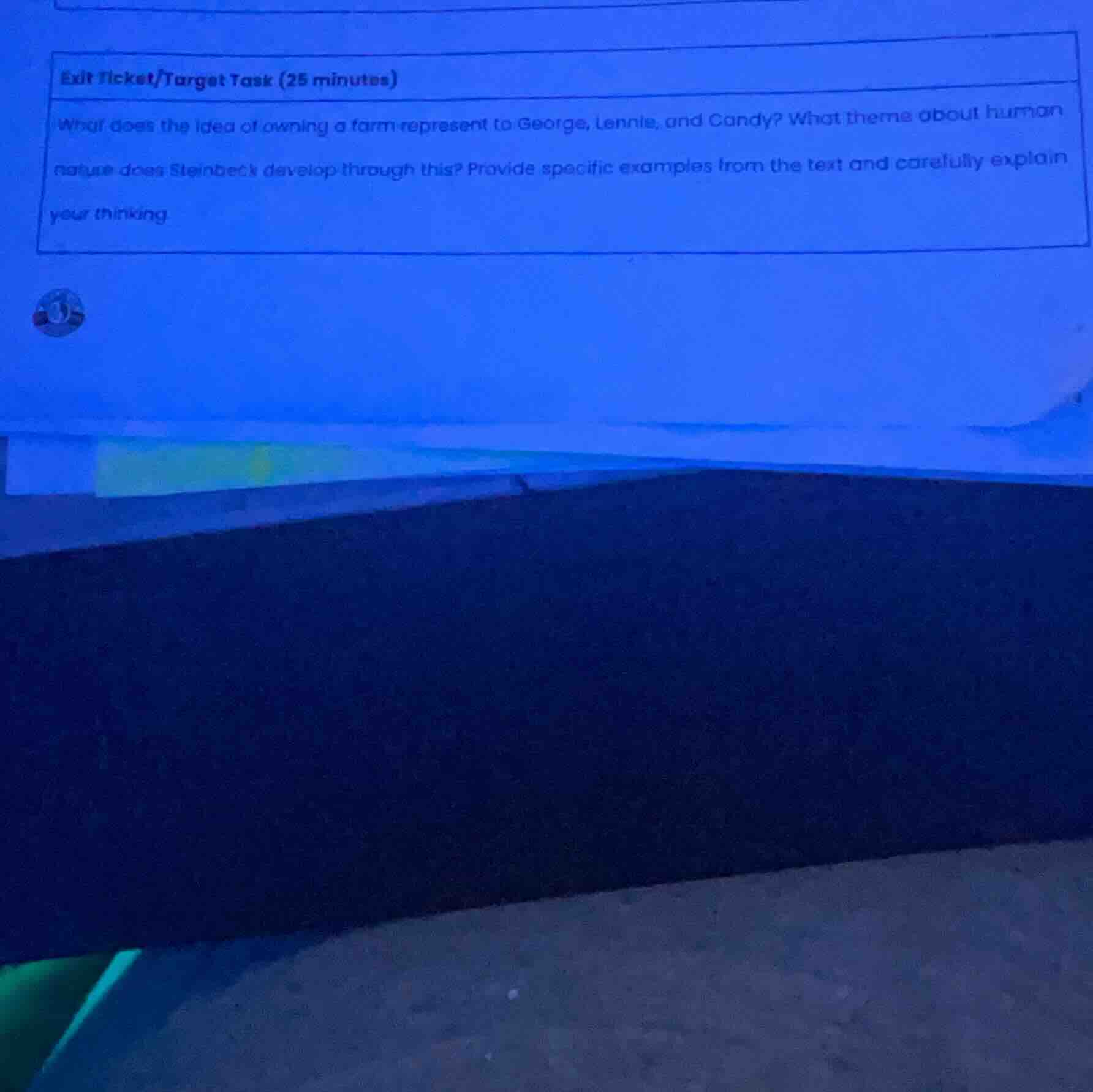
exit ticket/target task (25 minutes)
what does the idea of owning a farm represent to george, lennie, and candy? what theme about human nature does steinbeck develop through this? provide specific examples from the text and carefully explain your thinking
Brief Explanations
- For George: The farm represents freedom from the cycle of itinerant, exploitative farm work, and a chance to control his own life instead of answering to bosses. He repeatedly references escaping the "trap" of working for others, like when he says they'll "live off the fatta the lan'" and not have to "sleep in no bunk house."
- For Lennie: The farm is a safe, peaceful space where he can tend to soft rabbits (his core, childlike desire) without fear of getting in trouble for his accidental harm to small animals or people. He fixates on this detail in every retelling of their dream.
- For Candy: The farm is a lifeline against the loneliness and disposability of old, disabled workers. After his dog is put down (a parallel to his own fear of being abandoned), he offers his life savings to join the pair, hoping to have a home and purpose in his later years.
- Theme: Steinbeck develops the theme that human nature is driven by the universal desire for belonging, security, and a "dream" to cling to—even when that dream is nearly impossible to achieve during the Great Depression. The characters' shared farm dream binds them into a rare, chosen family, highlighting how people crave connection and stability in a harsh, isolating world.

Snap & solve any problem in the app
Get step-by-step solutions on Sovi AI
Photo-based solutions with guided steps
Explore more problems and detailed explanations
- To George: The farm represents freedom from exploitative labor and self-determination, a way to escape the cycle of answering to bosses and living in bunkhouses.
- To Lennie: The farm is a safe, happy space where he can tend to soft rabbits without fear of consequences for his unintentional mistakes.
- To Candy: The farm is a chance to avoid loneliness and disposability; after his dog is put down, he sees it as a way to have a home and purpose in his old age, contributing his savings to join the pair.
- Theme: Steinbeck develops the theme that human nature is defined by a universal longing for belonging, security, and a hopeful dream to anchor oneself—even in a harsh, unforgiving world like the Great Depression, where such dreams are rarely realized. The shared farm dream also creates a rare chosen family, emphasizing the human need for connection.