QUESTION IMAGE
Question
factor #1
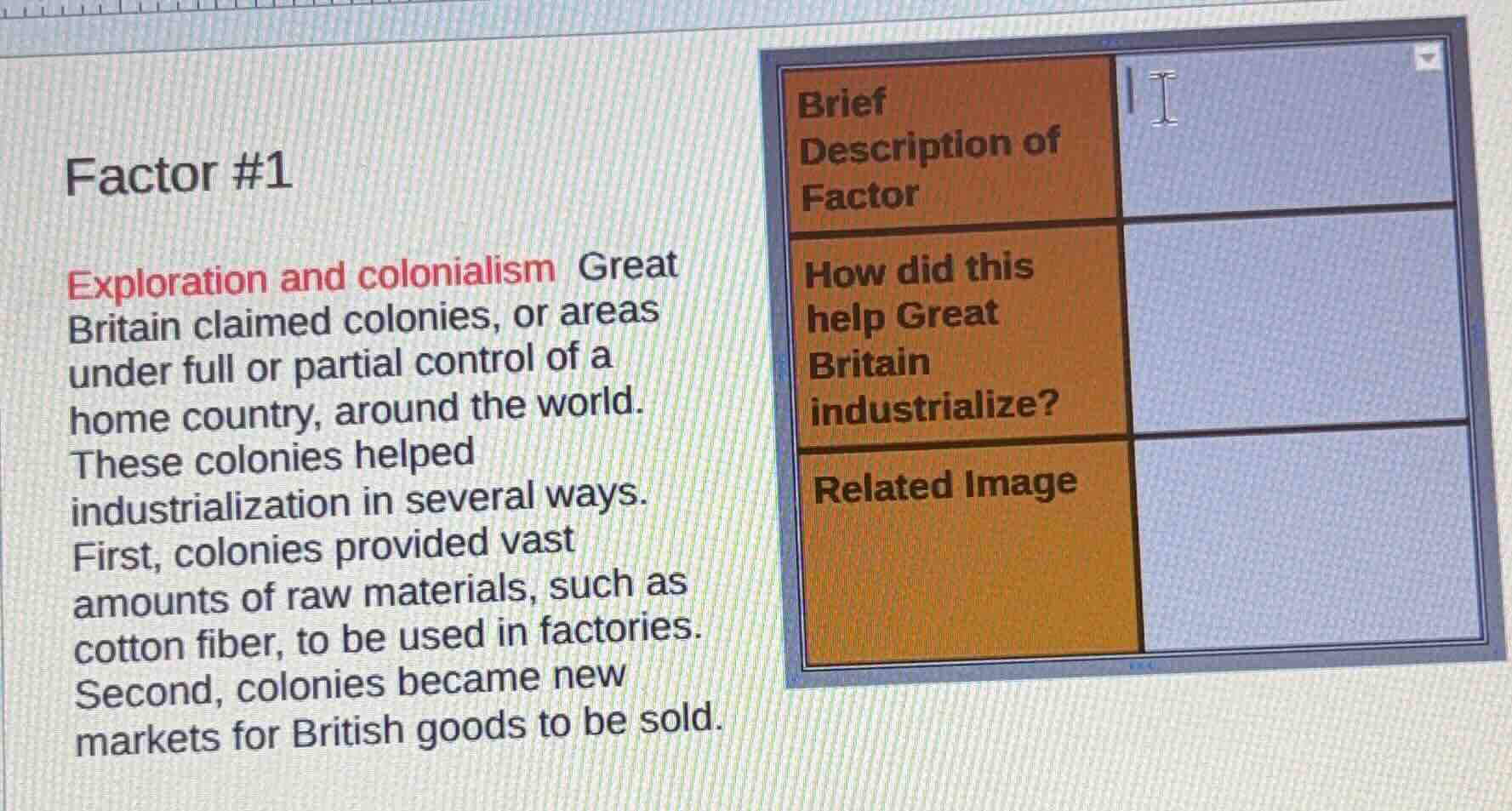
exploration and colonialism great britain claimed colonies, or areas under full or partial control of a home country, around the world. these colonies helped industrialization in several ways. first, colonies provided vast amounts of raw materials, such as cotton fiber, to be used in factories. second, colonies became new markets for british goods to be sold.
(and a table with columns: brief description of factor, how did this help great britain industrialize?, related image, and empty cells on the right)
Brief Description of Factor
Exploration and colonialism: Great Britain claimed colonies globally. Colonies supplied raw materials (e.g., cotton) for factories and served as markets for British goods, aiding industrialization.
How did this help Great Britain industrialize?
- Raw Materials: Colonies provided abundant raw materials (like cotton fiber) needed for factory production, ensuring a steady supply for industries (e.g., textile mills) to operate and expand.
- Markets: Colonies became new markets where British - manufactured goods (e.g., textiles, machinery) were sold. This increased demand for British products, driving factories to produce more, invest in technology, and scale up operations, thus fueling industrial growth.
Related Image (Suggestion)
An image showing a British colonial plantation (e.g., cotton plantation) with workers harvesting cotton (to represent raw material supply) and a British factory exporting goods to a colony (to represent market expansion) could be used.

Snap & solve any problem in the app
Get step-by-step solutions on Sovi AI
Photo-based solutions with guided steps
Explore more problems and detailed explanations
Brief Description of Factor
Exploration and colonialism: Great Britain claimed colonies globally. Colonies supplied raw materials (e.g., cotton) for factories and served as markets for British goods, aiding industrialization.
How did this help Great Britain industrialize?
- Raw Materials: Colonies provided abundant raw materials (like cotton fiber) needed for factory production, ensuring a steady supply for industries (e.g., textile mills) to operate and expand.
- Markets: Colonies became new markets where British - manufactured goods (e.g., textiles, machinery) were sold. This increased demand for British products, driving factories to produce more, invest in technology, and scale up operations, thus fueling industrial growth.
Related Image (Suggestion)
An image showing a British colonial plantation (e.g., cotton plantation) with workers harvesting cotton (to represent raw material supply) and a British factory exporting goods to a colony (to represent market expansion) could be used.