QUESTION IMAGE
Question
family spending plan
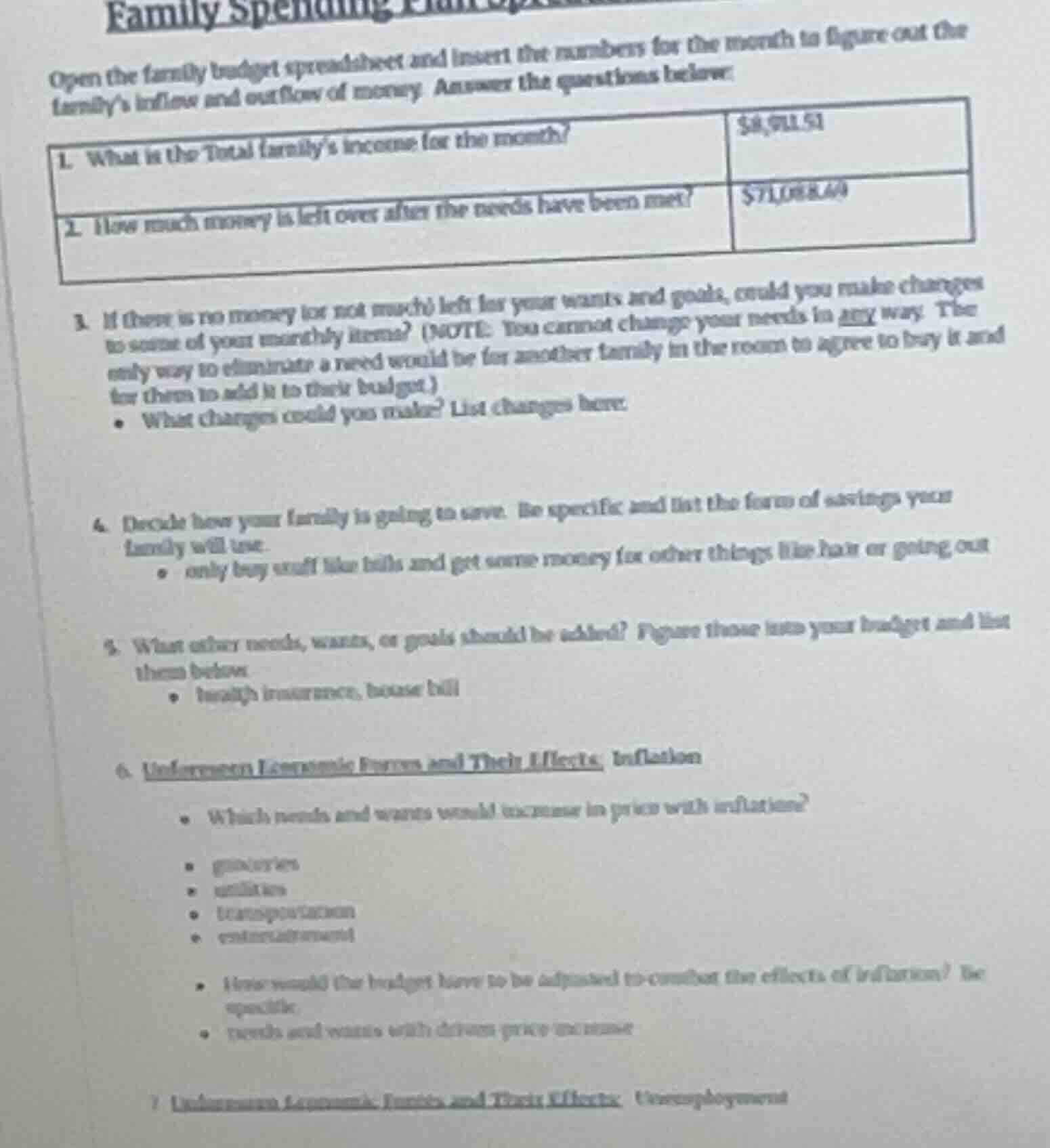
open the family budget spreadsheet and insert the numbers for the month to figure out the family’s inflow and outflow of money. answer the questions below:
- what is the total family’s income for the month? $8,911.51
- how much money is left over after the needs have been met? $71,088.69
- if there is no money (or not much) left for your wants and goals, could you make changes to some of your monthly items? (note: you cannot change your needs in any way. the only way to eliminate a need would be for another family in the room to agree to buy it and for them to add it to their budget.)
- what changes could you make? list changes here.
- decide how your family is going to save. be specific and list the form of savings your family will use.
- only buy stuff like bills and get some money for other things like hair or going out
- what other needs, wants, or goals should be added? figure those into your budget and list them below.
- health insurance, house bill
- unforeseen economic forces and their effects: inflation
- which needs and wants would increase in price with inflation?
- groceries
- utilities
- transportation
- entertainment
- how would the budget have to be adjusted to combat the effects of inflation? be specific.
- needs and wants with drastic price increase
- unforeseen economic forces and their effects: unemployment
Brief Explanations
- For question 3, non-essential wants (discretionary spending) can be cut since needs are fixed.
- For question 4, specific savings vehicles are outlined for leftover funds.
- For question 6, budget adjustments target inflation-impacted categories.

Snap & solve any problem in the app
Get step-by-step solutions on Sovi AI
Photo-based solutions with guided steps
Explore more problems and detailed explanations
- Total family's income for the month: $8,911.51
- Money left over after needs are met: $71,088.60
- Potential changes: Cut discretionary spending such as dining out, subscription services, and luxury purchases; reduce non-essential shopping for clothing or hobbies.
- Savings plan: Allocate 60% of leftover funds to a high-yield savings account for emergency goals, 25% to a retirement investment account (e.g., 401(k) or IRA), and 15% to a short-term certificate of deposit (CD) for a future family vacation.
- Additional items to add: Health insurance premium, monthly house maintenance fund, and a small monthly budget for children's educational activities.
- - Needs/wants with inflation price increases: groceries, utilities, transportation, entertainment
- Budget adjustments: Reduce discretionary spending on entertainment by 10% to offset grocery and utility price hikes; switch to more cost-effective transportation options (e.g., carpooling) to cut transportation costs; prioritize generic grocery brands to lower food expenses.
- (No specific question provided for unemployment; a sample response would be: If facing unemployment, immediately redirect all non-discretionary savings to cover essential needs, apply for unemployment benefits, and temporarily pause all non-essential spending and retirement contributions until income is restored.)