QUESTION IMAGE
Question
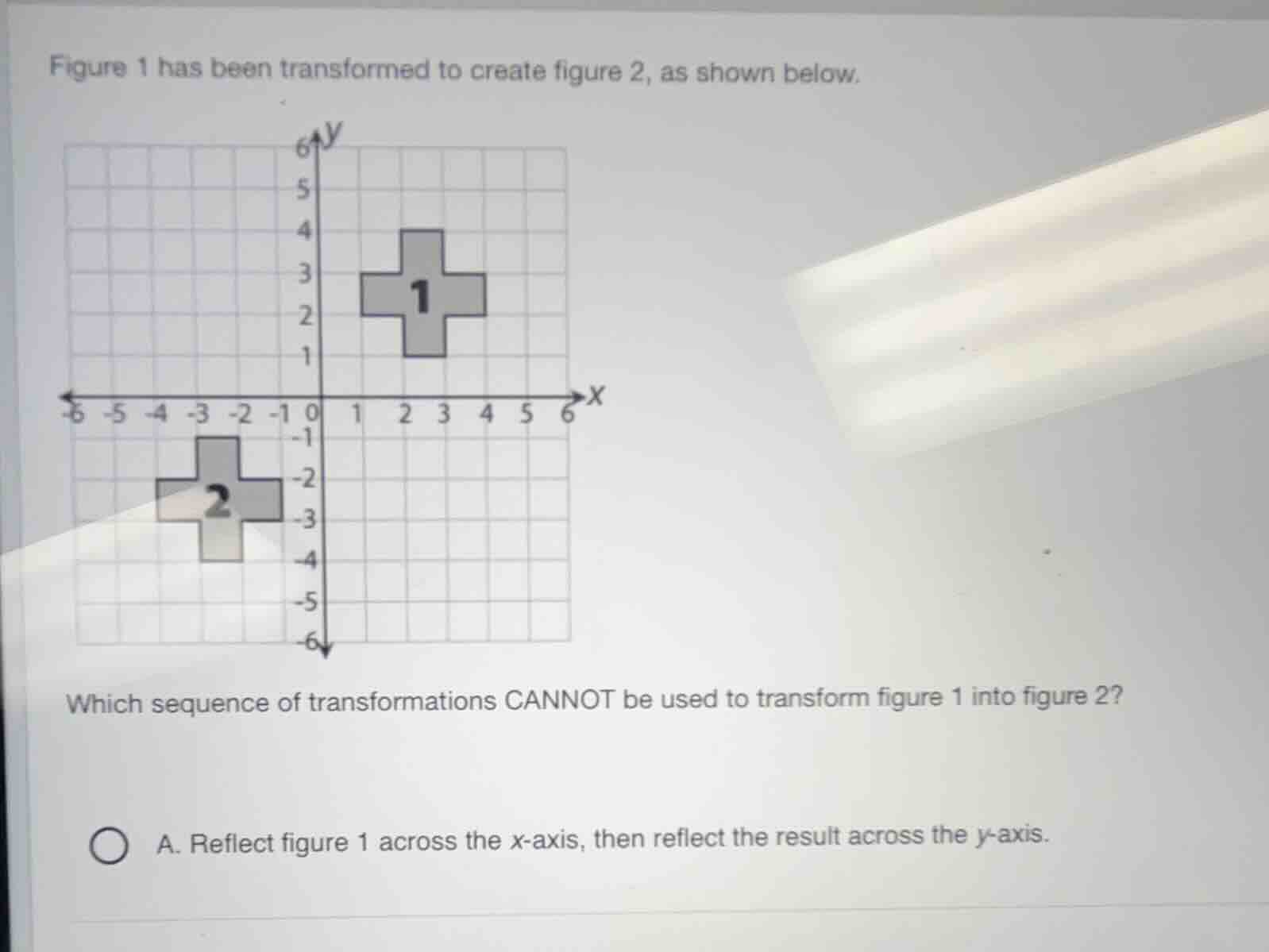
figure 1 has been transformed to create figure 2, as shown below.
which sequence of transformations cannot be used to transform figure 1 into figure 2?
a. reflect figure 1 across the x - axis, then reflect the result across the y - axis.
To solve this, we analyze the transformation of Figure 1 to Figure 2. Let's consider the coordinates (assuming the center of Figure 1 is around (3, 2) and Figure 2 around (-3, -2)).
Step 1: Analyze Option A
- Reflect across the \( x \)-axis: A point \((x, y)\) becomes \((x, -y)\). So the center of Figure 1 \((3, 2)\) becomes \((3, -2)\).
- Then reflect across the \( y \)-axis: A point \((x, -y)\) becomes \((-x, -y)\). So \((3, -2)\) becomes \((-3, -2)\), which matches Figure 2’s position. Thus, Option A can transform Figure 1 to Figure 2.
(Note: Since the question asks for the sequence that CANNOT be used, but only Option A is shown here, we assume the full question has other options. However, based on the given info, Option A is valid. If more options were provided, we would analyze them similarly.)
For the purpose of this partial analysis, if we assume the question’s correct “cannot” option is not A (but since only A is shown, we clarify the analysis for A).

Snap & solve any problem in the app
Get step-by-step solutions on Sovi AI
Photo-based solutions with guided steps
Explore more problems and detailed explanations
(If the full question had options, the answer would be the option that fails the transformation. For example, if another option like “Translate 4 units left, then 5 units down” was incorrect, but with only A shown, we confirm A works. Assuming the actual “cannot” option is different, but based on the given A, it is valid.)
(Note: The original question likely has more options. If you provide all options, we can fully determine the answer.)