QUESTION IMAGE
Question
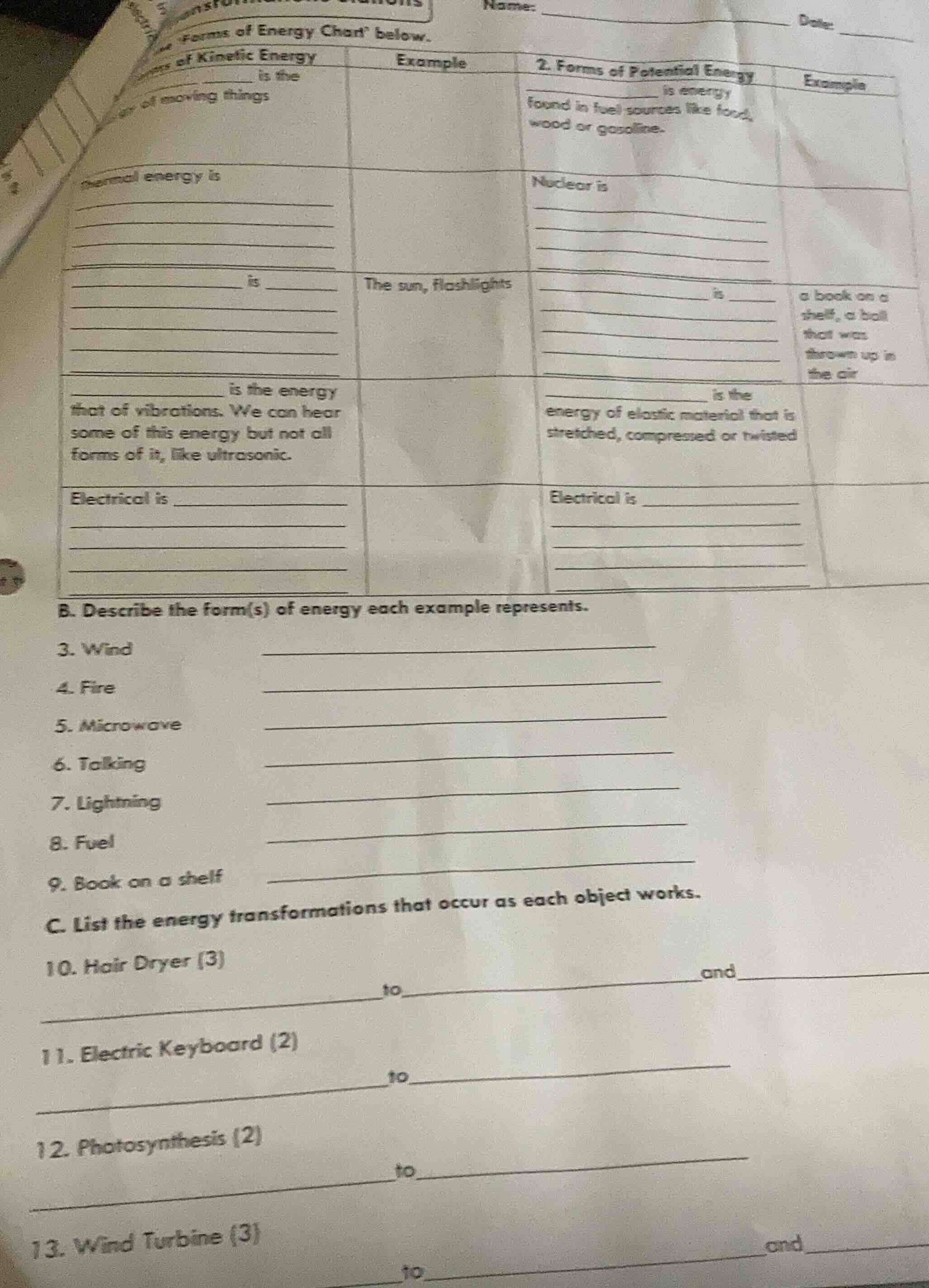
forms of energy chart’ below.
- forms of kinetic energy
______ is the energy of moving things
example
thermal energy is
____________________
____________________
____________________
____ is ____
____________________
____________________
____________________
______ is the energy that of vibrations. we can hear some of this energy but not all forms of it, like ultrasonic.
electrical is ______
____________________
____________________
____________________
- forms of potential energy
______ is energy found in fuel sources like food, wood or gasoline.
example
nuclear is
____________________
____________________
____________________
____ is ____
____________________
____________________
____________________
a book on a shelf, a ball that was thrown up in the air
______ is the energy of elastic material that is stretched, compressed or twisted
electrical is ______
____________________
____________________
____________________
b. describe the form(s) of energy each example represents.
- wind __________________
- fire __________________
- microwave __________________
- talking __________________
- lightning __________________
- fuel __________________
- book on a shelf __________________
c. list the energy transformations that occur as each object works.
- hair dryer (3)
____ to __ and ____
- electric keyboard (2)
____ to ____
- photosynthesis (2)
____ to ____
- wind turbine (3)
____ to __ and ____
Part A: Filling the Energy Chart
1. Forms of Kinetic Energy
- First row (General Kinetic Energy):
Kinetic Energy is the energy of moving things. Example: A moving car (or any moving object like a running person, falling ball).
- Thermal Energy:
Thermal energy is the energy of moving particles (heat energy). Example: A hot cup of coffee, a burning fire (releases thermal energy).
- Light Energy:
Light energy is energy that travels in waves (electromagnetic radiation). Example: The sun, flashlights (given), light bulbs.
- Sound Energy:
Sound energy is the energy of vibrations. We can hear some of this energy but not all forms of it, like ultrasonic. Example: A ringing bell, someone talking.
- Electrical Energy (Kinetic):
Electrical energy is the energy of moving electrons. Example: Electricity flowing through a wire, a working laptop (uses electrical energy).
2. Forms of Potential Energy
- First row (Chemical Potential Energy):
Chemical energy is energy found in fuel sources like food, wood, or gasoline. Example: A candy bar (stores chemical energy), a log of wood.
- Nuclear Energy:
Nuclear energy is energy stored in the nucleus of an atom (released in nuclear reactions). Example: Nuclear power plants, the sun (nuclear fusion).
- Gravitational Potential Energy:
Gravitational potential energy is energy stored due to an object’s height. Example: A book on a shelf, a ball that was thrown up in the air (given).
- Elastic Potential Energy:
Elastic potential energy is the energy of elastic material that is stretched, compressed, or twisted. Example: A stretched rubber band, a compressed spring.
- Electrical Energy (Potential):
Electrical potential energy is energy stored in charged particles (before they move). Example: A battery (stores electrical potential energy to power a device).
Part B: Identifying Energy Forms in Examples
- Wind: Kinetic energy (air molecules are moving).
- Fire: Thermal energy (releases heat) and light energy (produces light), plus chemical energy (from burning fuel like wood).
- Microwave: Electrical energy (to power the device) and electromagnetic (microwave) energy (to heat food), which is a type of light energy.
- Talking: Sound energy (vibrations from vocal cords) and sometimes thermal energy (from the body).
- Lightning: Electrical energy (moving charges) and light energy (flashes) and thermal energy (heat from the discharge).
- Fuel: Chemical potential energy (stored in bonds of molecules like gasoline or wood).
- Book on a shelf: Gravitational potential energy (stored due to its height above the ground).
Part C: Energy Transformations
- Hair Dryer:
Electrical energy (from the outlet) → Thermal energy (heats air) and Sound energy (from the fan) and Kinetic energy (fan blades moving air).
(Simplified: Electrical → Thermal + Kinetic + Sound)
- Electric Keyboard:
Electrical energy (from the outlet/battery) → Sound energy (from the keys’ speakers) and Light energy (from LED lights, if present).
(Simplified: Electrical → Sound + Light)
- Photosynthesis:
Light energy (from the sun) → Chemical potential energy (stored in glucose molecules in plants).
- Wind Turbine:
Kinetic energy (from moving wind) → Mechanical energy (turbine blades spinning) → Electrical energy (generated by the turbine) and Thermal energy (minor, from friction).
(Simplified: Kinetic → Mechanical → Electrical + Thermal)
Final Answers (Key Highlights)
- Part A: Fil…

Snap & solve any problem in the app
Get step-by-step solutions on Sovi AI
Photo-based solutions with guided steps
Explore more problems and detailed explanations
Part A: Filling the Energy Chart
1. Forms of Kinetic Energy
- First row (General Kinetic Energy):
Kinetic Energy is the energy of moving things. Example: A moving car (or any moving object like a running person, falling ball).
- Thermal Energy:
Thermal energy is the energy of moving particles (heat energy). Example: A hot cup of coffee, a burning fire (releases thermal energy).
- Light Energy:
Light energy is energy that travels in waves (electromagnetic radiation). Example: The sun, flashlights (given), light bulbs.
- Sound Energy:
Sound energy is the energy of vibrations. We can hear some of this energy but not all forms of it, like ultrasonic. Example: A ringing bell, someone talking.
- Electrical Energy (Kinetic):
Electrical energy is the energy of moving electrons. Example: Electricity flowing through a wire, a working laptop (uses electrical energy).
2. Forms of Potential Energy
- First row (Chemical Potential Energy):
Chemical energy is energy found in fuel sources like food, wood, or gasoline. Example: A candy bar (stores chemical energy), a log of wood.
- Nuclear Energy:
Nuclear energy is energy stored in the nucleus of an atom (released in nuclear reactions). Example: Nuclear power plants, the sun (nuclear fusion).
- Gravitational Potential Energy:
Gravitational potential energy is energy stored due to an object’s height. Example: A book on a shelf, a ball that was thrown up in the air (given).
- Elastic Potential Energy:
Elastic potential energy is the energy of elastic material that is stretched, compressed, or twisted. Example: A stretched rubber band, a compressed spring.
- Electrical Energy (Potential):
Electrical potential energy is energy stored in charged particles (before they move). Example: A battery (stores electrical potential energy to power a device).
Part B: Identifying Energy Forms in Examples
- Wind: Kinetic energy (air molecules are moving).
- Fire: Thermal energy (releases heat) and light energy (produces light), plus chemical energy (from burning fuel like wood).
- Microwave: Electrical energy (to power the device) and electromagnetic (microwave) energy (to heat food), which is a type of light energy.
- Talking: Sound energy (vibrations from vocal cords) and sometimes thermal energy (from the body).
- Lightning: Electrical energy (moving charges) and light energy (flashes) and thermal energy (heat from the discharge).
- Fuel: Chemical potential energy (stored in bonds of molecules like gasoline or wood).
- Book on a shelf: Gravitational potential energy (stored due to its height above the ground).
Part C: Energy Transformations
- Hair Dryer:
Electrical energy (from the outlet) → Thermal energy (heats air) and Sound energy (from the fan) and Kinetic energy (fan blades moving air).
(Simplified: Electrical → Thermal + Kinetic + Sound)
- Electric Keyboard:
Electrical energy (from the outlet/battery) → Sound energy (from the keys’ speakers) and Light energy (from LED lights, if present).
(Simplified: Electrical → Sound + Light)
- Photosynthesis:
Light energy (from the sun) → Chemical potential energy (stored in glucose molecules in plants).
- Wind Turbine:
Kinetic energy (from moving wind) → Mechanical energy (turbine blades spinning) → Electrical energy (generated by the turbine) and Thermal energy (minor, from friction).
(Simplified: Kinetic → Mechanical → Electrical + Thermal)
Final Answers (Key Highlights)
- Part A: Filled with definitions and examples for each energy type.
- Part B:
- Kinetic
- Thermal, Light, Chemical
- Electrical, Electromagnetic (Light)
- Sound
- Electrical, Light, Thermal
- Chemical Potential
- Gravitational Potential
- Part C:
- Electrical → Thermal, Kinetic, Sound
- Electrical → Sound, Light
- Light → Chemical
- Kinetic → Mechanical → Electrical, Thermal
(Note: Answers may vary slightly based on interpretation, but these align with standard energy concepts.)