QUESTION IMAGE
Question
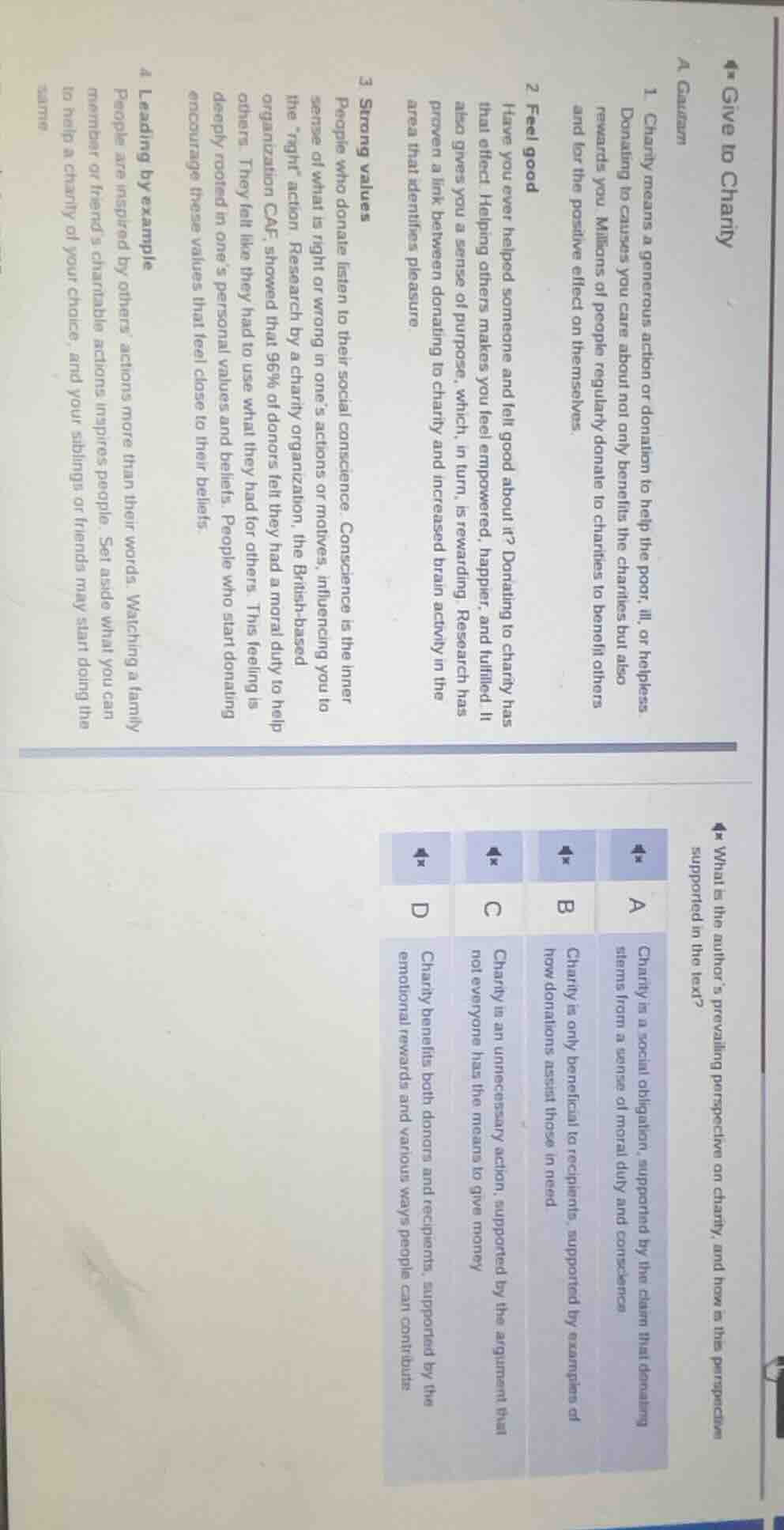
★ give to charity
a. guulam
- charity means a generous action or donation to help the poor, ill, or helpless. donating to causes you care about not only benefits the charities but also rewards you. millions of people regularly donate to charities to benefit others and for the positive effect on themselves.
2 feel good
have you ever helped someone and felt good about it? donating to charity has that effect. helping others makes you feel empowered, happier, and fulfilled. it also gives you a sense of purpose, which, in turn, is rewarding. research has proven a link between donating to charity and increased brain activity in the area that identifies pleasure.
3 strong values
people who donate listen to their social conscience. conscience is the inner sense of what is right or wrong in ones actions or motives, influencing you to the
ight\ action. research by a charity organization, the british-based organization caf, showed that 96% of donors felt they had a moral duty to help others. they felt like they had to use what they had for others. this feeling is deeply rooted in ones personal values and beliefs. people who start donating encourage these values that feel close to their beliefs.
4 leading by example
people are inspired by others actions more than their words. watching a family member or friends charitable actions inspires people. set aside what you can to help a charity of your choice, and your siblings or friends may start doing the same
★ what is the authors prevailing perspective on charity, and how is this perspective supported in the text?
a charity is a social obligation, supported by the claim that donating stems from a sense of moral duty and conscience
b charity is only beneficial to recipients, supported by examples of how donations assist those in need
c charity is an unnecessary action, supported by the argument that not everyone has the means to give money
d charity benefits both donors and recipients, supported by the emotional rewards and various ways people can contribute
The text states charity benefits both recipients (those in need) and donors (emotional rewards like feeling good, purpose, and alignment with values). It also notes people can contribute in various ways, not just money (e.g., leading by example to inspire others). Option A is incorrect as the text does not frame charity as a social obligation. Option B is wrong because the text clearly says donors also gain benefits. Option C is incorrect since the text does not call charity unnecessary, and it mentions non-monetary ways to contribute.

Snap & solve any problem in the app
Get step-by-step solutions on Sovi AI
Photo-based solutions with guided steps
Explore more problems and detailed explanations
D. Charity benefits both donors and recipients, supported by the emotional rewards and various ways people can contribute