QUESTION IMAGE
Question
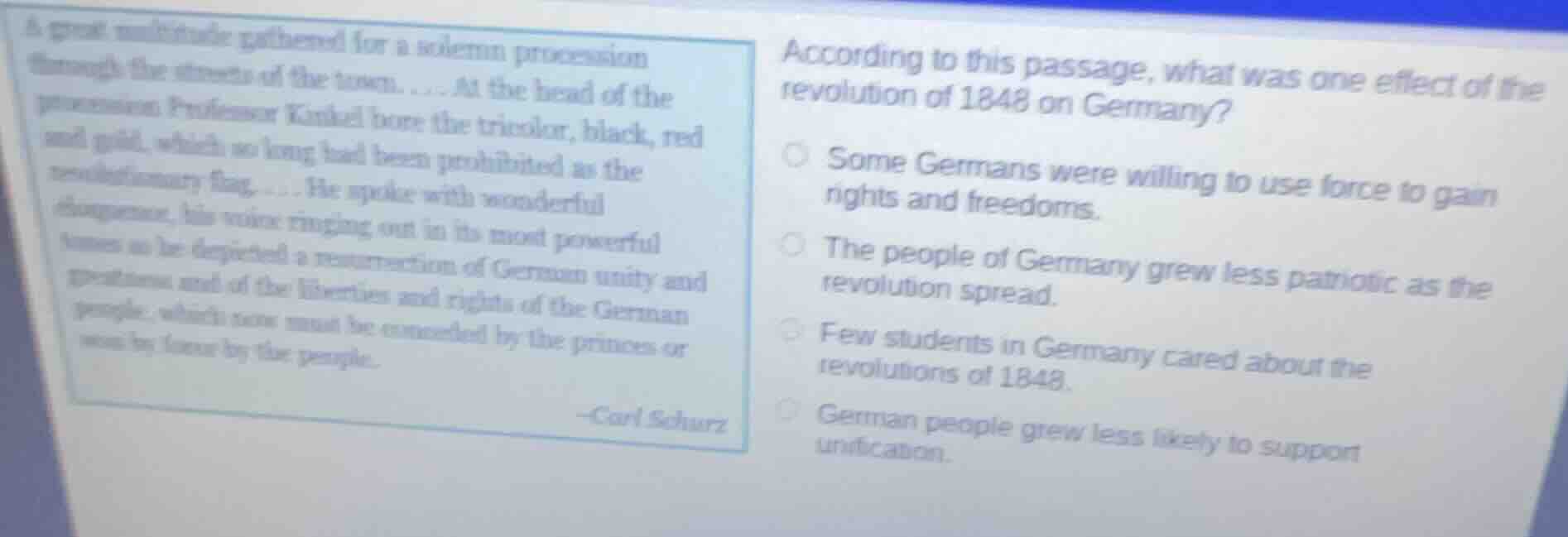
a great multitude gathered for a solemn procession through the streets of the town. . . . at the head of the procession professor kinkel bore the tricolor, black, red and gold, which so long had been prohibited as the revolutionary flag. . . . he spoke with wonderful eloquence, his voice ringing out in its most powerful tones as he depicted a resurrection of german unity and greatness and of the liberties and rights of the german people, which now must be conceded by the princes or won by force by the people.
-carl schurz
according to this passage, what was one effect of the revolution of 1848 on germany?
some germans were willing to use force to gain rights and freedoms.
the people of germany grew less patriotic as the revolution spread.
few students in germany cared about the revolutions of 1848.
german people grew less likely to support unification.
The passage describes a solemn procession with a previously prohibited revolutionary flag, and a speech stating German liberties/rights must be "won by force by the people" if princes do not concede. This aligns with the idea that some Germans accepted using force for rights. The other options contradict the text: the speech promotes patriotism/unity, so the second and fourth options are wrong; the passage focuses on a public (including likely student) demonstration, so the third option is wrong.

Snap & solve any problem in the app
Get step-by-step solutions on Sovi AI
Photo-based solutions with guided steps
Explore more problems and detailed explanations
Some Germans were willing to use force to gain rights and freedoms.