QUESTION IMAGE
Question
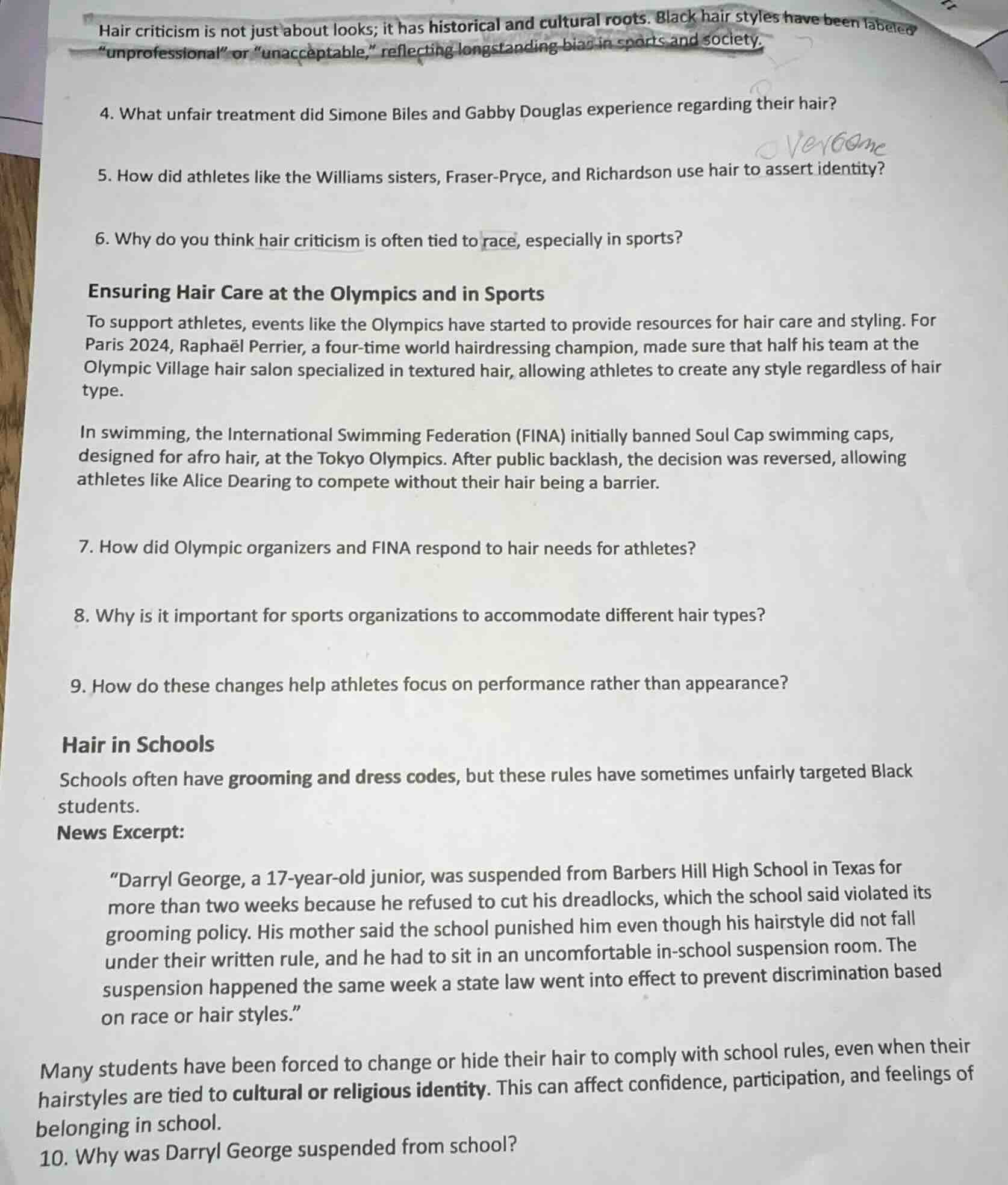
hair criticism is not just about looks; it has historical and cultural roots. black hair styles have been labeled “unprofessional” or “unacceptable,” reflecting longstanding bias in sports and society.
- what unfair treatment did simone biles and gabby douglas experience regarding their hair?
- how did athletes like the williams sisters, fraser - pryce, and richardson use hair to assert identity?
- why do you think hair criticism is often tied to race, especially in sports?
ensuring hair care at the olympics and in sports
to support athletes, events like the olympics have started to provide resources for hair care and styling. for paris 2024, raphaël perrier, a four - time world hairdressing champion, made sure that half his team at the olympic village hair salon specialized in textured hair, allowing athletes to create any style regardless of hair type.
in swimming, the international swimming federation (fina) initially banned soul cap swimming caps, designed for afro hair, at the tokyo olympics. after public backlash, the decision was reversed, allowing athletes like alice dearing to compete without their hair being a barrier.
- how did olympic organizers and fina respond to hair needs for athletes?
- why is it important for sports organizations to accommodate different hair types?
- how do these changes help athletes focus on performance rather than appearance?
hair in schools
schools often have grooming and dress codes, but these rules have sometimes unfairly targeted black students.
news excerpt:
“darryl george, a 17 - year - old junior, was suspended from barbers hill high school in texas for more than two weeks because he refused to cut his dreadlocks, which the school said violated its grooming policy. his mother said the school punished him even though his hairstyle did not fall under their written rule, and he had to sit in an uncomfortable in - school suspension room. the suspension happened the same week a state law went into effect to prevent discrimination based on race or hair styles.”
many students have been forced to change or hide their hair to comply with school rules, even when their hairstyles are tied to cultural or religious identity. this can affect confidence, participation, and feelings of belonging in school.
- why was darryl george suspended from school?
- Simone Biles and Gabby Douglas faced public criticism and scrutiny of their natural Black hairstyles, with their looks being labeled unprofessional or unkempt, reflecting broader bias against Black hair in sports.
- These athletes wore traditional and natural Black hairstyles (like braids, afros, and locs) in competitions, openly embracing their hair as part of their Black identity and rejecting Eurocentric beauty standards in sports.
- Hair criticism is tied to race because sports has long centered Eurocentric beauty norms, framing natural Black hairstyles as "unprofessional" or "disruptive." This stems from historical anti-Black bias that marginalizes cultural expressions of Black identity.
- Olympic organizers for Paris 2024 ensured half the Olympic Village hair salon team specialized in textured hair to support diverse hair needs. FINA initially banned Soul Caps for afro hair at the Tokyo Olympics, but reversed the ban after public backlash.
- Accommodating different hair types promotes equity, respects cultural and racial identities, reduces discrimination, and creates an inclusive environment where all athletes feel valued and supported.
- These changes eliminate the stress and distraction of managing or hiding natural hair to meet unfair standards, letting athletes direct their energy and focus entirely on training and competing.
- Darryl George was suspended for over two weeks because he refused to cut his dreadlocks, which the school claimed violated its grooming policy, even though his mother stated the hairstyle did not break the school's written rules.

Snap & solve any problem in the app
Get step-by-step solutions on Sovi AI
Photo-based solutions with guided steps
Explore more problems and detailed explanations
- They faced criticism of their natural Black hairstyles, which were deemed unprofessional/unkempt due to anti-Black bias in sports.
- They wore natural/traditional Black hairstyles (braids, afros, locs) in competitions to embrace their Black identity and reject Eurocentric beauty norms.
- It stems from anti-Black bias and Eurocentric beauty standards in sports that frame natural Black hairstyles as unprofessional or disruptive.
- Paris 2024 Olympic organizers had half their salon team specialize in textured hair; FINA reversed its ban on Soul Caps after public backlash.
- It promotes equity, respects cultural/racial identities, reduces discrimination, and fosters an inclusive sports environment.
- It removes the distraction and stress of managing hair to meet unfair standards, letting athletes focus on performance.
- He was suspended for refusing to cut his dreadlocks, which the school said violated its grooming policy, despite his mother claiming it did not break written rules.