QUESTION IMAGE
Question
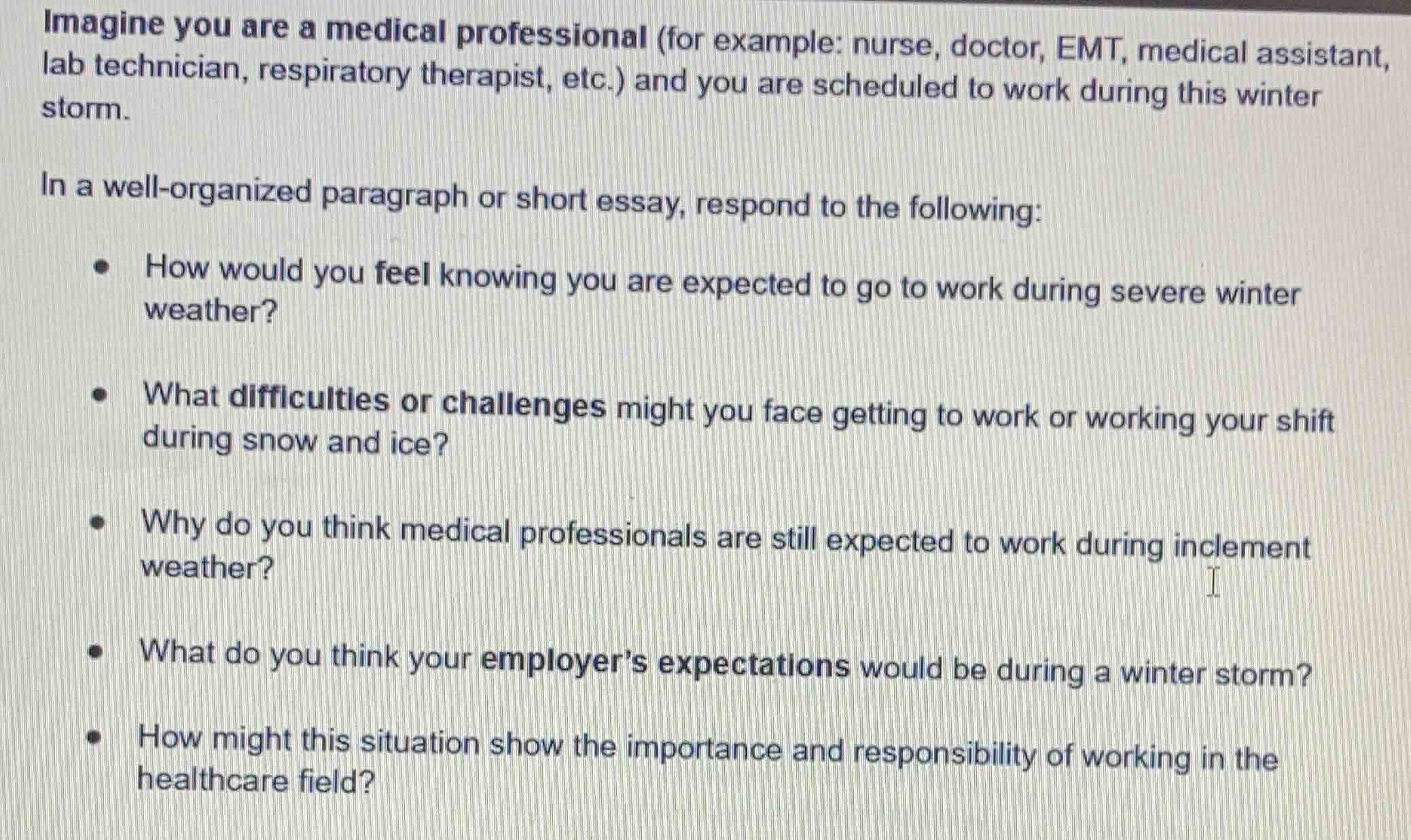
imagine you are a medical professional (for example: nurse, doctor, emt, medical assistant, lab technician, respiratory therapist, etc.) and you are scheduled to work during this winter storm. in a well - organized paragraph or short essay, respond to the following: - how would you feel knowing you are expected to go to work during severe winter weather? - what difficulties or challenges might you face getting to work or working your shift during snow and ice? - why do you think medical professionals are still expected to work during inclement weather? - what do you think your employer’s expectations would be during a winter storm? - how might this situation show the importance and responsibility of working in the healthcare field?
As a nurse, I'd feel a mix of anxiety and duty about working in the winter storm. Anxiety stems from the hazardous travel conditions—snow - covered roads, icy patches, and reduced visibility make commuting extremely dangerous, and there's also the fear of getting stranded or injured on the way. However, a strong sense of duty to patients prevails, as I know they rely on consistent care, especially during emergencies that often spike in severe weather. Getting to work would be a major challenge: my car might struggle on icy roads, public transport could be delayed or canceled, and even walking to a vehicle could lead to slips and falls. Once at work, the shift might be more stressful—higher patient loads due to weather - related injuries or illnesses, and possible staffing shortages if colleagues can't make it in. Medical professionals are expected to work because healthcare is essential; patients don't stop needing care during storms, and emergencies like heart attacks, strokes, or weather - induced injuries still occur. Employers would expect full attendance unless travel is impossible, and even then, to find alternative ways (like carpooling or staying nearby) to fulfill shifts, as the facility must remain staffed to meet patient needs. This situation highlights healthcare's importance—medical workers are frontline defenders, ensuring care continuity when others can stay home, embodying the responsibility to prioritize others' well - being over personal comfort or safety.

Snap & solve any problem in the app
Get step-by-step solutions on Sovi AI
Photo-based solutions with guided steps
Explore more problems and detailed explanations
As a nurse, I'd feel anxious about hazardous travel but duty - bound to patients. Challenges: dangerous commute (icy roads, transport issues), potential staffing shortages, and higher patient loads. Medical pros work as healthcare is essential (patients still need care). Employers expect attendance (or alternative arrangements) to keep facilities staffed. This shows healthcare's importance—workers prioritize others' well - being over personal safety.