QUESTION IMAGE
Question
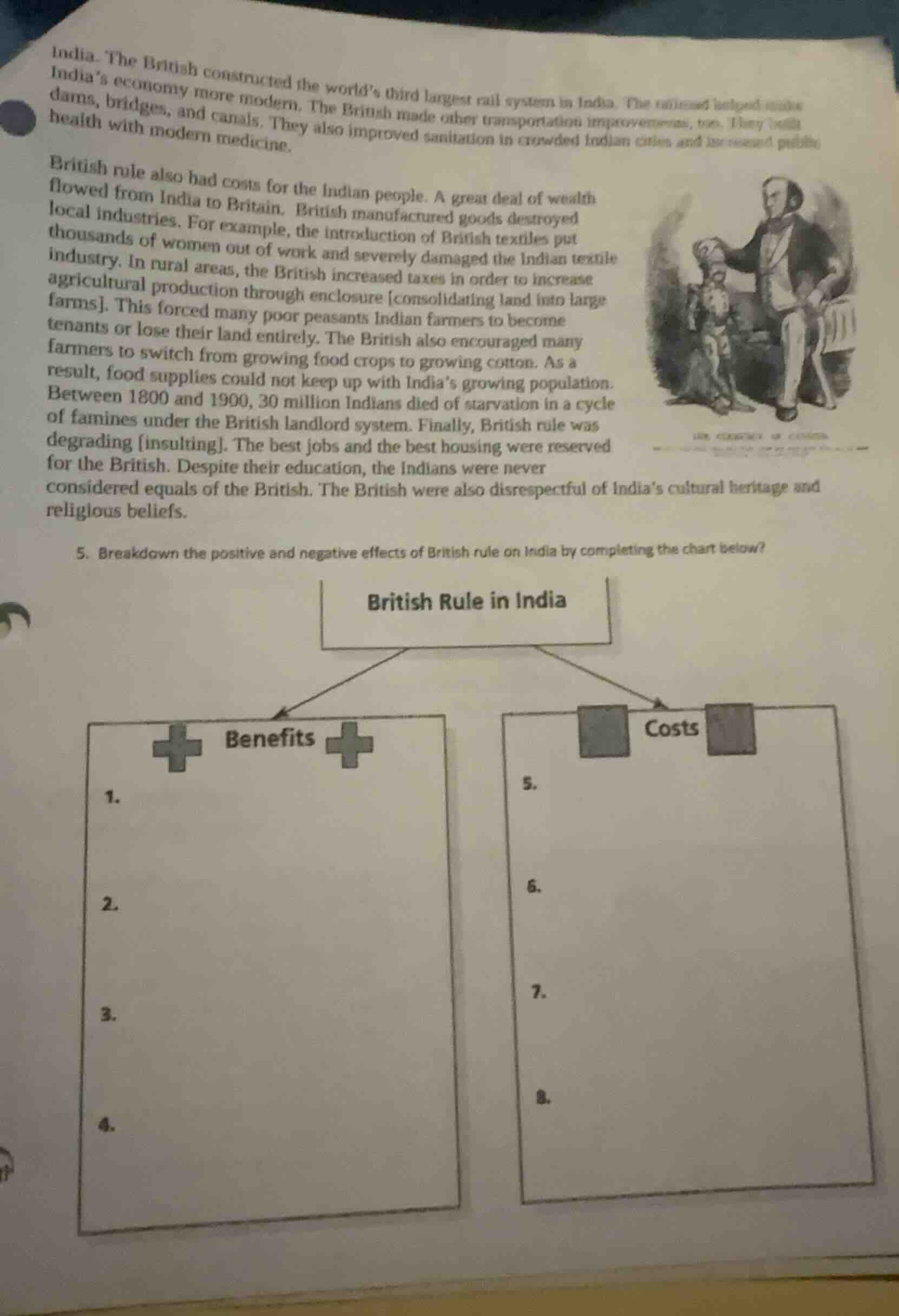
india. the british constructed the world’s third largest rail system in india. the railroad helped make india’s economy more modern. the british made other transportation improvements, too. they built dams, bridges, and canals. they also improved sanitation in crowded indian cities and increased public health with modern medicine. british rule also had costs for the indian people. a great deal of wealth flowed from india to britain. british manufactured goods destroyed local industries. for example, the introduction of british textiles put thousands of women out of work and severely damaged the indian textile industry. in rural areas, the british increased taxes in order to increase agricultural production through enclosure consolidating land into large farms. this forced many poor peasants indian farmers to become tenants or lose their land entirely. the british also encouraged many farmers to switch from growing food crops to growing cotton. as a result, food supplies could not keep up with india’s growing population. between 1800 and 1900, 30 million indians died of starvation in a cycle of famines under the british landlord system. finally, british rule was degrading insulting. the best jobs and the best housing were reserved for the british. despite their education, the indians were never considered equals of the british. the british were also disrespectful of india’s cultural heritage and religious beliefs. 5. breakdown the positive and negative effects of british rule on india by completing the chart below? british rule in india + benefits + 1. 2. 3. 4. costs 5. 6. 7. 8.
All points are directly extracted from the provided text about British rule in India, separating positive benefits and negative costs as required.

Snap & solve any problem in the app
Get step-by-step solutions on Sovi AI
Photo-based solutions with guided steps
Explore more problems and detailed explanations
Benefits
- Built the world's third largest rail system and other transportation infrastructure (dams, bridges, canals) to modernize India's economy
- Improved sanitation in crowded Indian cities
- Increased public health access with modern medicine
Costs
- Large amounts of wealth flowed from India to Britain
- British manufactured goods destroyed local industries (e.g., Indian textile industry, putting thousands of women out of work)
- Increased taxes and enclosure forced poor peasants to become tenants or lose land; switching to cotton crops caused food shortages and 30 million Indians died of starvation between 1800-1900
- British rule was degrading: reserved best jobs/housing for British, treated Indians as unequal, disrespected Indian cultural heritage and religious beliefs