QUESTION IMAGE
Question
invasive species
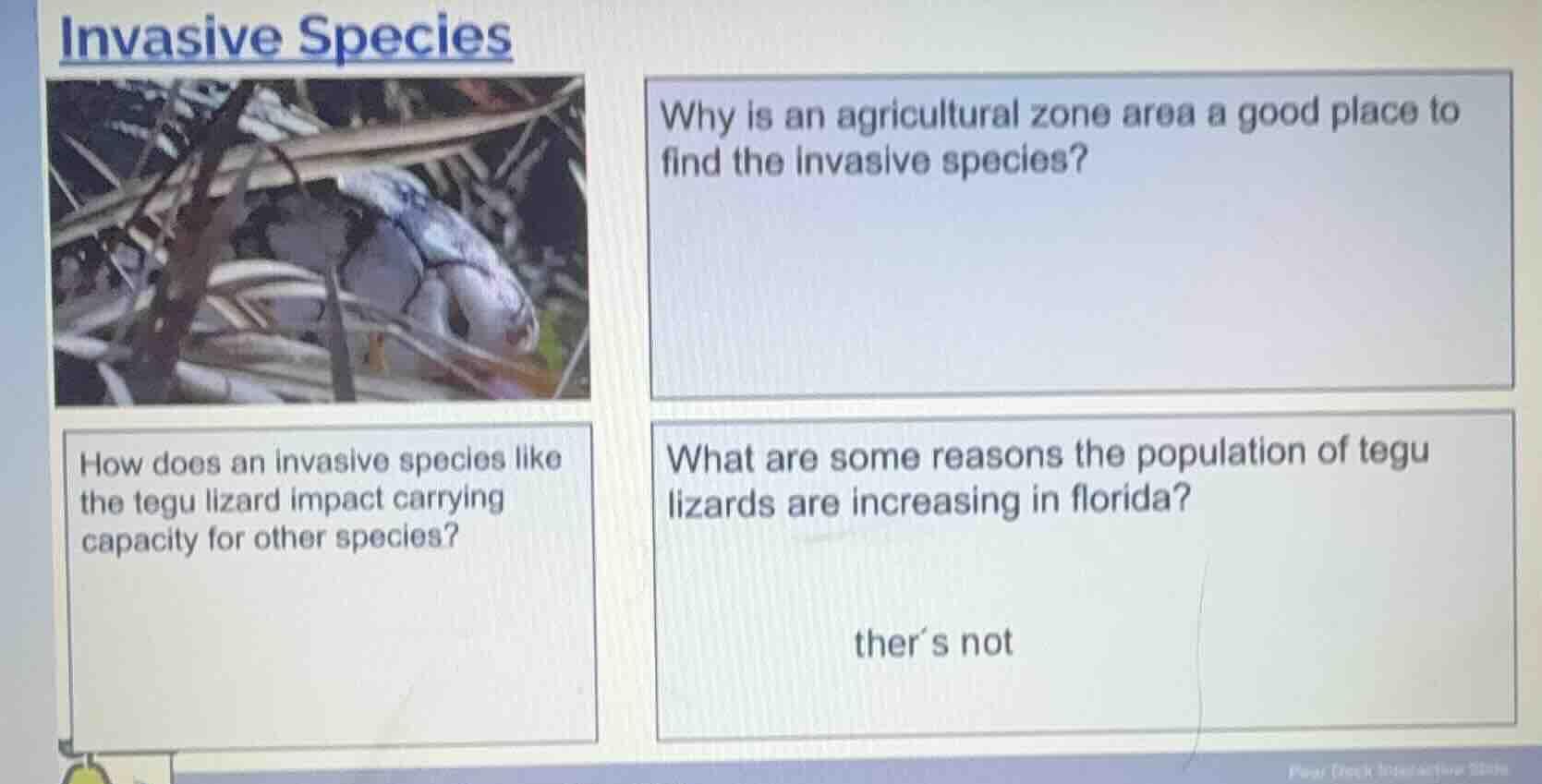
why is an agricultural zone area a good place to find the invasive species?
how does an invasive species like the tegu lizard impact carrying capacity for other species?
what are some reasons the population of tegu lizards are increasing in florida?
ther’s not
Brief Explanations
- For the agricultural zone question: Agricultural areas have abundant food sources (crops, livestock feed, insect prey), consistent water access, and often disturbed habitats that invasive species adapt to easily, as native species may struggle with modified environments.
- For the tegu and carrying capacity question: Tegus compete with native species for food and shelter, prey on native animals (eggs, small mammals, reptiles) reducing their numbers, and alter resource availability, lowering the maximum population size native species can sustain.
- For tegu population growth in Florida question: Tegus have no natural predators in Florida, they are omnivorous with access to abundant food, they have high reproductive rates, and human activities (accidental release from pet trade, intentional releases) introduce new individuals, while warm Florida climate matches their native tropical habitat.

Snap & solve any problem in the app
Get step-by-step solutions on Sovi AI
Photo-based solutions with guided steps
Explore more problems and detailed explanations
- Agricultural zones offer abundant food, water, and disturbed habitats that invasive species thrive in, as these modified environments favor adaptable non-native organisms over some native species.
- Tegu lizards reduce carrying capacity for other species by competing for limited resources (food, shelter), preying on native species and their eggs, and disrupting local ecosystem dynamics that support native populations.
- Tegu lizard populations are increasing in Florida because:
- They lack natural predators in the region
- They have a flexible omnivorous diet with abundant local food sources
- They have high reproductive output
- Human-related introductions (pet trade releases/escapes) add to their numbers
- Florida's warm, subtropical climate matches their native habitat needs