QUESTION IMAGE
Question
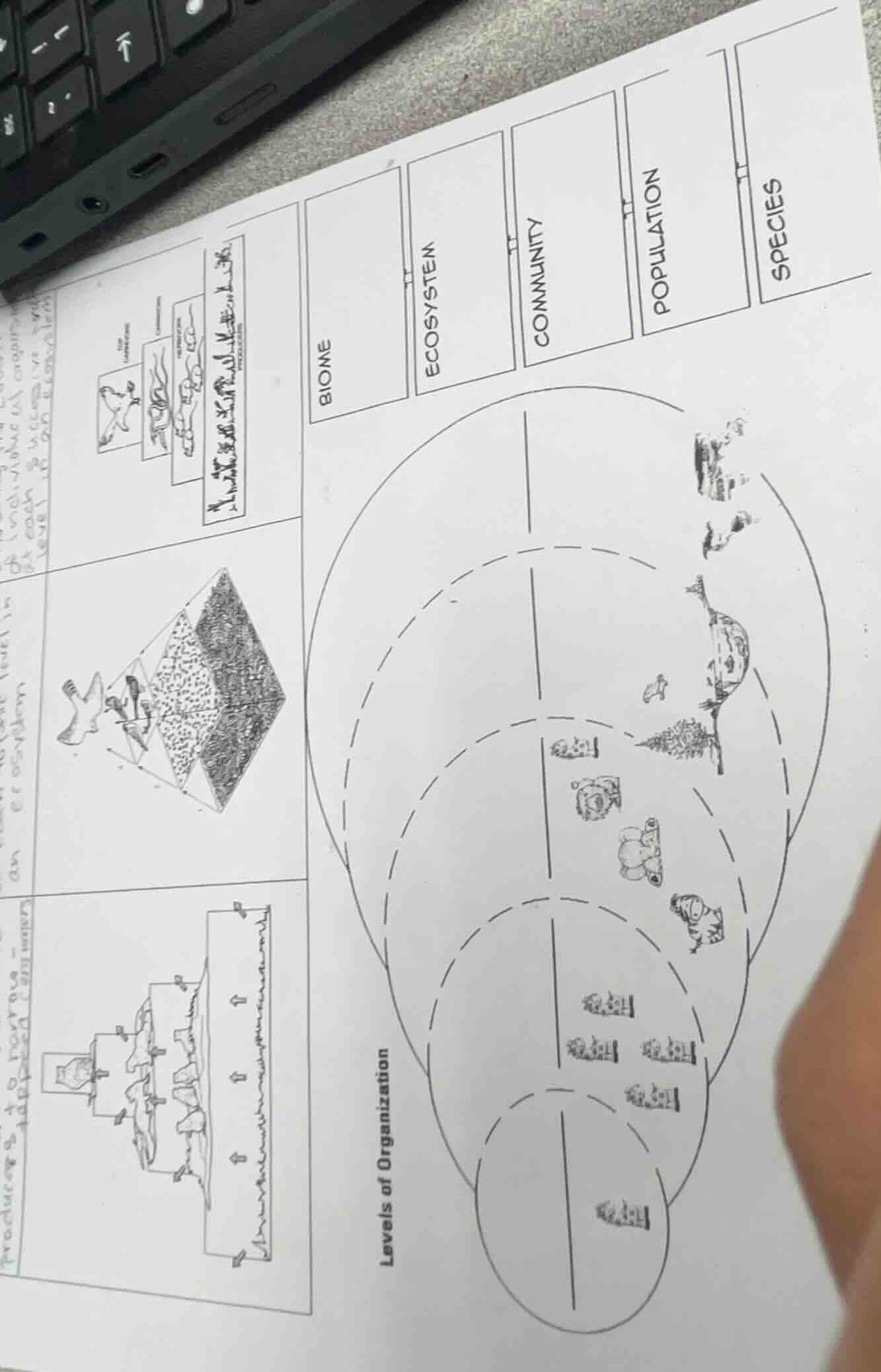
levels of organization
biome
ecosystem
community
population
species
To solve this problem about the levels of ecological organization, we analyze the components of each level:
1. Species
A species is a group of organisms that can interbreed to produce fertile offspring. In the diagram, the smallest circle (representing the most specific level) should contain a single type of organism (e.g., a group of the same species, like a single species of tree or animal).
2. Population
A population consists of all individuals of the same species living in a specific area. So, the next circle (larger than the species circle) should contain multiple individuals of that same species (e.g., a population of the same tree or animal species).
3. Community
A community includes all populations (of different species) that interact in a specific area. This circle is larger than the population circle and contains multiple species (e.g., trees, animals, fungi, etc., that coexist in a habitat).
4. Ecosystem
An ecosystem includes the community (all living organisms) plus the abiotic (non - living) components of the environment (e.g., soil, water, sunlight, climate). This circle is larger than the community circle and includes both biotic (living) and abiotic (non - living) elements.
5. Biome
A biome is a large geographic area with similar climates, ecosystems, and communities. It encompasses multiple ecosystems with similar characteristics (e.g., a tropical rainforest biome includes many rainforest ecosystems across different regions).
To fill the diagram:
- The smallest circle (Species) → A single species (e.g., a group of oak trees of the same species).
- Next (Population) → Multiple individuals of that oak tree species.
- Next (Community) → Oak trees, plus other species like squirrels, birds, fungi, etc., that live with them.
- Next (Ecosystem) → The oak forest community plus soil, water, sunlight, and climate of the forest.
- Largest circle (Biome) → The temperate deciduous forest biome (if the oak forest is part of this biome), including multiple temperate deciduous forest ecosystems.
If we assume the organisms in the diagram:
- Species: A single type of organism (e.g., the small group of the same - looking trees or animals).
- Population: Multiple of that same organism (e.g., several of the same tree or animal).
- Community: Different species (e.g., trees, different animals, maybe plants) interacting.
- Ecosystem: The community plus non - living things (e.g., the background representing soil, sky for climate).
- Biome: A large region with similar ecosystems (e.g., a forest biome if the ecosystem is a forest).
For example, if the diagram has a small circle with one type of tree (species), the next with many of that tree (population), then with trees, animals, etc. (community), then with trees, animals, and a landscape (ecosystem), and the largest with a broader landscape (biome).

Snap & solve any problem in the app
Get step-by-step solutions on Sovi AI
Photo-based solutions with guided steps
Explore more problems and detailed explanations
To solve this problem about the levels of ecological organization, we analyze the components of each level:
1. Species
A species is a group of organisms that can interbreed to produce fertile offspring. In the diagram, the smallest circle (representing the most specific level) should contain a single type of organism (e.g., a group of the same species, like a single species of tree or animal).
2. Population
A population consists of all individuals of the same species living in a specific area. So, the next circle (larger than the species circle) should contain multiple individuals of that same species (e.g., a population of the same tree or animal species).
3. Community
A community includes all populations (of different species) that interact in a specific area. This circle is larger than the population circle and contains multiple species (e.g., trees, animals, fungi, etc., that coexist in a habitat).
4. Ecosystem
An ecosystem includes the community (all living organisms) plus the abiotic (non - living) components of the environment (e.g., soil, water, sunlight, climate). This circle is larger than the community circle and includes both biotic (living) and abiotic (non - living) elements.
5. Biome
A biome is a large geographic area with similar climates, ecosystems, and communities. It encompasses multiple ecosystems with similar characteristics (e.g., a tropical rainforest biome includes many rainforest ecosystems across different regions).
To fill the diagram:
- The smallest circle (Species) → A single species (e.g., a group of oak trees of the same species).
- Next (Population) → Multiple individuals of that oak tree species.
- Next (Community) → Oak trees, plus other species like squirrels, birds, fungi, etc., that live with them.
- Next (Ecosystem) → The oak forest community plus soil, water, sunlight, and climate of the forest.
- Largest circle (Biome) → The temperate deciduous forest biome (if the oak forest is part of this biome), including multiple temperate deciduous forest ecosystems.
If we assume the organisms in the diagram:
- Species: A single type of organism (e.g., the small group of the same - looking trees or animals).
- Population: Multiple of that same organism (e.g., several of the same tree or animal).
- Community: Different species (e.g., trees, different animals, maybe plants) interacting.
- Ecosystem: The community plus non - living things (e.g., the background representing soil, sky for climate).
- Biome: A large region with similar ecosystems (e.g., a forest biome if the ecosystem is a forest).
For example, if the diagram has a small circle with one type of tree (species), the next with many of that tree (population), then with trees, animals, etc. (community), then with trees, animals, and a landscape (ecosystem), and the largest with a broader landscape (biome).