QUESTION IMAGE
Question
mountains and earths changing surface
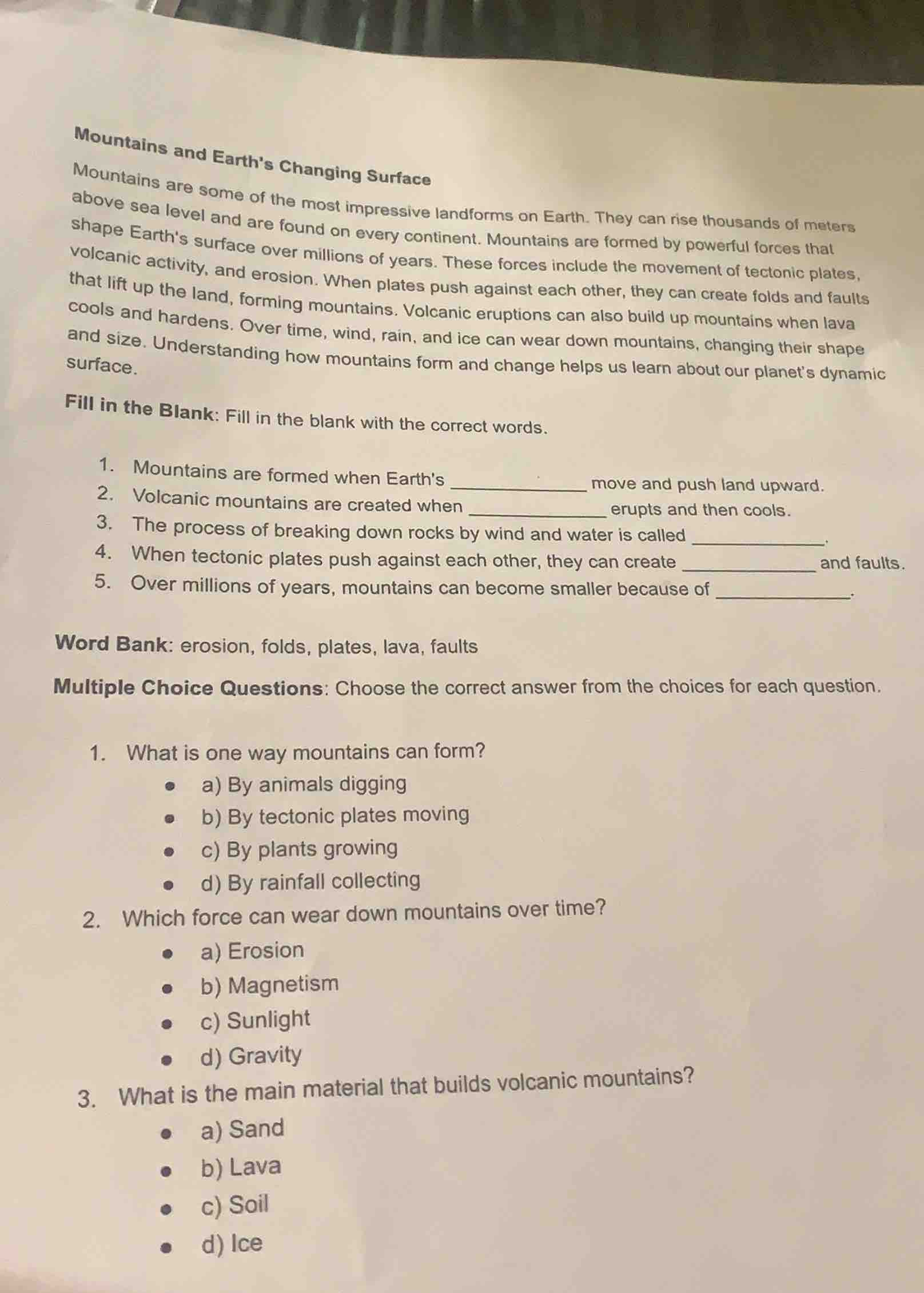
mountains are some of the most impressive landforms on earth. they can rise thousands of meters above sea level and are found on every continent. mountains are formed by powerful forces that shape earths surface over millions of years. these forces include the movement of tectonic plates, volcanic activity, and erosion. when plates push against each other, they can create folds and faults that lift up the land, forming mountains. volcanic eruptions can also build up mountains when lava cools and hardens. over time, wind, rain, and ice can wear down mountains, changing their shape and size. understanding how mountains form and change helps us learn about our planets dynamic surface.
fill in the blank: fill in the blank with the correct words.
- mountains are formed when earths __________ move and push land upward.
- volcanic mountains are created when __________ erupts and then cools.
- the process of breaking down rocks by wind and water is called __________.
- when tectonic plates push against each other, they can create __________ and faults.
- over millions of years, mountains can become smaller because of __________.
word bank: erosion, folds, plates, lava, faults
multiple choice questions: choose the correct answer from the choices for each question.
- what is one way mountains can form?
- a) by animals digging
- b) by tectonic plates moving
- c) by plants growing
- d) by rainfall collecting
- which force can wear down mountains over time?
- a) erosion
- b) magnetism
- c) sunlight
- d) gravity
- what is the main material that builds volcanic mountains?
- a) sand
- b) lava
- c) soil
- d) ice
Las respuestas se basan en el texto introductorio que describe la formación y modificación de las montañas, así como en el banco de palabras proporcionado.
Rellenar los espacios en blanco:
- El texto indica que los movimientos de las placas tectónicas forman montañas al empujar la tierra hacia arriba.
- Se menciona que las erupciones volcánicas construyen montañas cuando la lava se enfría y endurece.
- Se define que la erosión es el proceso por el que el viento y el agua desgastan las rocas.
- Cuando las placas tectónicas chocan, crean pliegues (folds) y fallas (faults).
- El texto explica que la erosión por viento, lluvia y hielo va reduciendo el tamaño de las montañas con el tiempo.
Preguntas de opción múltiple:
- La única forma de formación de montañas mencionada en las opciones es el movimiento de las placas tectónicas.
- El texto señala que la erosión es la fuerza que desgasta las montañas a lo largo del tiempo.
- Se indica que la lava es el material que forma las montañas volcánicas al enfriarse y endurecerse.

Snap & solve any problem in the app
Get step-by-step solutions on Sovi AI
Photo-based solutions with guided steps
Explore more problems and detailed explanations
Fill in the Blank:
- plates
- lava
- erosion
- folds
- erosion
Multiple Choice Questions:
- b) By tectonic plates moving
- a) Erosion
- b) Lava