QUESTION IMAGE
Question
4 multiple choice 1 point
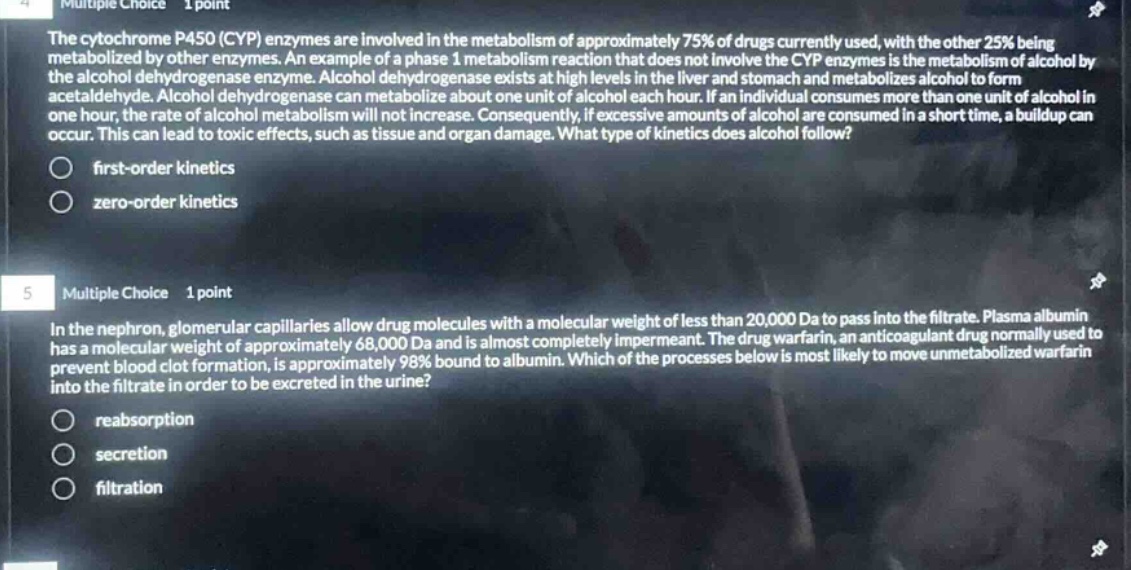
the cytochrome p450 (cyp) enzymes are involved in the metabolism of approximately 75% of drugs currently used, with the other 25% being metabolized by other enzymes. an example of a phase 1 metabolism reaction that does not involve the cyp enzymes is the metabolism of alcohol by the alcohol dehydrogenase enzyme. alcohol dehydrogenase exists at high levels in the liver and stomach and metabolizes alcohol to form acetaldehyde. alcohol dehydrogenase can metabolize about one unit of alcohol each hour. if an individual consumes more than one unit of alcohol in one hour, the rate of alcohol metabolism will not increase. consequently, if excessive amounts of alcohol are consumed in a short time, a buildup can occur. this can lead to toxic effects, such as tissue and organ damage. what type of kinetics does alcohol follow?
first-order kinetics
zero-order kinetics
5 multiple choice 1 point
in the nephron, glomerular capillaries allow drug molecules with a molecular weight of less than 20,000 da to pass into the filtrate. plasma albumin has a molecular weight of approximately 68,000 da and is almost completely impermeant. the drug warfarin, an anticoagulant drug normally used to prevent blood clot formation, is approximately 98% bound to albumin. which of the processes below is most likely to move unmetabolized warfarin into the filtrate in order to be excreted in the urine?
reabsorption
secretion
filtration
For question 4: Zero-order kinetics means the reaction rate is constant regardless of substrate concentration. Here, alcohol dehydrogenase metabolizes 1 unit of alcohol per hour, and the rate does not increase even with more alcohol consumed, which matches zero-order kinetics.
For question 5: Filtration only allows molecules under 20,000 Da to pass, and warfarin is mostly bound to albumin (68,000 Da) so it can't be filtered. Reabsorption moves substances back into blood, not into filtrate. Secretion actively transports substances from blood into the filtrate, which is the way unmetabolized warfarin would enter filtrate for excretion.

Snap & solve any problem in the app
Get step-by-step solutions on Sovi AI
Photo-based solutions with guided steps
Explore more problems and detailed explanations
- zero-order kinetics
- secretion