QUESTION IMAGE
Question
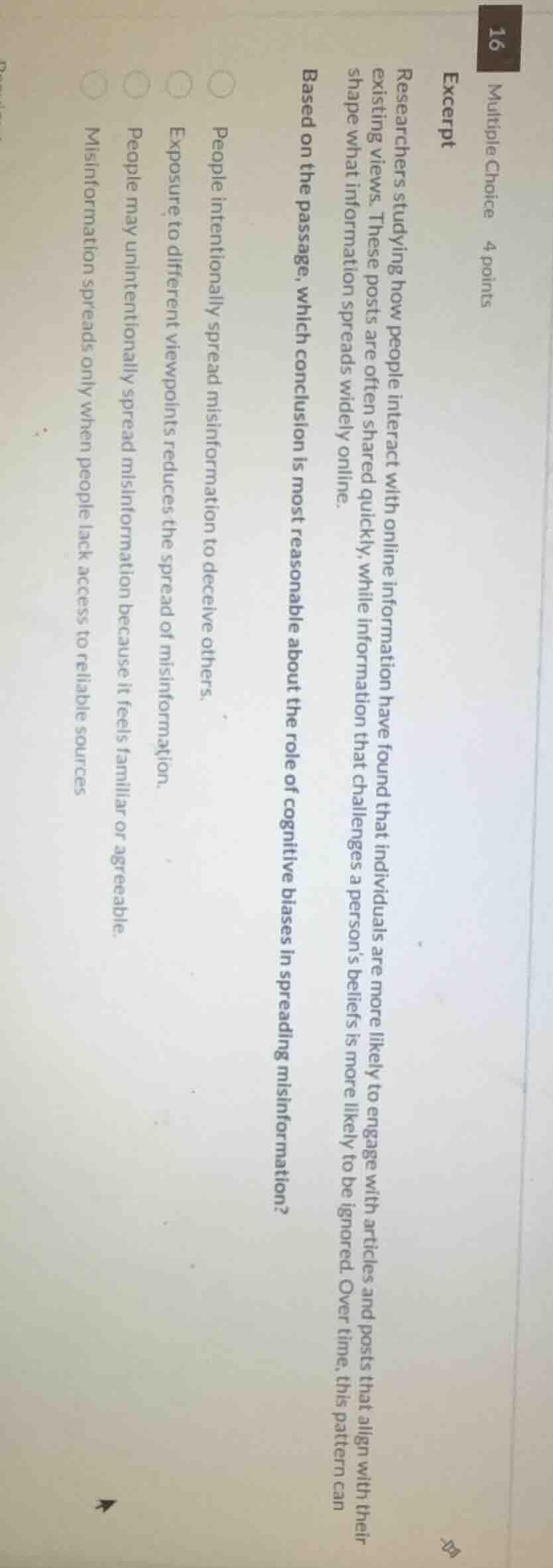
multiple choice 4 points excerpt researchers studying how people interact with online information have found that individuals are more likely to engage with articles and posts that align with their existing views. these posts are often shared quickly, while information that challenges a person’s beliefs is more likely to be ignored. over time, this pattern can based on the passage, which conclusion is most reasonable about the role of cognitive biases in spreading misinformation? people intentionally spread misinformation to deceive others. exposure to different viewpoints reduces the spread of misinformation. people may unintentionally spread misinformation because it feels familiar or agreeable. misinformation spreads only when people lack access to reliable sources
The excerpt states people engage more with content matching their existing views, sharing it quickly, while contradictory content is ignored. This aligns with cognitive biases (like confirmation bias) that make people favor familiar/agreeable information, leading to unintentional spread of misinformation that fits their beliefs. The other options are unsupported: the text does not mention intentional deception, reduced spread from diverse viewpoints, or misinformation spreading only due to lack of reliable sources.

Snap & solve any problem in the app
Get step-by-step solutions on Sovi AI
Photo-based solutions with guided steps
Explore more problems and detailed explanations
C. People may unintentionally spread misinformation because it feels familiar or agreeable.