QUESTION IMAGE
Question
mutations & meiosis
answer the following questions about the image above:
- how are these organisms similar?
- how are these organisms different?
- what are some biological processes that may lead between these organisms?
- are there benefits to similarities among organism
- are there benefits to differences among organisr
Brief Explanations
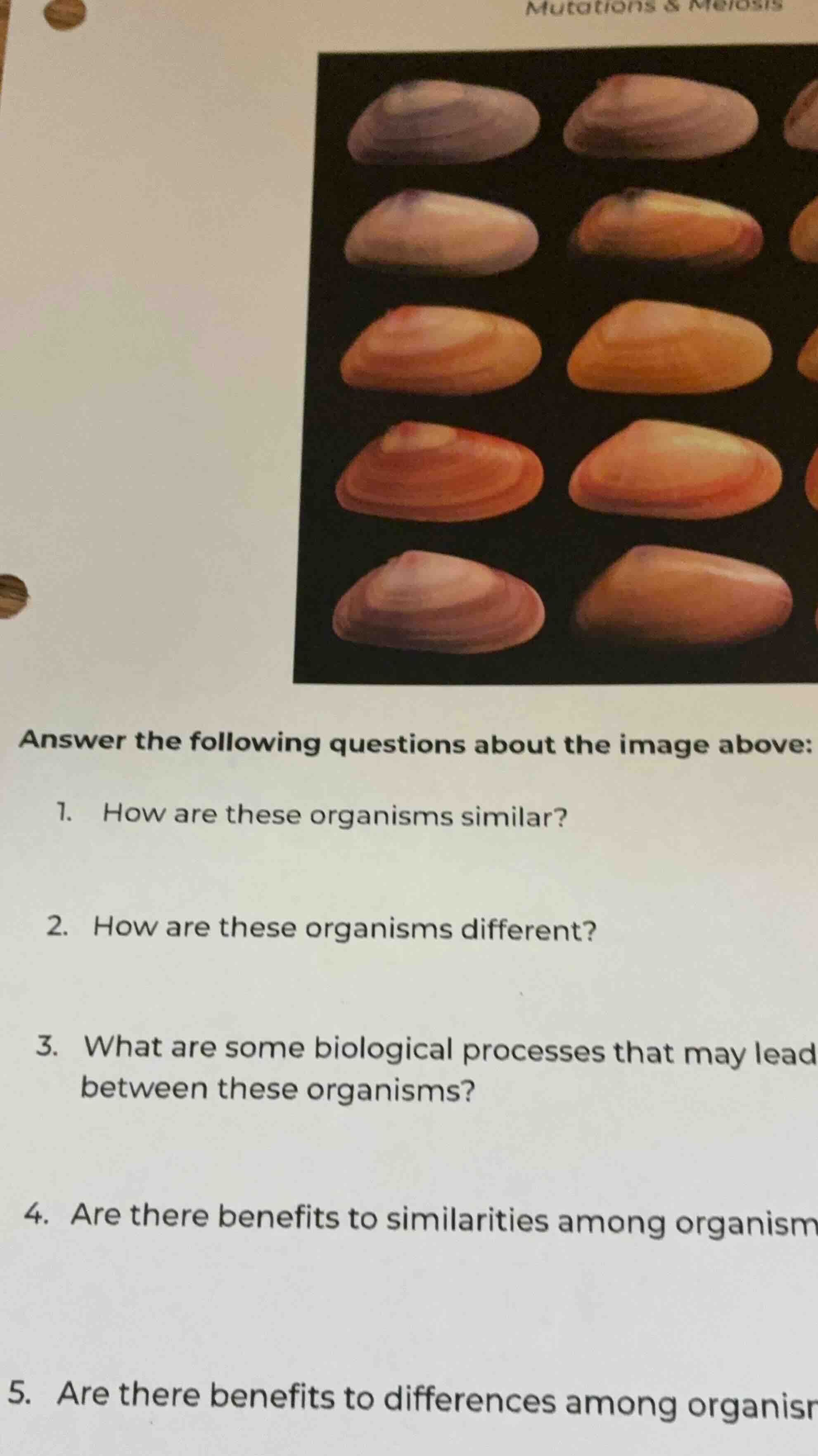
- For similarities: All organisms share the same core body/shell shape (elongated, bivalve form), meaning they belong to the same taxonomic group (bivalve mollusks) and share a common genetic blueprint for basic structure.
- For differences: The visible variations are in shell color (ranging from dark purple to bright orange) and subtle differences in shell patterning, which are phenotypic variations.
- For biological processes: Mutations (random genetic changes) create new genetic variants, meiosis (with crossing over and independent assortment) generates genetic diversity in gametes, and sexual reproduction combines genetic material from two parents to create unique offspring. Natural selection can also favor certain traits in different environments, amplifying differences.
- For benefits of similarities: Shared structural traits mean they share successful adaptations (like the bivalve shell for protection and burrowing) suited to their habitat, and they can use the same food sources and habitat niches. Similar genetic makeup also allows for successful mating within the group.
- For benefits of differences: Genetic and phenotypic variation helps the population survive environmental changes (e.g., different shell colors may provide camouflage in different microhabitats, or help avoid predation if predators target a specific color). Variation also reduces competition for resources if some individuals can exploit slightly different resources.

Snap & solve any problem in the app
Get step-by-step solutions on Sovi AI
Photo-based solutions with guided steps
Explore more problems and detailed explanations
- All these organisms are bivalve mollusks, so they share the same elongated, two-part shell body shape, and they belong to the same broad species group with a shared basic genetic and anatomical blueprint.
- The organisms differ in their shell color (ranging from dark purplish tones to bright orange/red hues) and subtle variations in shell patterning and shade.
- Biological processes leading to these differences include: random genetic mutations that create new color-related alleles; meiosis (via crossing over and independent assortment) that shuffles genetic material to produce unique gametes; sexual reproduction that combines genetic material from two parents to create genetically unique offspring; and natural selection that may favor certain shell colors in specific environmental conditions.
- Yes, similarities benefit the organisms: their shared bivalve structure is a successful adaptation for burrowing, protection, and feeding in their aquatic habitat; shared genetics allow for viable sexual reproduction within the group; and they can exploit the same food sources and environmental niches efficiently.
- Yes, differences benefit the organisms: phenotypic variation (like shell color) provides camouflage in different microhabitats, reducing predation risk; genetic variation helps the population survive environmental shifts (e.g., changes in predator preferences or water conditions); and variation can reduce intraspecific competition by allowing some individuals to use slightly different resources.