QUESTION IMAGE
Question
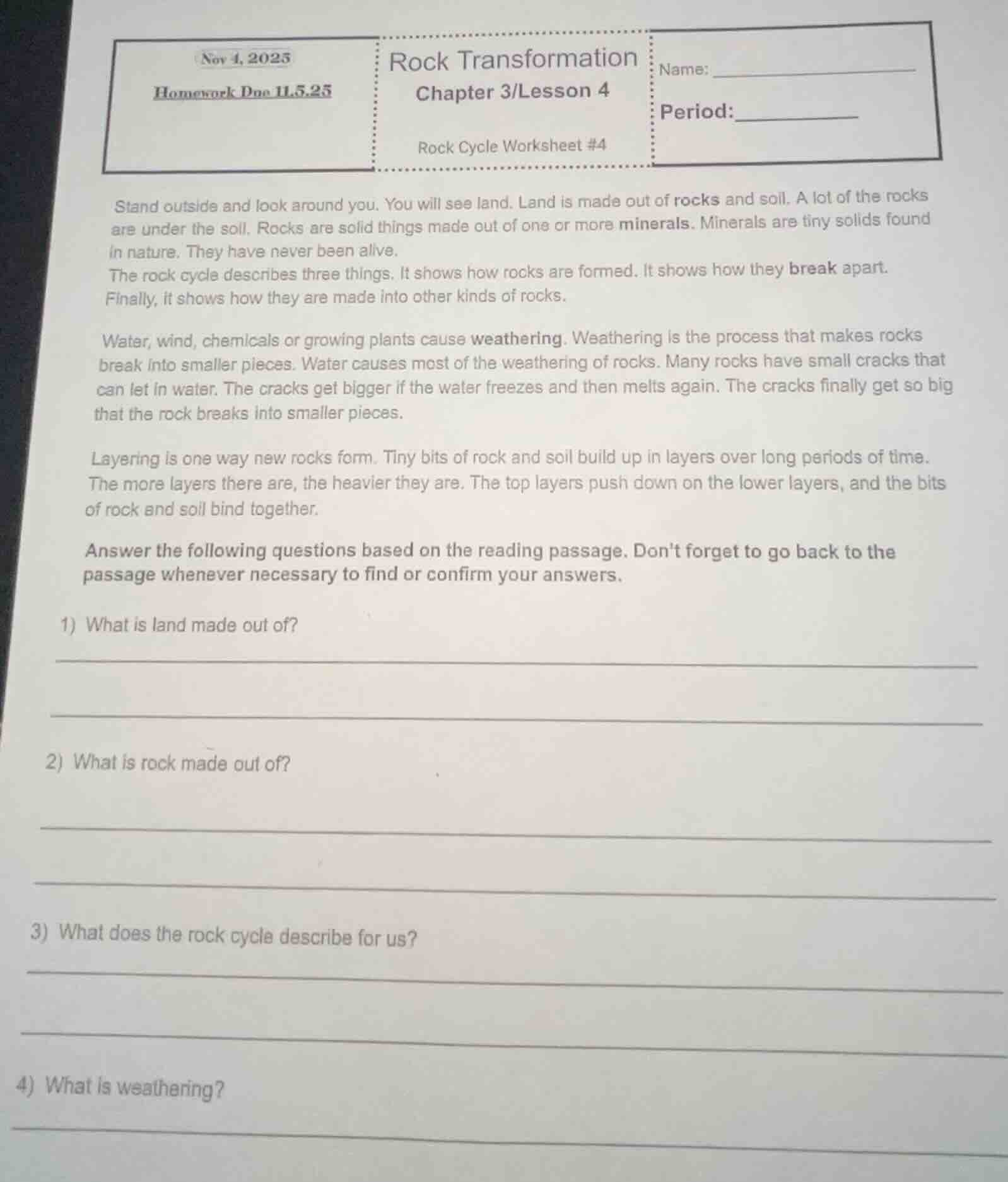
nov 1, 2025
homework due 11.5.25
rock transformation
chapter 3/lesson 4
rock cycle worksheet #4
name:
period:
stand outside and look around you. you will see land. land is made out of rocks and soil. a lot of the rocks are under the soil. rocks are solid things made out of one or more minerals. minerals are tiny solids found in nature. they have never been alive.
the rock cycle describes three things. it shows how rocks are formed. it shows how they break apart. finally, it shows how they are made into other kinds of rocks.
water, wind, chemicals or growing plants cause weathering. weathering is the process that makes rocks break into smaller pieces. water causes most of the weathering of rocks. many rocks have small cracks that can let in water. the cracks get bigger if the water freezes and then melts again. the cracks finally get so big that the rock breaks into smaller pieces.
layering is one way new rocks form. tiny bits of rock and soil build up in layers over long periods of time. the more layers there are, the heavier they are. the top layers push down on the lower layers, and the bits of rock and soil bind together.
answer the following questions based on the reading passage. dont forget to go back to the passage whenever necessary to find or confirm your answers.
- what is land made out of?
- what is rock made out of?
- what does the rock cycle describe for us?
- what is weathering?
All answers are directly sourced from the provided reading passage, matching each question to the corresponding descriptive text.

Snap & solve any problem in the app
Get step-by-step solutions on Sovi AI
Photo-based solutions with guided steps
Explore more problems and detailed explanations
- Land is made out of rocks and soil.
- Rocks are made out of one or more minerals.
- The rock cycle describes three things: how rocks are formed, how they break apart, and how they are made into other kinds of rocks.
- Weathering is the process that makes rocks break into smaller pieces, caused by water, wind, chemicals, or growing plants.