QUESTION IMAGE
Question
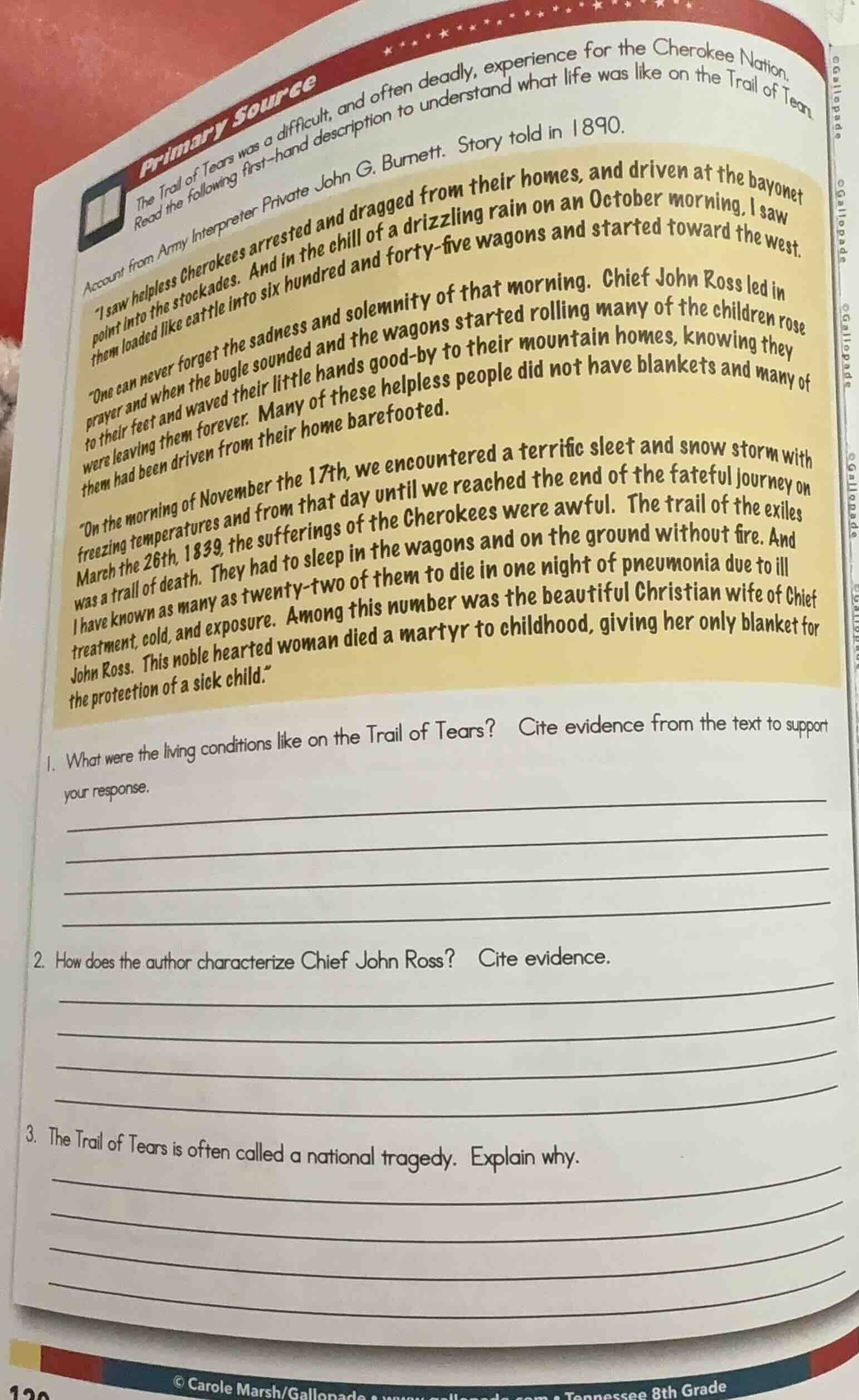
primary source
the trail of tears was a difficult, and often deadly, experience for the cherokee nation.
read the following first - hand description to understand what life was like on the trail of tears.
account from army interpreter private john g. burnett. story told in 1890.
\i saw helpless cherokees arrested and dragged from their homes, and driven at the bayonet point into the stockades. and in the chill of a drizzling rain on an october morning, i saw them loaded like cattle into six hundred and forty - five wagons and started toward the west.
\one can never forget the sadness and solemnity of that morning. chief john ross led in prayer and when the bugle sounded and the wagons started rolling many of the children rose to their feet and waved their little hands good - by to their mountain homes, knowing they were leaving them forever. many of these helpless people did not have blankets and many of them had been driven from their home barefooted.
\on the morning of november the 17th, we encountered a terrific sleet and snow storm with freezing temperatures and from that day until we reached the end of the fateful journey on march the 26th, 1839, the sufferings of the cherokees were awful. the trail of the exiles was a trail of death. they had to sleep in the wagons and on the ground without fire. and i have known as many as twenty - two of them to die in one night of pneumonia due to ill treatment, cold, and exposure. among this number was the beautiful christian wife of chief john ross. this noble hearted woman died a martyr to childhood, giving her only blanket for the protection of a sick child.\
- what were the living conditions like on the trail of tears? cite evidence from the text to support your response.
- how does the author characterize chief john ross? cite evidence.
- the trail of tears is often called a national tragedy. explain why.
- Evidence includes: the Cherokee were "driven from their home barefooted" with no blankets; they faced a "terrific sleet and snow storm with freezing temperatures"; they slept "in the wagons and on the ground without fire"; as many as 22 died in one night from pneumonia, cold, and exposure.
- Evidence includes: he "led in prayer" as the wagons departed, showing he was a respected, guiding leader; his wife is described as a "noble hearted woman [who] died a martyr to childhood," framing him as part of a virtuous, respected family tied to the Cherokee community.
- It was a tragedy because the Cherokee were violently arrested and dragged from their homes against their will; they endured extreme cold, lack of basic supplies, and deadly weather during the forced march; hundreds suffered and died, representing a large-scale, unjust humanitarian disaster inflicted on the Cherokee Nation by the U.S. government.

Snap & solve any problem in the app
Get step-by-step solutions on Sovi AI
Photo-based solutions with guided steps
Explore more problems and detailed explanations
- The living conditions were extremely harsh and deadly.
- The author characterizes Chief John Ross as a respected leader with a loyal, noble family.
- The Trail of Tears is a national tragedy due to the forced displacement, mass suffering, and high death toll of the Cherokee Nation.