QUESTION IMAGE
Question
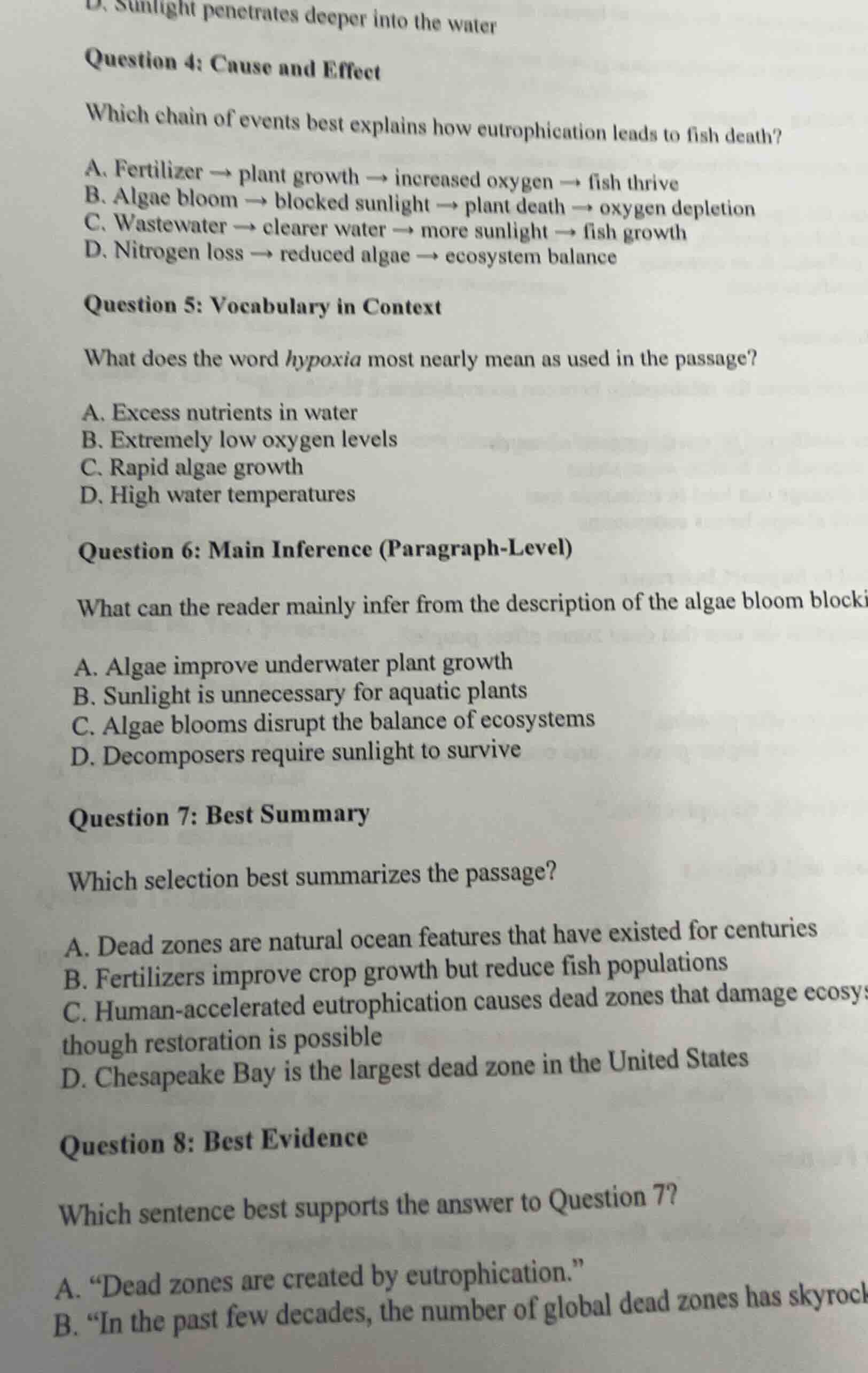
question 4: cause and effect
which chain of events best explains how eutrophication leads to fish death?
a. fertilizer → plant growth → increased oxygen → fish thrive
b. algae bloom → blocked sunlight → plant death → oxygen depletion
c. wastewater → clearer water → more sunlight → fish growth
d. nitrogen loss → reduced algae → ecosystem balance
question 5: vocabulary in context
what does the word hypoxia most nearly mean as used in the passage?
a. excess nutrients in water
b. extremely low oxygen levels
c. rapid algae growth
d. high water temperatures
question 6: main inference (paragraph-level)
what can the reader mainly infer from the description of the algae bloom blocki
a. algae improve underwater plant growth
b. sunlight is unnecessary for aquatic plants
c. algae blooms disrupt the balance of ecosystems
d. decomposers require sunlight to survive
question 7: best summary
which selection best summarizes the passage?
a. dead zones are natural ocean features that have existed for centuries
b. fertilizers improve crop growth but reduce fish populations
c. human-accelerated eutrophication causes dead zones that damage ecosy
though restoration is possible
d. chesapeake bay is the largest dead zone in the united states
question 8: best evidence
which sentence best supports the answer to question 7?
a. “dead zones are created by eutrophication.”
b. “in the past few decades, the number of global dead zones has skyrock
Question 4:
Eutrophication starts with excess nutrients causing algae blooms. Blooms block sunlight, killing aquatic plants. Decomposition of dead plants uses up oxygen, leading to fish death.
Question 5:
Hypoxia is a term specifically referring to environments with critically low oxygen, which aligns with aquatic dead zone contexts.
Question 6:
Algae blooms blocking sunlight kills aquatic plants, disrupting the food web and oxygen cycle, upsetting ecosystem balance.
Question 7:
The passage focuses on human activities speeding up eutrophication, creating harmful dead zones, and notes restoration is possible.
Question 8:
The statement directly links eutrophication (human-accelerated) to dead zones, supporting the core of Question 7's answer.

Snap & solve any problem in the app
Get step-by-step solutions on Sovi AI
Photo-based solutions with guided steps
Explore more problems and detailed explanations
Question 4: B. Algae bloom → blocked sunlight → plant death → oxygen depletion
Question 5: B. Extremely low oxygen levels
Question 6: C. Algae blooms disrupt the balance of ecosystems
Question 7: C. Human-accelerated eutrophication causes dead zones that damage ecosystems, though restoration is possible
Question 8: A. "Dead zones are created by eutrophication."