QUESTION IMAGE
Question
quiz navigation
question 1
not yet answered
marked out of 1.00
flag question
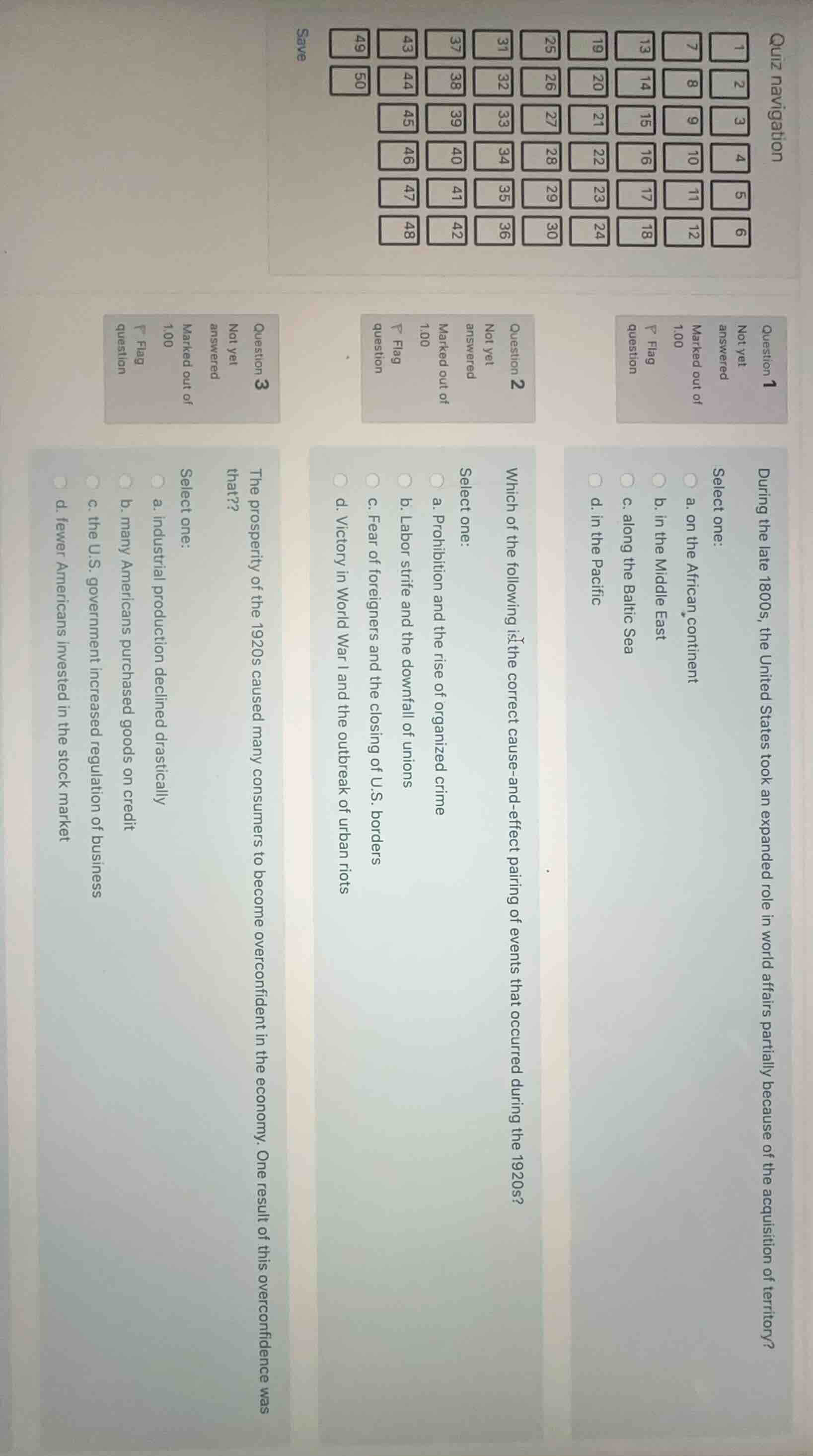
during the late 1800s, the united states took an expanded role in world affairs partially because of the acquisition of territory?
select one:
a. on the african continent
b. in the middle east
c. along the baltic sea
d. in the pacific
question 2
not yet answered
marked out of 1.00
flag question
which of the following is the correct cause - and - effect pairing of events that occurred during the 1920s?
select one:
a. prohibition and the rise of organized crime
b. labor strife and the downfall of unions
c. fear of foreigners and the closing of u.s. borders
d. victory in world war i and the outbreak of urban riots
question 3
not yet answered
marked out of 1.00
flag question
the prosperity of the 1920s caused many consumers to become overconfident in the economy. one result of this overconfidence was
select one:
a. industrial production declined drastically
b. many americans purchased goods on credit
c. the u.s. government increased regulation of business
d. fewer americans invested in the stock market
- In the late 1800s, the U.S. acquired territories like Hawaii, Guam, and the Philippines, all located in the Pacific, driving its expanded global role.
- Prohibition (banning alcohol) in the 1920s created a black market, directly leading to the growth of organized crime syndicates that profited from illegal alcohol sales, forming a clear cause-and-effect relationship.
- The economic prosperity of the 1920s led to consumer overconfidence, making many Americans willing to buy goods on credit (installment plans), which was a defining trend of the era. The other options are incorrect: industrial production grew, government regulation decreased, and more Americans invested in the stock market.

Snap & solve any problem in the app
Get step-by-step solutions on Sovi AI
Photo-based solutions with guided steps
Explore more problems and detailed explanations
- d. in the Pacific
- a. Prohibition and the rise of organized crime
- b. many Americans purchased goods on credit