QUESTION IMAGE
Question
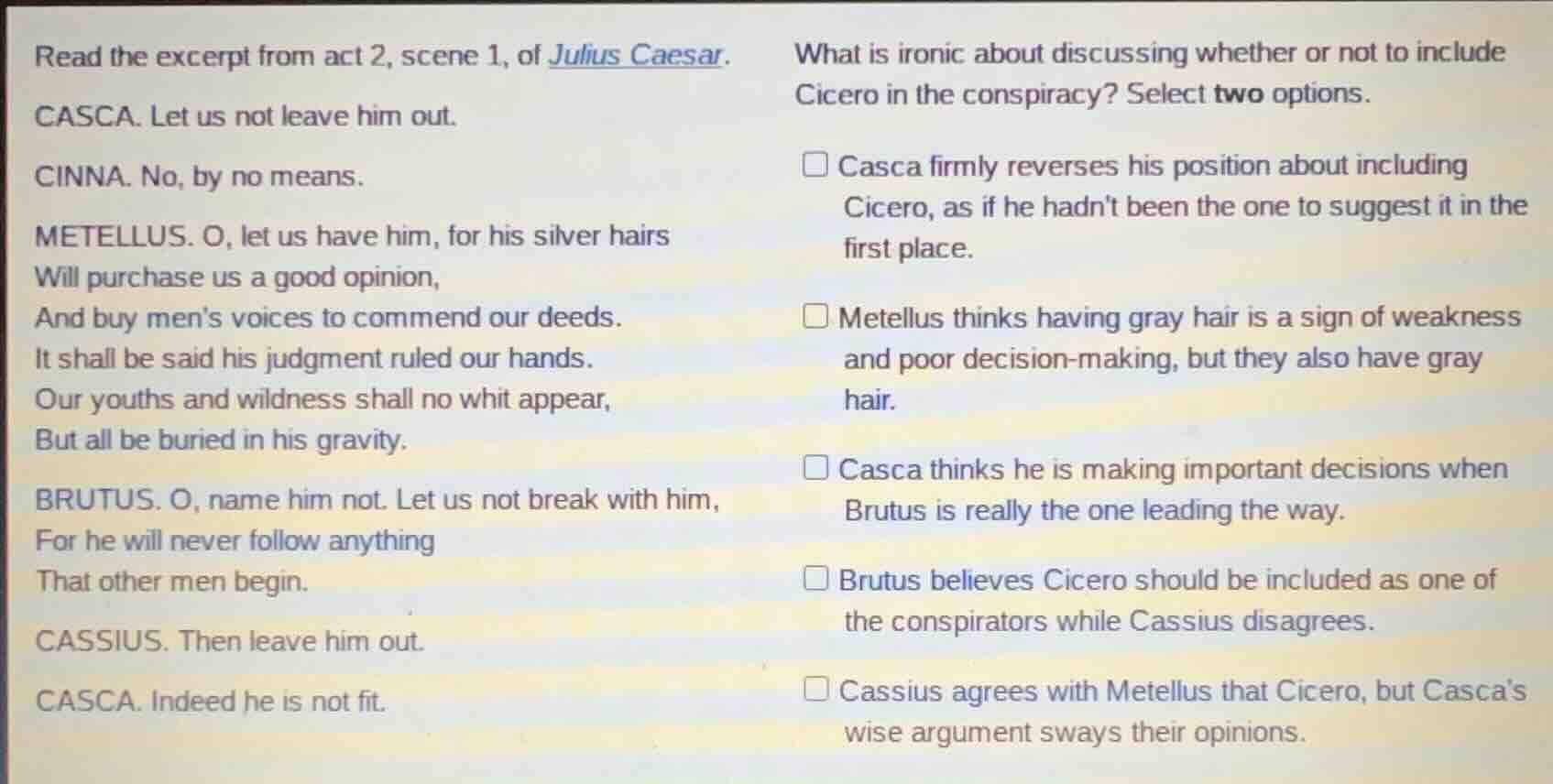
read the excerpt from act 2, scene 1, of julius caesar.
casca. let us not leave him out.
cinna. no, by no means.
metellus. o, let us have him, for his silver hairs
will purchase us a good opinion,
and buy mens voices to commend our deeds.
it shall be said his judgment ruled our hands.
our youths and wildness shall no whit appear,
but all be buried in his gravity.
brutus. o, name him not. let us not break with him,
for he will never follow anything
that other men begin.
cassius. then leave him out.
casca. indeed he is not fit.
what is ironic about discussing whether or not to include
cicero in the conspiracy? select two options.
□ casca firmly reverses his position about including
cicero, as if he hadnt been the one to suggest it in the
first place.
□ metellus thinks having gray hair is a sign of weakness
and poor decision - making, but they also have gray
hair.
□ casca thinks he is making important decisions when
brutus is really the one leading the way.
□ brutus believes cicero should be included as one of
the conspirators while cassius disagrees.
□ cassius agrees with metellus that cicero, but cascas
wise argument sways their opinions.
- For the first option: Casca initially says "Let us not leave him out" (suggesting including Cicero) and later says "Indeed he is not fit" (reversing to excluding), which is ironic as he acts as if he didn't suggest inclusion first.
- For the third option: Casca acts like he's making key decisions, but Brutus is the one (e.g., Brutus says "O, name him not..." and others follow his lead) actually leading the conspiracy's direction.
The second option is incorrect because Metellus thinks gray hair (Cicero's) gives good opinion, not weakness. The fourth is wrong as Brutus doesn't want to include Cicero. The fifth is wrong as Cassius agrees to leave him out, not with Metellus, and Casca's argument isn't "wise" or the swaying factor.

Snap & solve any problem in the app
Get step-by-step solutions on Sovi AI
Photo-based solutions with guided steps
Explore more problems and detailed explanations
A. Casca firmly reverses his position about including Cicero, as if he hadn't been the one to suggest it in the first place.
C. Casca thinks he is making important decisions when Brutus is really the one leading the way.