QUESTION IMAGE
Question
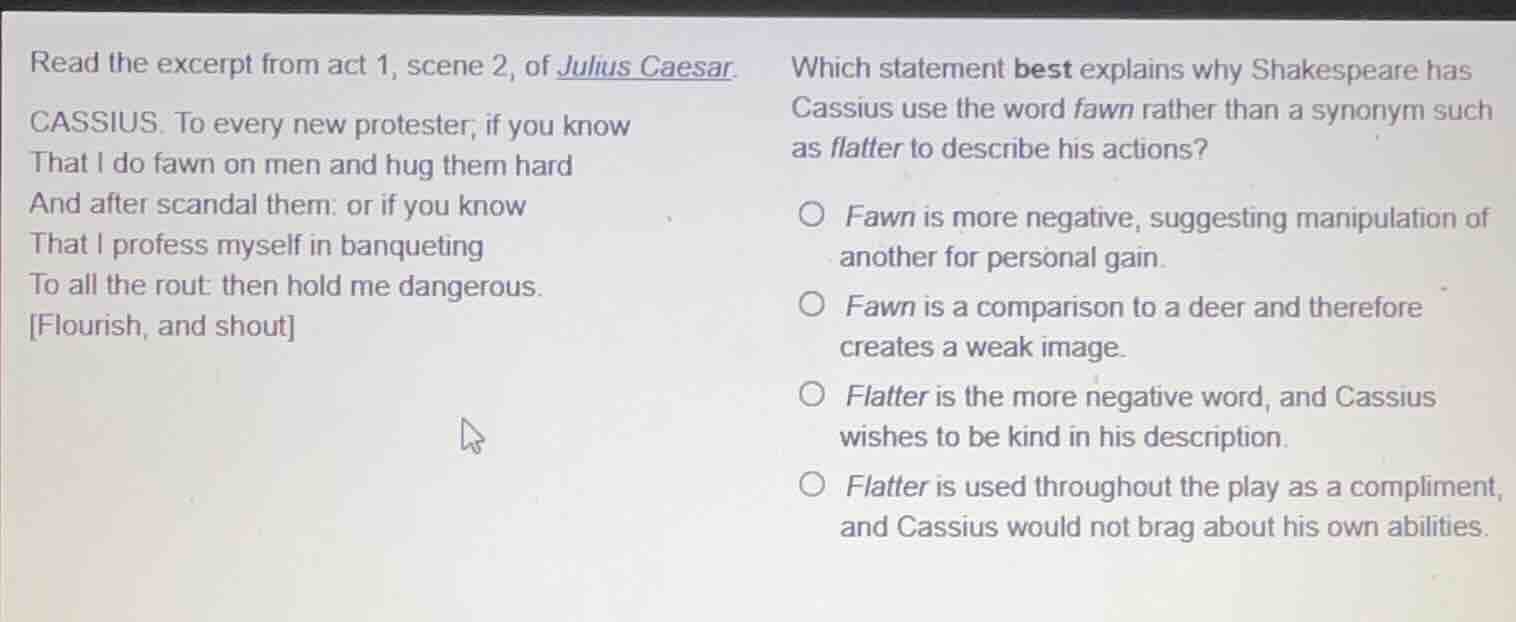
read the excerpt from act 1, scene 2, of julius caesar. cassius. to every new protester, if you know that i do fawn on men and hug them hard and after scandal them: or if you know that i profess myself in banqueting to all the rout: then hold me dangerous. flourish, and shout which statement best explains why shakespeare has cassius use the word fawn rather than a synonym such as flatter to describe his actions? fawn is more negative, suggesting manipulation of another for personal gain. fawn is a comparison to a deer and therefore creates a weak image. flatter is the more negative word, and cassius wishes to be kind in his description. flatter is used throughout the play as a compliment, and cassius would not brag about his own abilities.
"Fawn" carries a more negative, servile connotation than "flatter," implying insincere, overly eager behavior to manipulate others for personal benefit. Cassius is describing his strategic, manipulative actions to win over others before turning against them, so the harsher, more negative tone of "fawn" better reflects his deceptive intent. The other options are incorrect: "fawn" does not primarily evoke a deer comparison here, "flatter" is less negative than "fawn," and "flatter" is not used as a consistent compliment in the play.

Snap & solve any problem in the app
Get step-by-step solutions on Sovi AI
Photo-based solutions with guided steps
Explore more problems and detailed explanations
Fawn is more negative, suggesting manipulation of another for personal gain.