QUESTION IMAGE
Question
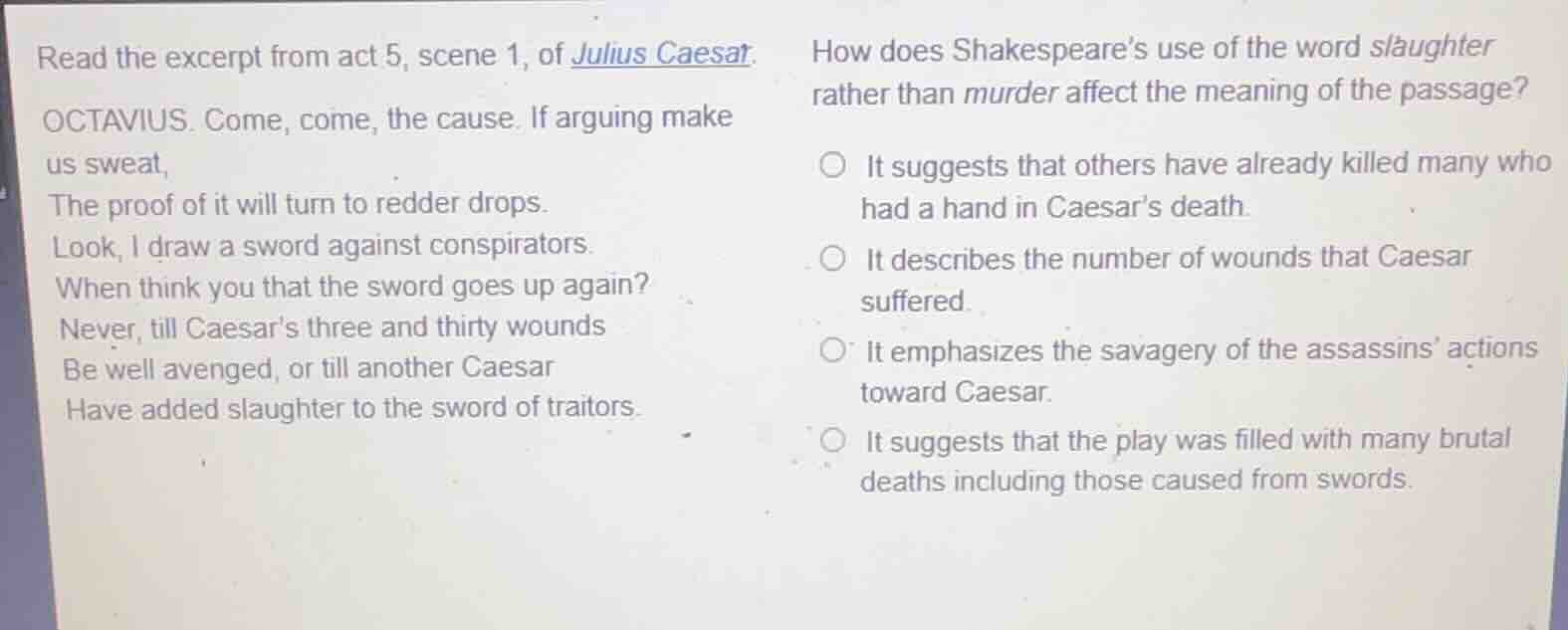
read the excerpt from act 5, scene 1, of julius caesar. octavius. come, come, the cause. if arguing make us sweat, the proof of it will turn to redder drops. look, i draw a sword against conspirators. when think you that the sword goes up again? never, till caesar’s three and thirty wounds be well avenged, or till another caesar have added slaughter to the sword of traitors. how does shakespeare’s use of the word slaughter rather than murder affect the meaning of the passage? it suggests that others have already killed many who had a hand in caesar’s death. it describes the number of wounds that caesar suffered. it emphasizes the savagery of the assassins’ actions toward caesar. it suggests that the play was filled with many brutal deaths including those caused from swords.
"Murder" refers to unlawful, intentional killing of one person, while "slaughter" implies a brutal, indiscriminate, or large-scale act of killing. In Octavius's line, using "slaughter" amplifies the cruel, excessive nature of the assassins' attack on Caesar, who suffered 33 wounds, framing their actions as more savagely violent than a simple murder. The other options are incorrect: the line focuses on avenging Caesar, not prior killings; it does not describe his wounds directly; and it does not reference multiple deaths in the play.

Snap & solve any problem in the app
Get step-by-step solutions on Sovi AI
Photo-based solutions with guided steps
Explore more problems and detailed explanations
C. It emphasizes the savagery of the assassins' actions toward Caesar.