QUESTION IMAGE
Question
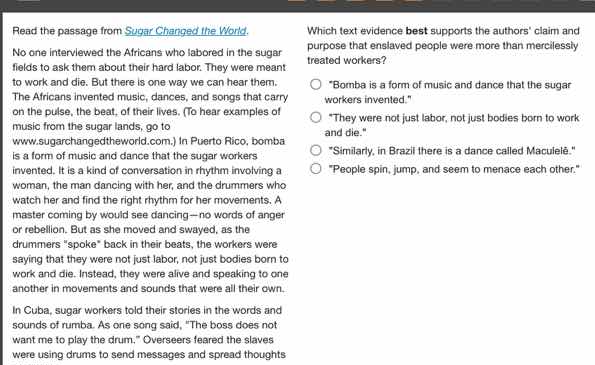
read the passage from sugar changed the world. no one interviewed the africans who labored in the sugar fields to ask them about their hard labor. they were meant to work and die. but there is one way we can hear them: the africans invented music, dances, and songs that carry on the pulse, the beat, of their lives. (to hear examples of music from the sugar lands, go to www.sugarmusicanddance.com.) in puerto rico, bomba is a form of music and dance that the sugar workers invented. it is a kind of conversation, in rhythm involving a woman, the man dancing with her, and the drummers who watch her and find the right rhythm for her movements. a worker rebellion, but as you would see dancing—and, as the drummers “spoke” back in their beats, the workers were saying that they were not just labor, not just bodies born to work and die. instead, they were alive and speaking to one another in movements and sounds that were all their own. in cuba, sugar workers told their stories in the words and sounds of rumba. as one song said, “the boss does not want me to play the drum.” overseers feared the slaves were using drums to send messages and spread thoughts. which text evidence best supports the author’s claim and purpose that enslaved people were more than mercilessly treated workers? - “bomba is a form of music and dance that the sugar workers invented.” - “they were not just labor, not just bodies born to work and die.” - “similarly, in brazil there is a dance called maculelê.” - “people spin, jump, and seem to menace each other.”
To support the claim that enslaved people were more than just workers, we need evidence showing they had agency, culture, or humanity beyond labor. The option "They were not just labor, not just bodies born to work and die. Instead, they were alive and speaking to one another in movements and sounds that were all their own." directly states they were more than labor, emphasizing their aliveness and cultural expression (movements, sounds). Other options describe music/dance forms or actions but not the broader idea of being more than workers.

Snap & solve any problem in the app
Get step-by-step solutions on Sovi AI
Photo-based solutions with guided steps
Explore more problems and detailed explanations
They were not just labor, not just bodies born to work and die. Instead, they were alive and speaking to one another in movements and sounds that were all their own.