QUESTION IMAGE
Question
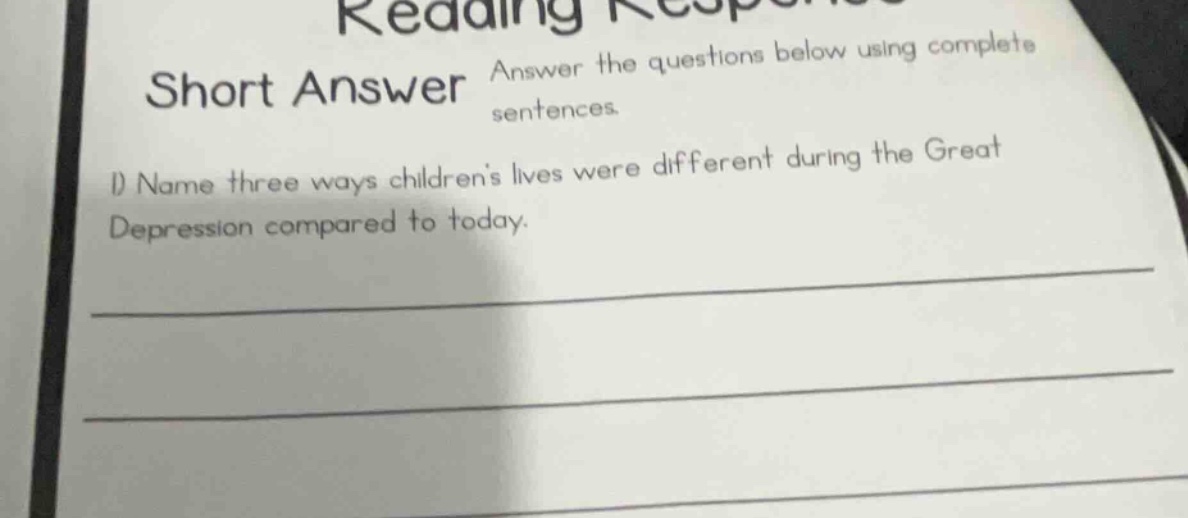
reading short answer answer the questions below using complete sentences. 1) name three ways childrens lives were different during the great depression compared to today.
Brief Explanations
- Economic Hardship & Work: Many children during the Great Depression had to leave school to take low-paying jobs (like selling newspapers, working in factories, or helping with farm labor) to support their struggling families, whereas today, child labor laws strictly limit work for minors and prioritize compulsory education.
- Lack of Modern Resources: Children during the Great Depression rarely had access to modern conveniences like widespread electricity, indoor plumbing, or affordable mass-produced toys and clothing; many made do with hand-me-downs, homemade items, and simple outdoor games, unlike today's children who typically have access to digital devices, abundant manufactured goods, and consistent utilities.
- Instability & Insecurity: Economic collapse led to widespread homelessness, frequent family relocations in search of work, and chronic hunger for many children during the Great Depression. Today, while poverty exists, there are widespread social safety nets (like food assistance programs, public housing, and child welfare services) that help reduce this level of extreme instability for most children.

Snap & solve any problem in the app
Get step-by-step solutions on Sovi AI
Photo-based solutions with guided steps
Explore more problems and detailed explanations
- During the Great Depression, large numbers of children left school to take jobs to support their families, a practice that is heavily restricted by child labor laws and modern educational priorities today.
- Children in the Great Depression era generally lacked access to modern utilities like widespread electricity and indoor plumbing, as well as mass-produced toys and goods, unlike today's children who typically have these resources readily available.
- Great Depression-era children faced far more widespread homelessness, hunger, and family instability due to economic collapse, while today's social safety nets such as food assistance and housing support reduce this level of extreme insecurity for most children.