QUESTION IMAGE
Question
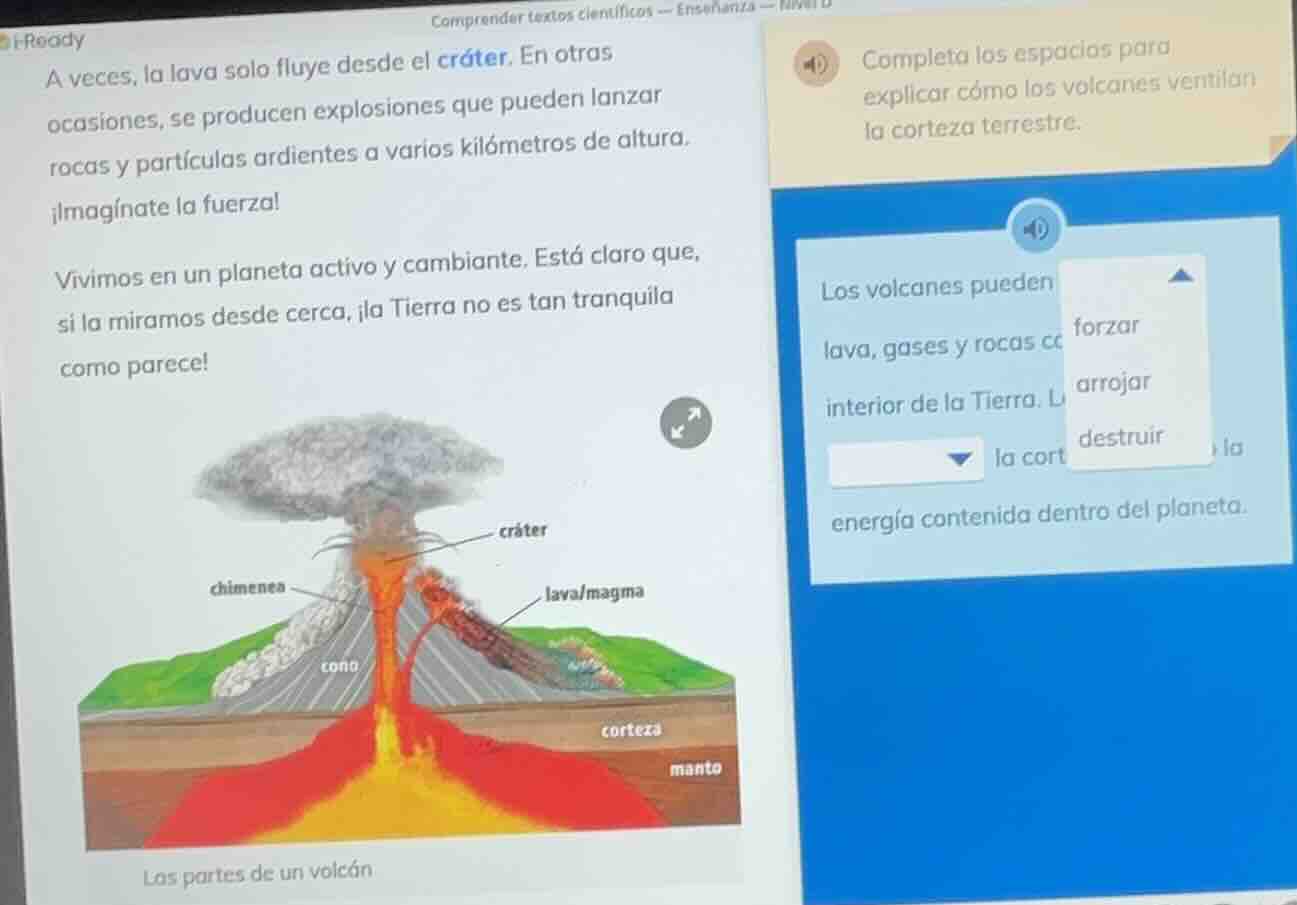
i - ready comprender textos científicos — enseñanza — nivel a veces, la lava solo fluye desde el cráter. en otras ocasiones, se producen explosiones que pueden lanzar rocas y partículas ardientes a varios kilómetros de altura. ¡imagínate la fuerza! vivimos en un planeta activo y cambiante. está claro que, si la miramos desde cerca, ¡la tierra no es tan tranquila como parece! completa los espacios para explicar cómo los volcanes ventilan la corteza terrestre. los volcanes pueden lava, gases y rocas del interior de la tierra. la la cort la energía contenida dentro del planeta. (imagen de un volcán con etiquetas: cráter, chimenea, lava/magma, cono, corteza, manto) los partes de un volcán
To solve this fill - in - the - blank problem about how volcanoes ventilate the Earth's crust, we analyze the context and the meaning of each verb:
Step 1: Analyze the meaning of each verb
- forzar: It means "to force". If we use this verb in the sentence "Los volcanes pueden forzar lava, gases y rocas...", it doesn't fit well with the idea of volcanoes releasing materials from the Earth's interior to the crust.
- arrojar: It means "to throw" or "to hurl". Volcanoes throw (or eject) lava, gases, and rocks from the Earth's interior towards the crust. This makes sense in the context of volcanic activity.
- destruir: It means "to destroy". The sentence is about how volcanoes release materials from the Earth's interior to the crust, not about destroying the crust in this context, so this verb is not appropriate.

Snap & solve any problem in the app
Get step-by-step solutions on Sovi AI
Photo-based solutions with guided steps
Explore more problems and detailed explanations
arrojar