QUESTION IMAGE
Question
salutary neglect:
what was it?
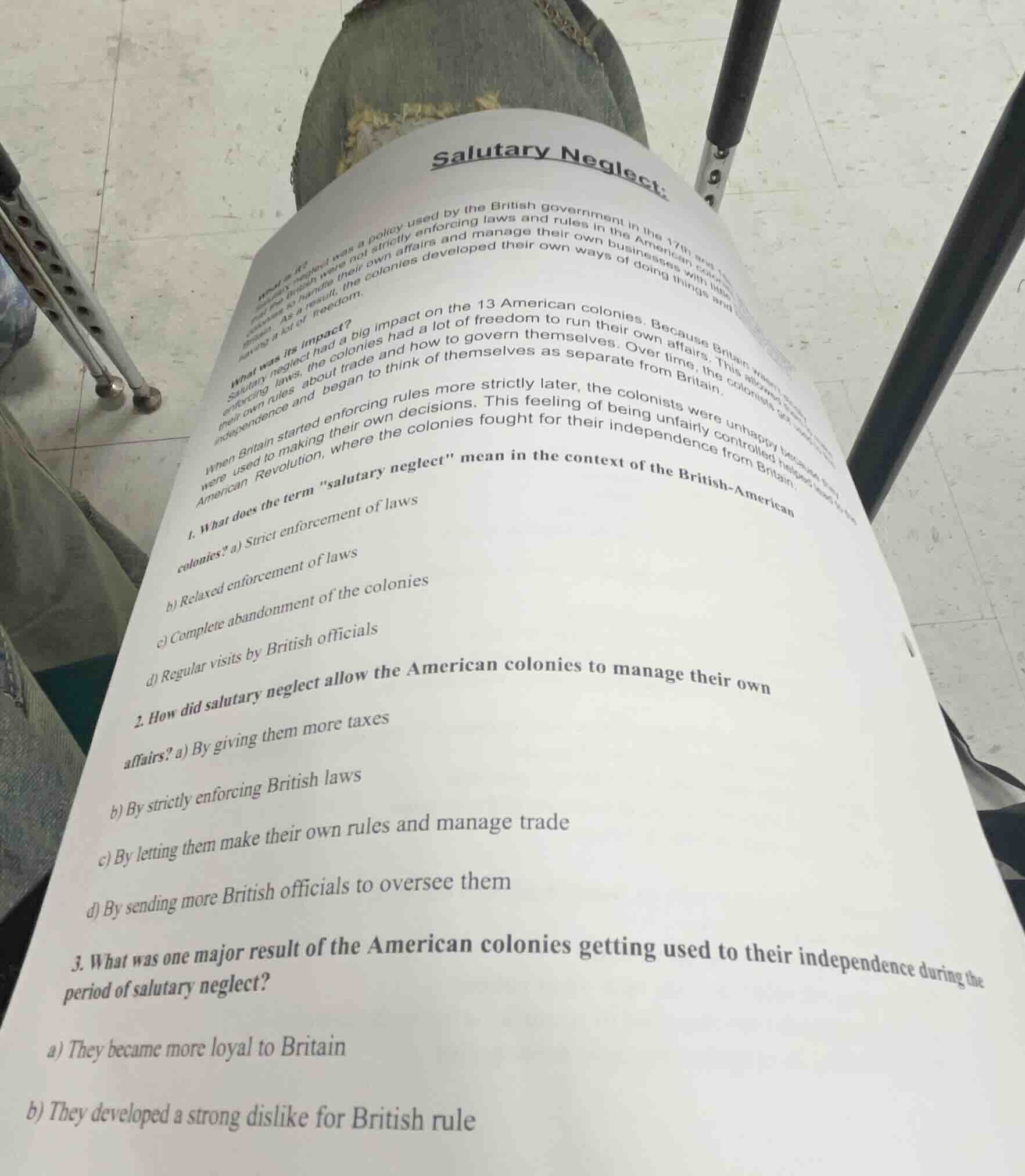
salutary neglect was a policy used by the british government in the 17th and 18th centuries. britain was not strictly enforcing laws and rules in the american colonies. instead, the british let the american colonies handle their own affairs and manage their own businesses with little interference. as a result, the colonies developed their own ways of doing things and started having a lot of freedom.
what was its impact?
salutary neglect had a big impact on the 13 american colonies. because britain wasn’t strictly enforcing laws, the colonies had a lot of freedom to run their own affairs. this allowed the colonies to make their own rules about trade and how to govern themselves. over time, the colonists felt a sense of independence and began to think of themselves as separate from britain.
when britain started enforcing rules more strictly later, the colonists were unhappy because they were used to making their own decisions. this feeling of being unfairly controlled helped lead to the american revolution, where the colonies fought for their independence from britain.
- what does the term \salutary neglect\ mean in the context of the british - american colonies?
a) strict enforcement of laws
b) relaxed enforcement of laws
c) complete abandonment of the colonies
d) regular visits by british officials
- how did salutary neglect allow the american colonies to manage their own affairs?
a) by giving them more taxes
b) by strictly enforcing british laws
c) by letting them make their own rules and manage trade
d) by sending more british officials to oversee them
- what was one major result of the american colonies getting used to their independence during the period of salutary neglect?
a) they became more loyal to britain
b) they developed a strong dislike for british rule
Question 1
The passage states that salutary neglect was a policy where the British government was not strictly enforcing laws in the American colonies. Option a is incorrect as it's the opposite. Option c is incorrect because it's not a complete abandonment, just relaxed enforcement. Option d is incorrect as the policy didn't involve regular visits. So the correct answer is b.
The text says that under salutary neglect, the colonies could handle their own affairs and manage trade by making their own rules. Option a is wrong (more taxes would not help self - management). Option b is wrong (strict enforcement of British laws would not allow self - management). Option d is wrong (more officials would not allow self - management). So the correct answer is c.
During salutary neglect, the colonies got used to independence. When Britain later tried to enforce rules, the colonists disliked British rule as they were used to self - governance. Option a is wrong (they became less loyal). So if option b is "They developed a strong dislike for British rule", it's correct.

Snap & solve any problem in the app
Get step-by-step solutions on Sovi AI
Photo-based solutions with guided steps
Explore more problems and detailed explanations
b) Relaxed enforcement of laws