QUESTION IMAGE
Question
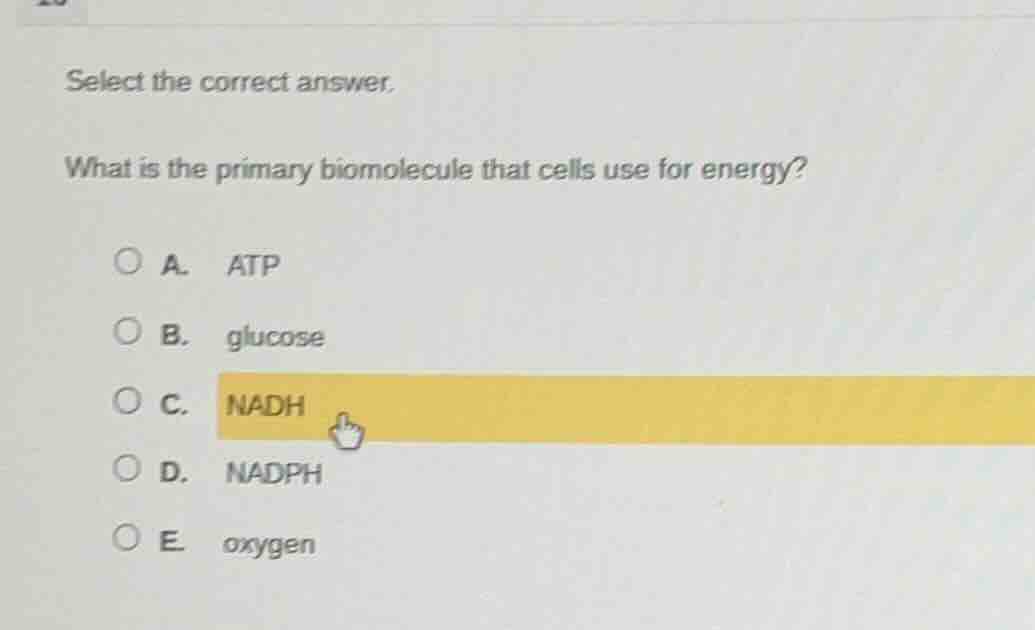
select the correct answer.
what is the primary biomolecule that cells use for energy?
a. atp
b. glucose
c. nadh
d. nadph
e. oxygen
Brief Explanations
To determine the primary biomolecule cells use for energy, we analyze each option:
- Option A (ATP): Adenosine Triphosphate (ATP) is the immediate energy currency of cells. When its high - energy phosphate bonds are broken, energy is released for cellular processes.
- Option B (glucose): Glucose is a source of energy, but cells break down glucose (through processes like cellular respiration) to produce ATP. So glucose is not the direct, primary energy - using biomolecule.
- Option C (NADH): NADH is an electron carrier in cellular respiration. It transfers electrons to the electron transport chain to help generate ATP, but it is not the primary energy - using molecule.
- Option D (NADPH): NADPH is mainly involved in anabolic reactions (like photosynthesis in plants) and is not the primary energy - using biomolecule for general cellular work.
- Option E (oxygen): Oxygen is the final electron acceptor in aerobic respiration. It is essential for efficient ATP production but is not an energy - using biomolecule.

Snap & solve any problem in the app
Get step-by-step solutions on Sovi AI
Photo-based solutions with guided steps
Explore more problems and detailed explanations
A. ATP