QUESTION IMAGE
Question
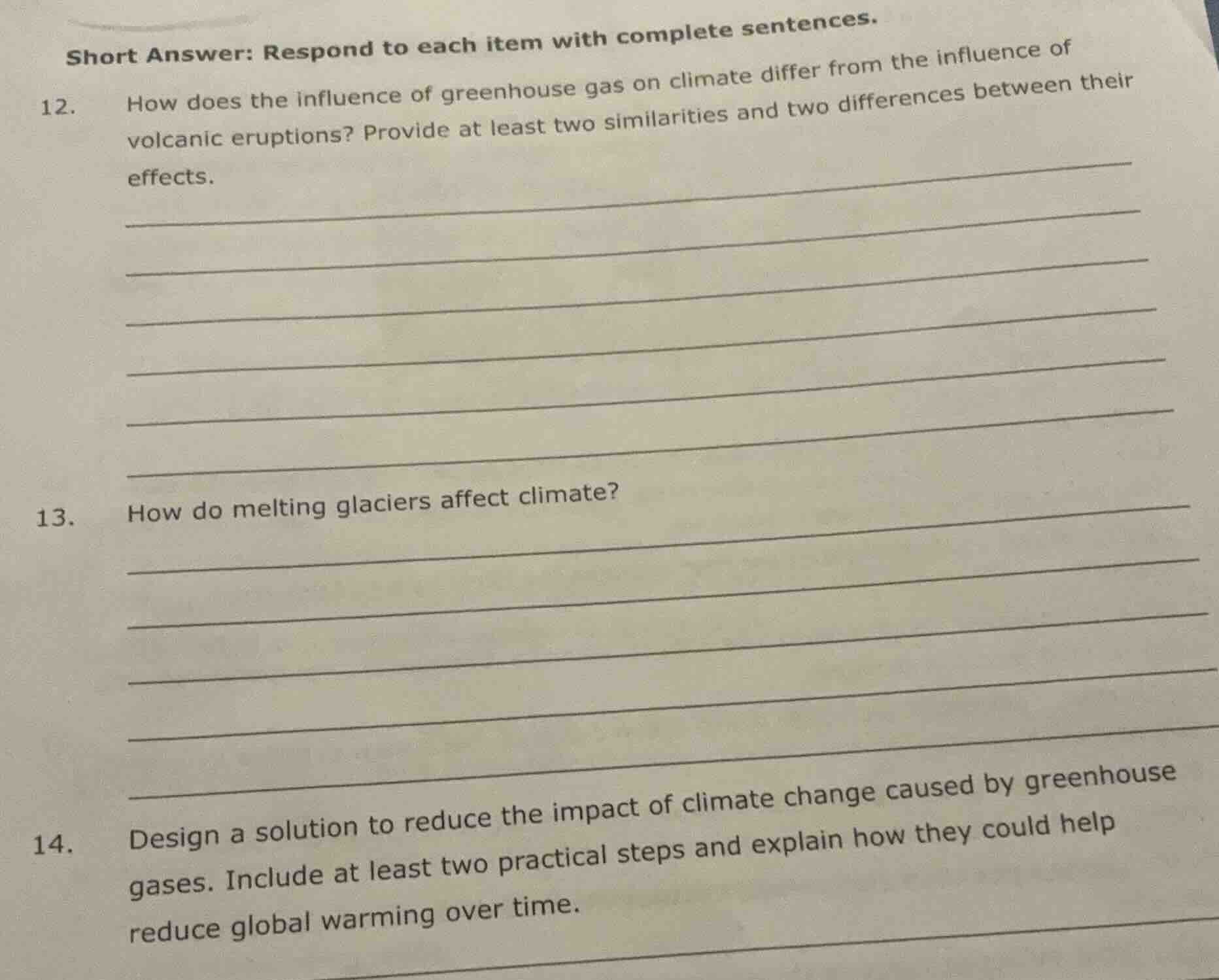
short answer: respond to each item with complete sentences.
- how does the influence of greenhouse gas on climate differ from the influence of volcanic eruptions? provide at least two similarities and two differences between their effects.
- how do melting glaciers affect climate?
- design a solution to reduce the impact of climate change caused by greenhouse gases. include at least two practical steps and explain how they could help reduce global warming over time.
For Question 12:
Similarities: Both greenhouse gases and volcanic eruptions can alter Earth's radiative balance, and both can have global-scale climate impacts. Differences: Greenhouse gases cause long-term warming by trapping outgoing heat, while volcanic eruptions typically cause short-term cooling by blocking incoming sunlight; greenhouse gas emissions are mostly human-caused and ongoing, while volcanic eruptions are natural, infrequent events.
For Question 13:
Melting glaciers reduce Earth's albedo, as dark ocean/land replaces reflective ice, causing more solar energy to be absorbed and amplifying warming. They also add freshwater to oceans, which can disrupt ocean currents that regulate global climate patterns, and contribute to sea level rise that can alter coastal weather systems.
For Question 14:
Step 1: Mandate widespread adoption of rooftop solar panels for residential and commercial buildings. This reduces reliance on fossil fuel-powered electricity, cutting greenhouse gas emissions from the energy sector over time. Step 2: Implement a subsidized program for farmers to adopt regenerative agriculture practices (like cover cropping and no-till farming). These practices increase soil carbon sequestration, removing carbon dioxide from the atmosphere, and reduce synthetic fertilizer use which lowers nitrous oxide emissions.

Snap & solve any problem in the app
Get step-by-step solutions on Sovi AI
Photo-based solutions with guided steps
Explore more problems and detailed explanations
- Two similarities between greenhouse gases and volcanic eruptions are that both can shift Earth's radiative balance and have global climate effects. Two key differences are that greenhouse gases drive long-term global warming by trapping heat, while volcanic eruptions usually cause short-term global cooling by blocking sunlight, and greenhouse gas impacts are mostly human-caused and continuous, while volcanic climate effects are natural and episodic.
- Melting glaciers affect climate by decreasing Earth's albedo, which leads to more solar energy being absorbed and amplifies global warming; they also add freshwater to oceans, which can disrupt climate-regulating ocean currents and contribute to sea level rise that alters coastal climate patterns.
- A solution to reduce greenhouse gas-driven climate change includes two practical steps: first, mandate rooftop solar panel installation for most buildings, which cuts fossil fuel-based electricity use and lowers ongoing greenhouse gas emissions; second, subsidize regenerative agriculture for farmers, which increases soil carbon sequestration to remove atmospheric CO₂ and reduces emissions from synthetic fertilizers. Over time, these steps will reduce the concentration of heat-trapping gases in the atmosphere, slowing and reversing global warming.