QUESTION IMAGE
Question
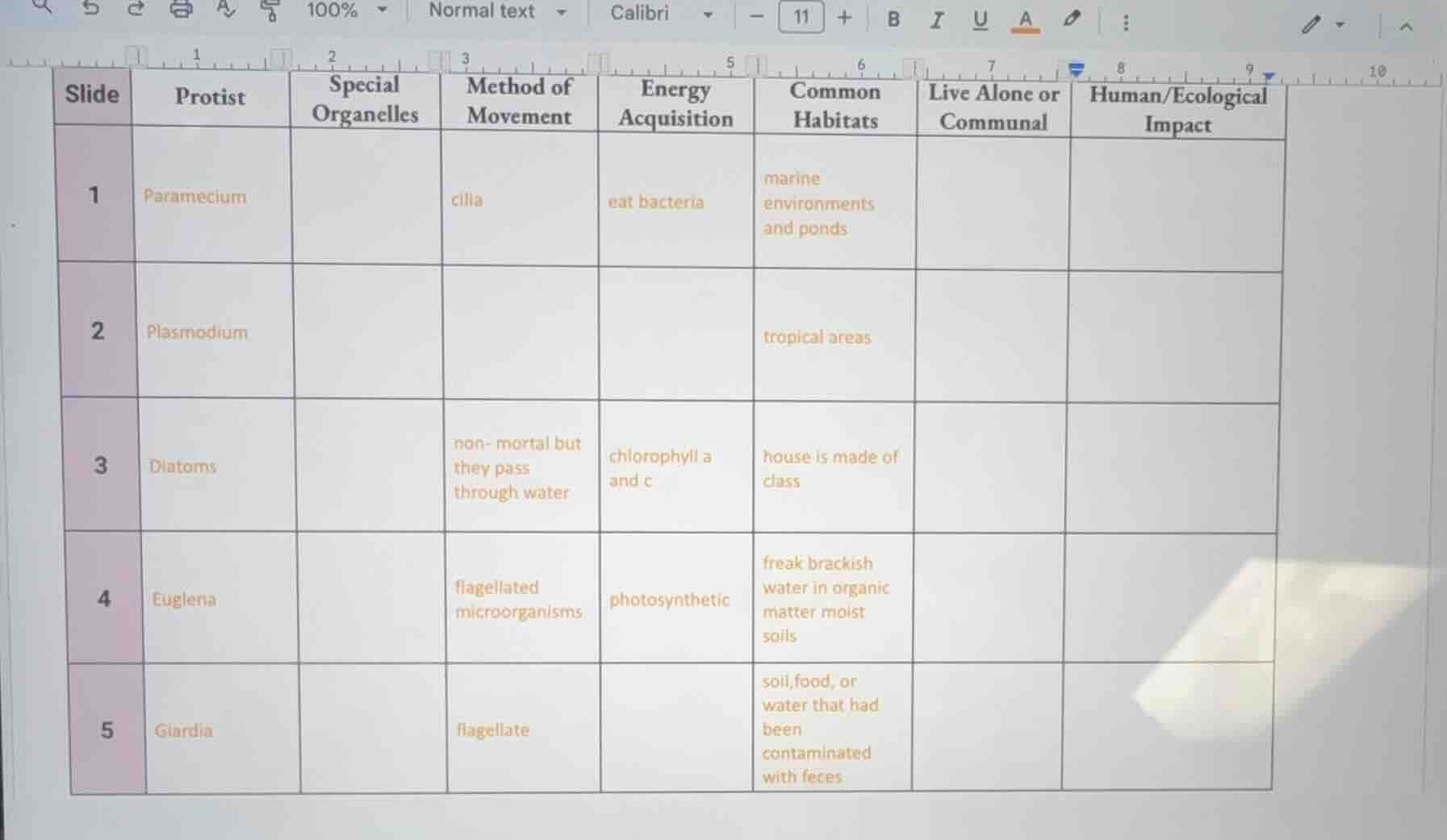
slide\tprotist\tspecial organelles\tmethod of movement\tenergy acquisition\tcommon habitats\tlive alone or communal\thuman/ecological impact
1\tparamecium\t\tcilia\teat bacteria\tmarine environments and ponds\t\t
2\tplasmodium\t\t\t\t\tropical areas\t\t
3\tdiatoms\t\tnon- mortal but they pass through water\tchlorophyll a and c\thouse is made of class\t\t
4\teuglena\t\tflagellated microorganisms\tphotosynthetic\tfreak brackish water in organic matter moist soils\t\t
5\tgiardia\t\tflagellate\t\tsoil,food, or water that had been contaminated with feces\t\t
Filled in the missing characteristics of each protist based on biological facts about their organelles, lifestyle, and impacts.

Snap & solve any problem in the app
Get step-by-step solutions on Sovi AI
Photo-based solutions with guided steps
Explore more problems and detailed explanations
| Slide | Protist | Special Organelles | Method of Movement | Energy Acquisition | Common Habitats | Live Alone or Communal | Human/Ecological Impact |
|---|---|---|---|---|---|---|---|
| 2 | Plasmodium | Apical complex | Glides (host cell invasion) | Steals nutrients from host (heterotrophic) | tropical areas (in Anopheles mosquitoes & human blood) | Communal (inside host cells) | Causes malaria, leading to fever, organ damage, and death in humans |
| 3 | Diatoms | Silica frustule | Non-motile (drift in water) | Photosynthetic (chlorophyll a/c) | Aquatic environments (oceans, lakes, ponds) | Live Alone/Colonial | Major oxygen producers; form diatomaceous earth used in filters and abrasives |
| 4 | Euglena | Chloroplasts, eyespot | flagellated | Photosynthetic/heterotrophic (mixotrophic) | Brackish water, moist soils, organic-rich water | Live Alone | Indicates water pollution; contributes to aquatic food webs |
| 5 | Giardia | Adhesive discs | flagellate | Heterotrophic (steals host nutrients) | Soil, food, feces-contaminated water | Live Alone | Causes giardiasis, leading to diarrhea, abdominal pain, and nutrient malabsorption in humans |