QUESTION IMAGE
Question
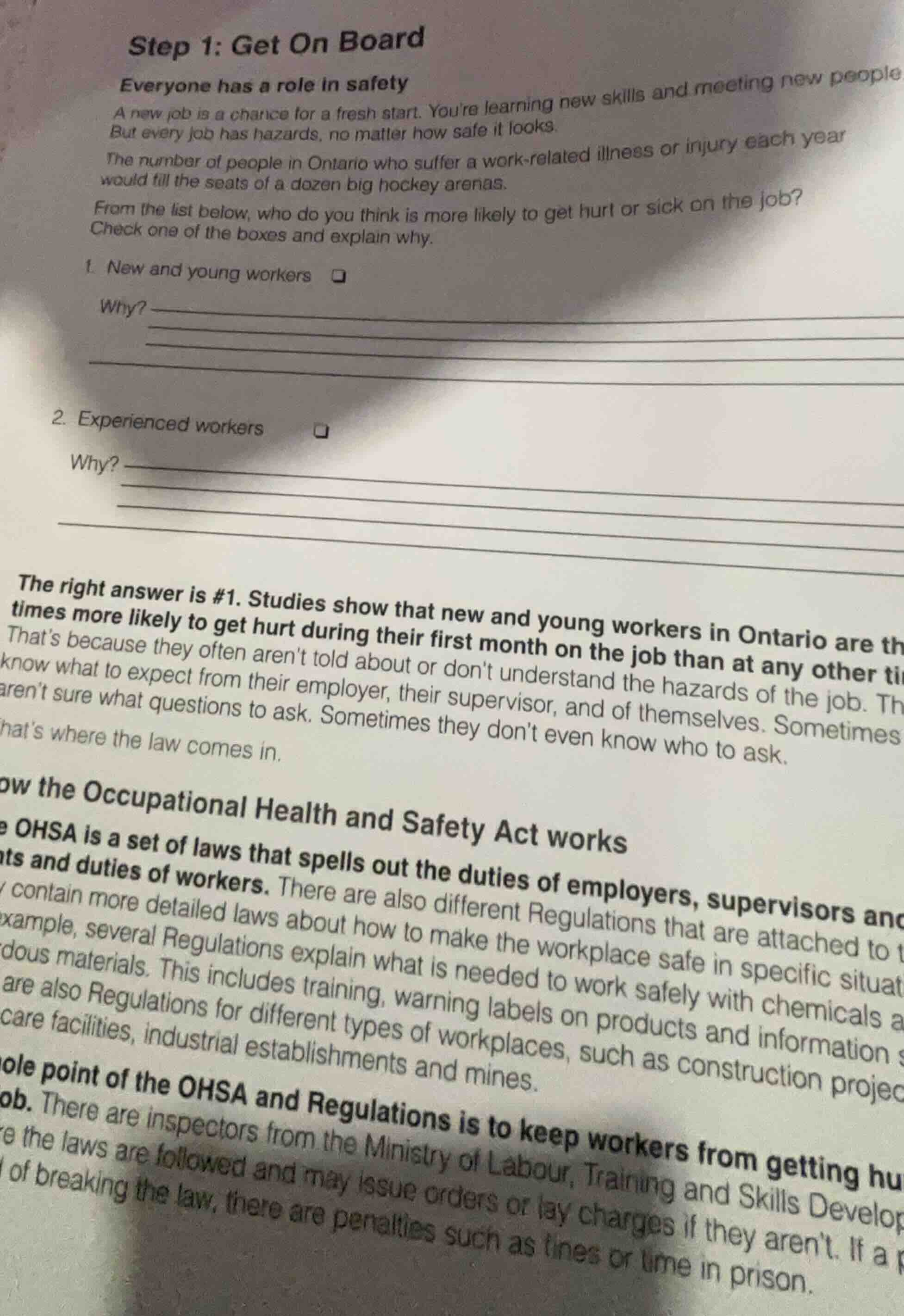
step 1: get on board
everyone has a role in safety
a new job is a chance for a fresh start. youre learning new skills and meeting new people
but every job has hazards, no matter how safe it looks.
the number of people in ontario who suffer a work - related illness or injury each year
would fill the seats of a dozen big hockey arenas.
from the list below, who do you think is more likely to get hurt or sick on the job?
check one of the boxes and explain why.
- new and young workers
why?
- experienced workers
why?
the right answer is #1. studies show that new and young workers in ontario are th
times more likely to get hurt during their first month on the job than at any other ti
thats because they often arent told about or dont understand the hazards of the job. th
know what to expect from their employer, their supervisor, and of themselves. sometimes
arent sure what questions to ask. sometimes they dont even know who to ask.
hats where the law comes in.
ow the occupational health and safety act works
e ohsa is a set of laws that spells out the duties of employers, supervisors an
ts and duties of workers. there are also different regulations that are attached to t
contain more detailed laws about how to make the workplace safe in specific situat
example, several regulations explain what is needed to work safely with chemicals a
dous materials. this includes training, warning labels on products and information s
are also regulations for different types of workplaces, such as construction projec
care facilities, industrial establishments and mines.
ole point of the ohsa and regulations is to keep workers from getting hu
b. there are inspectors from the ministry of labour, training and skills develop
e the laws are followed and may issue orders or lay charges if they arent. if a
of breaking the law, there are penalties such as fines or time in prison.
To determine who is more likely to get hurt on the job, we analyze the options:
- For "New and young workers": They are new to the job, lack experience, may not be informed about job hazards, and don't know what to expect or who to ask. Studies confirm they are more at risk, especially in the first month.
- For "Experienced workers": They have more knowledge of job hazards and safety procedures, so they are less likely to get hurt.
The text also confirms that new and young workers in Ontario are three times more likely to get hurt in their first month due to lack of hazard awareness and unclear expectations.

Snap & solve any problem in the app
Get step-by-step solutions on Sovi AI
Photo-based solutions with guided steps
Explore more problems and detailed explanations
- New and young workers $\square$ (checked)
Why? New and young workers often lack knowledge of job hazards, don't know what to expect, and aren't sure who to ask for safety information. Studies show they are three times more likely to get hurt in their first month.
- Experienced workers $\square$ (unchecked)
Why? Experienced workers have more familiarity with job hazards and safety protocols, reducing their risk of injury or illness.