QUESTION IMAGE
Question
1.2.2 study: informational texts
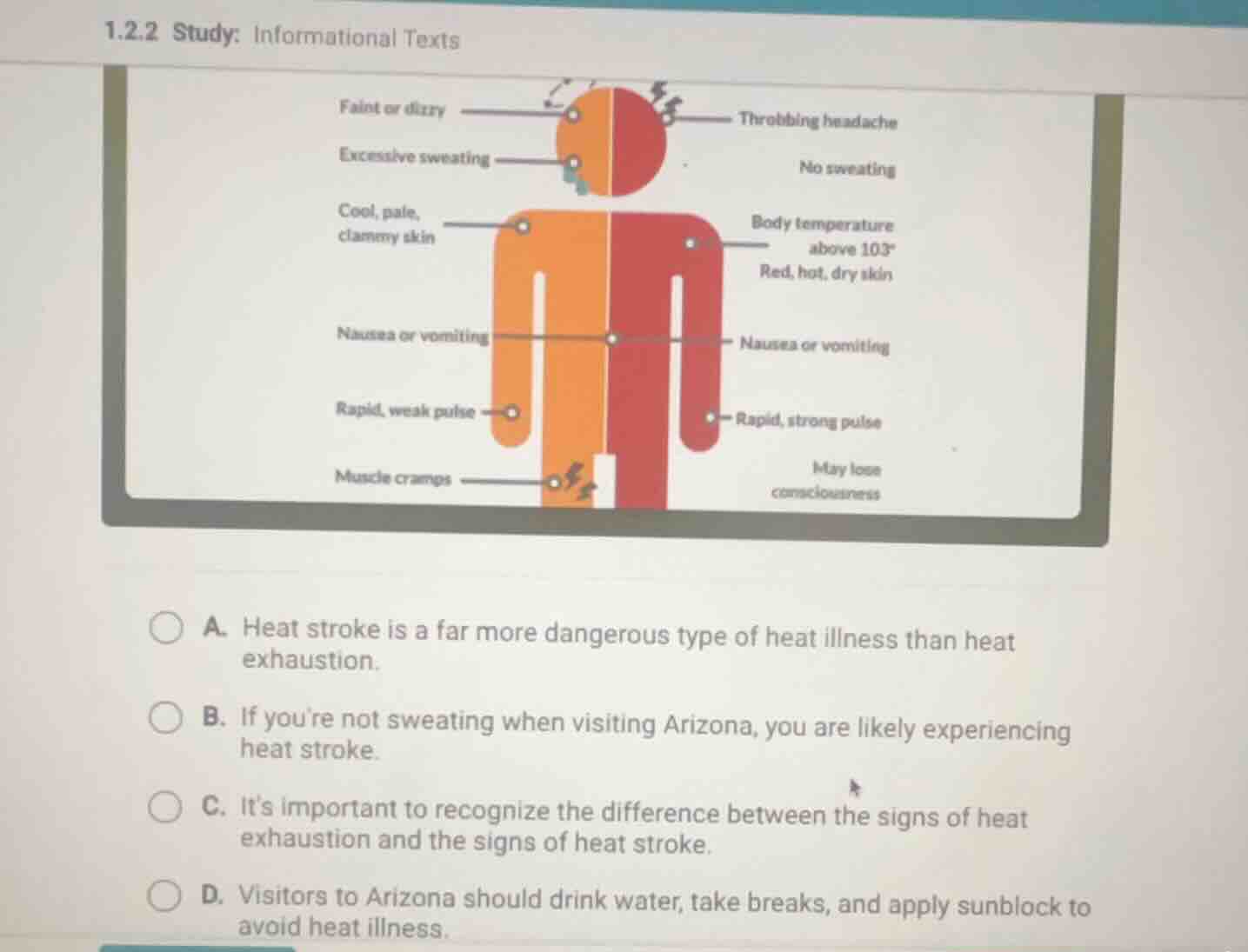
image of a human figure split into two halves (orange and red) with labels for symptoms of heat exhaustion (orange) and heat stroke (red):
- orange (heat exhaustion): faint or dizzy, excessive sweating, cool, pale, clammy skin, nausea or vomiting, rapid, weak pulse, muscle cramps
- red (heat stroke): throbbing headache, no sweating, body temperature above 103°, red, hot, dry skin, nausea or vomiting, rapid, strong pulse, may lose consciousness
a. heat stroke is a far more dangerous type of heat illness than heat exhaustion.
b. if you’re not sweating when visiting arizona, you are likely experiencing heat stroke.
c. it’s important to recognize the difference between the signs of heat exhaustion and the signs of heat stroke.
d. visitors to arizona should drink water, take breaks, and apply sunblock to avoid heat illness.
The diagram shows the symptoms of heat exhaustion (orange side) and heat stroke (red side). Option A: The diagram doesn't directly compare the danger levels. Option B: Not sweating in Arizona could have other causes, and this is an overgeneralization. Option C: The diagram presents different symptoms for heat exhaustion and heat stroke, so recognizing the difference is important. Option D: The diagram is about symptoms, not prevention methods. So the best answer is C as it relates to the purpose of the diagram (showing different signs to recognize the two conditions).

Snap & solve any problem in the app
Get step-by-step solutions on Sovi AI
Photo-based solutions with guided steps
Explore more problems and detailed explanations
C. It's important to recognize the difference between the signs of heat exhaustion and the signs of heat stroke.