QUESTION IMAGE
Question
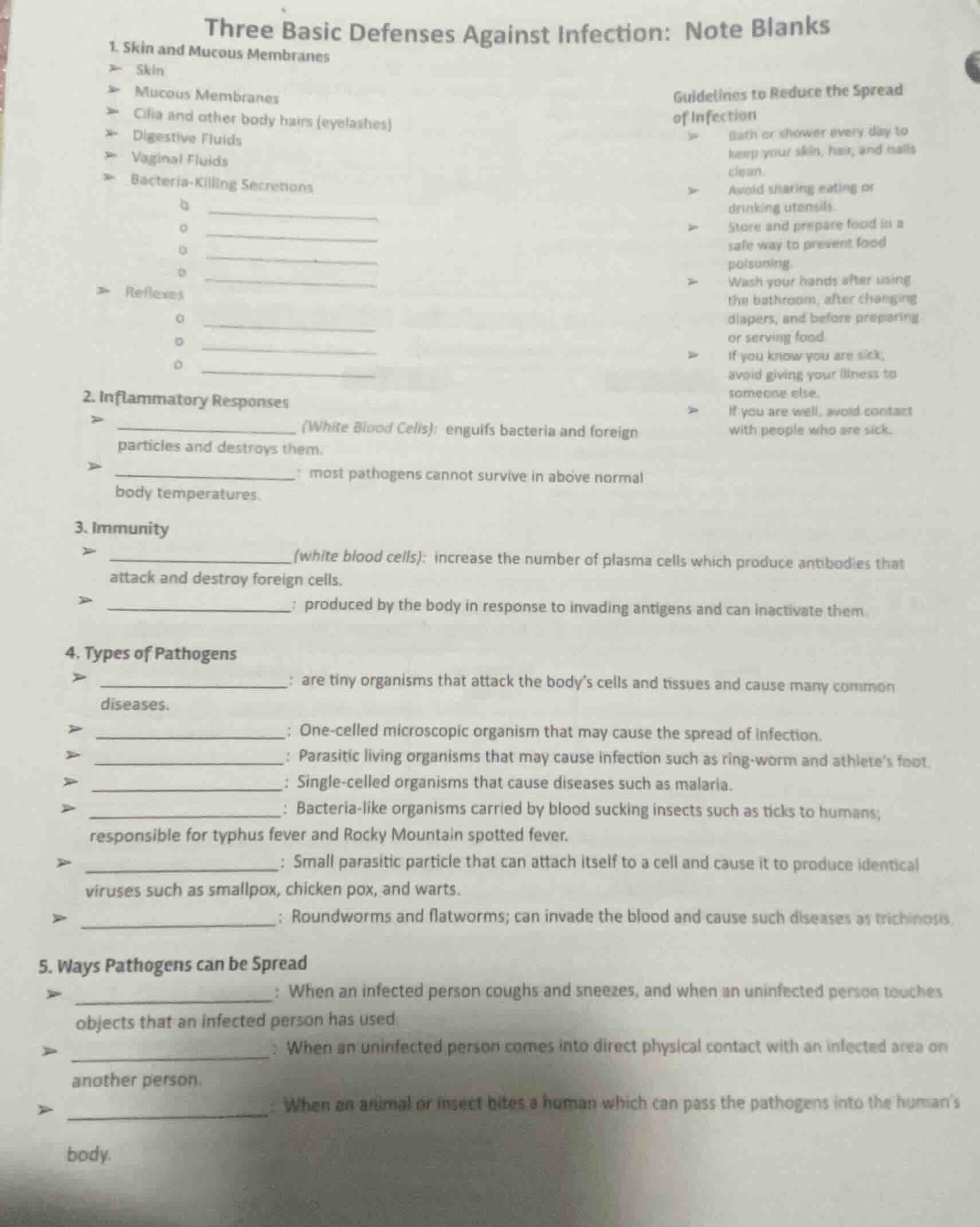
three basic defenses against infection: note blanks
- skin and mucous membranes
- skin
- mucous membranes
- cilia and other body hairs (eyelashes)
- digestive fluids
- vaginal fluids
- bacteria - killing secretions
- ______
- ______
- ______
- ______
- reflexes
- ______
- ______
- ______
guidelines to reduce the spread of infection
- bath or shower every day to keep your skin, hair, and nails clean.
- avoid sharing eating or drinking utensils.
- store and prepare food in a safe way to prevent food poisoning.
- wash your hands after using the bathroom, after changing diapers, and before preparing or serving food.
- if you know you are sick, avoid giving your illness to someone else.
- if you are well, avoid contact with people who are sick.
- inflammatory responses
- ______ (white blood cells): engulfs bacteria and foreign particles and destroys them.
- ______: most pathogens cannot survive in above normal body temperatures.
- immunity
- ______ (white blood cells): increase the number of plasma cells which produce antibodies that attack and destroy foreign cells.
- ______: produced by the body in response to invading antigens and can inactivate them.
- types of pathogens
- ______: are tiny organisms that attack the body’s cells and tissues and cause many common diseases.
- ______: one - celled microscopic organism that may cause the spread of infection.
- ______: parasitic living organisms that may cause infection such as ring - worm and athlete’s foot.
- ______: single - celled organisms that cause diseases such as malaria.
- ______: bacteria - like organisms carried by blood sucking insects such as ticks to humans; responsible for typhus fever and rocky mountain spotted fever.
- ______: small parasitic particle that can attach itself to a cell and cause it to produce identical viruses such as smallpox, chicken pox, and warts.
- ______: roundworms and flatworms; can invade the blood and cause such diseases as trichinosis.
- ways pathogens can be spread
- ______: when an infected person coughs and sneezes, and when an uninfected person touches objects that an infected person has used.
- ______: when an uninfected person comes into direct physical contact with an infected area on another person.
- ______: when an animal or insect bites a human which can pass the pathogens into the human’s body.
Response
1. Skin and Mucous Membranes - Bacteria - Killing Secretions
- Saliva: Contains enzymes like lysozyme that can kill bacteria.
- Tears: Have lysozyme and other substances to protect the eyes from infection.
- Sweat: Has antimicrobial properties and helps flush out pathogens.
- Stomach Acid: Highly acidic environment that kills many ingested pathogens.
1. Skin and Mucous Membranes - Reflexes
- Sneezing: Expels pathogens from the respiratory tract.
- Coughing: Helps remove pathogens and irritants from the lungs and throat.
- Vomiting: Expels harmful substances (including pathogens) from the stomach.
2. Inflammatory Responses
- Phagocytes (White Blood Cells): Engulfs bacteria and foreign particles and destroys them.
- Fever: Most pathogens cannot survive in above - normal body temperatures.
3. Immunity
- Lymphocytes (white blood cells): Increase the number of plasma cells which produce antibodies that attack and destroy foreign cells.
- Antibodies: Produced by the body in response to invading antigens and can inactivate them.
4. Types of Pathogens
- Bacteria: Are tiny organisms that attack the body’s cells and tissues and cause many common diseases.
- Bacteria (One - celled): One - celled microscopic organism that may cause the spread of infection. (Note: More precisely, the first blank here can be "Bacteria" and the second can be "Bacteria" as well, but if we consider different types, the first is general bacteria, the second is the one - celled description of bacteria. Alternatively, the first could be "Viruses" but the description of "tiny organisms that attack cells" can fit bacteria too. However, a more accurate breakdown:
- Bacteria: Are tiny organisms that attack the body’s cells and tissues and cause many common diseases.
- Bacteria: One - celled microscopic organism that may cause the spread of infection.
- Fungi: Parasitic living organisms that may cause infection such as ring - worm and athlete’s foot.
- Protozoa: Single - celled organisms that cause diseases such as malaria.
- Rickettsia: Bacteria - like organisms carried by blood - sucking insects such as ticks to humans; responsible for typhus fever and Rocky Mountain spotted fever.
- Viruses: Small parasitic particle that can attach itself to a cell and cause it to produce identical viruses such as smallpox, chicken pox, and warts.
- Helminths: Roundworms and flatworms; can invade the blood and cause such diseases as trichinosis.
5. Ways Pathogens can be Spread
- Indirect Contact: When an infected person coughs and sneezes, and when an uninfected person touches objects that an infected person has used.
- Direct Contact: When an uninfected person comes into direct physical contact with an infected area on another person.
- Vector - Borne: When an animal or insect bites a human which can pass the pathogens into the human’s body.

Snap & solve any problem in the app
Get step-by-step solutions on Sovi AI
Photo-based solutions with guided steps
Explore more problems and detailed explanations
1. Skin and Mucous Membranes - Bacteria - Killing Secretions
- Saliva: Contains enzymes like lysozyme that can kill bacteria.
- Tears: Have lysozyme and other substances to protect the eyes from infection.
- Sweat: Has antimicrobial properties and helps flush out pathogens.
- Stomach Acid: Highly acidic environment that kills many ingested pathogens.
1. Skin and Mucous Membranes - Reflexes
- Sneezing: Expels pathogens from the respiratory tract.
- Coughing: Helps remove pathogens and irritants from the lungs and throat.
- Vomiting: Expels harmful substances (including pathogens) from the stomach.
2. Inflammatory Responses
- Phagocytes (White Blood Cells): Engulfs bacteria and foreign particles and destroys them.
- Fever: Most pathogens cannot survive in above - normal body temperatures.
3. Immunity
- Lymphocytes (white blood cells): Increase the number of plasma cells which produce antibodies that attack and destroy foreign cells.
- Antibodies: Produced by the body in response to invading antigens and can inactivate them.
4. Types of Pathogens
- Bacteria: Are tiny organisms that attack the body’s cells and tissues and cause many common diseases.
- Bacteria (One - celled): One - celled microscopic organism that may cause the spread of infection. (Note: More precisely, the first blank here can be "Bacteria" and the second can be "Bacteria" as well, but if we consider different types, the first is general bacteria, the second is the one - celled description of bacteria. Alternatively, the first could be "Viruses" but the description of "tiny organisms that attack cells" can fit bacteria too. However, a more accurate breakdown:
- Bacteria: Are tiny organisms that attack the body’s cells and tissues and cause many common diseases.
- Bacteria: One - celled microscopic organism that may cause the spread of infection.
- Fungi: Parasitic living organisms that may cause infection such as ring - worm and athlete’s foot.
- Protozoa: Single - celled organisms that cause diseases such as malaria.
- Rickettsia: Bacteria - like organisms carried by blood - sucking insects such as ticks to humans; responsible for typhus fever and Rocky Mountain spotted fever.
- Viruses: Small parasitic particle that can attach itself to a cell and cause it to produce identical viruses such as smallpox, chicken pox, and warts.
- Helminths: Roundworms and flatworms; can invade the blood and cause such diseases as trichinosis.
5. Ways Pathogens can be Spread
- Indirect Contact: When an infected person coughs and sneezes, and when an uninfected person touches objects that an infected person has used.
- Direct Contact: When an uninfected person comes into direct physical contact with an infected area on another person.
- Vector - Borne: When an animal or insect bites a human which can pass the pathogens into the human’s body.