QUESTION IMAGE
Question
two day assignment
activity 4: credible sources
when you are conducting research, you need to ensure the sources you are planning to use are credible.
because knowing if a source is credible or non - credible is important when choosing sources to use, you will be
practicing this skill by reading two articles to determine if the source is credible or not. to prepare you for
working with the two sources, watch the video from the bbc (british broadcasting corporation) about the
spaghetti - harvest in ticino. once you have watched the short video, respond to the question given below.
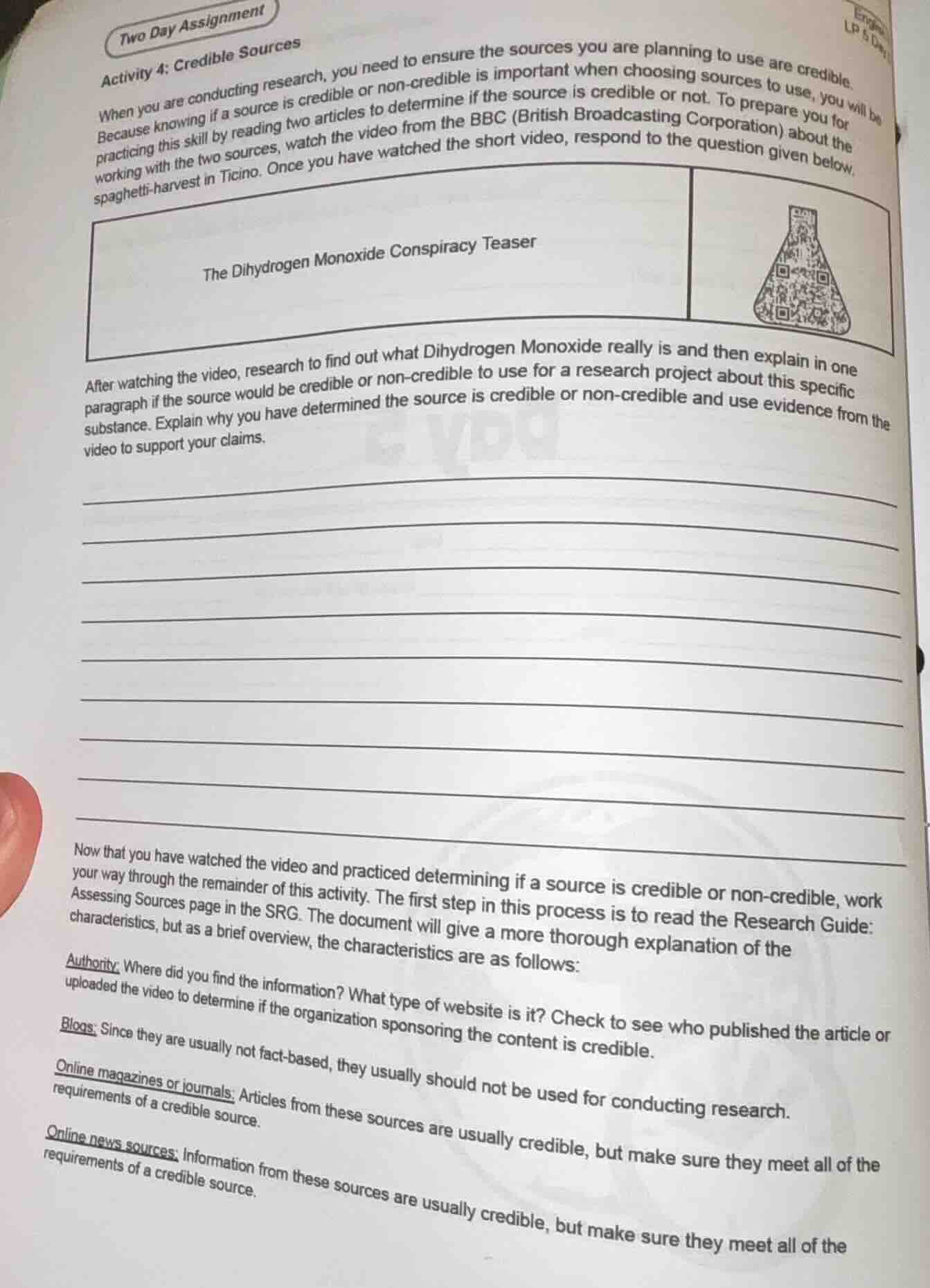
the dihydrogen monoxide conspiracy teaser
after watching the video, research to find out what dihydrogen monoxide really is and then explain in one
paragraph if the source would be credible or non - credible to use for a research project about this specific
substance. explain why you have determined the source is credible or non - credible and use evidence from the
video to support your claims.
now that you have watched the video and practiced determining if a source is credible or non - credible, work
your way through the remainder of this activity. the first step in this process is to read the research guide:
assessing sources page in the srg. the document will give a more thorough explanation of the
characteristics, but as a brief overview, the characteristics are as follows:
authority: where did you find the information? what type of website is it? check to see who published the article or
uploaded the video to determine if the organization sponsoring the content is credible.
blogs: since they are usually not fact - based, they usually should not be used for conducting research.
online magazines or journals: articles from these sources are usually credible, but make sure they meet all of the
requirements of a credible source.
online news sources: information from these sources are usually credible, but make sure they meet all of the
requirements of a credible source.
Dihydrogen Monoxide is actually water ($H_2O$). The video "The Dihydrogen Monoxide Conspiracy Teaser" likely presents misleading or satirical claims (e.g., framing water as a dangerous substance with a scientific - sounding name to mislead). For a research project on this substance, the source is non - credible. First, the content misrepresents water's properties (water is essential for life, not a dangerous conspiracy substance as the title implies). Second, credible sources about water would present accurate scientific information (like its chemical structure, role in ecosystems, and biological functions), while this video uses a misleading naming and framing to create a false narrative. Also, if the video is from an unvetted or satirical source (even if it appears to use scientific jargon), it fails the authority and accuracy checks for credible research sources.

Snap & solve any problem in the app
Get step-by-step solutions on Sovi AI
Photo-based solutions with guided steps
Explore more problems and detailed explanations
The source (the video "The Dihydrogen Monoxide Conspiracy Teaser") is non - credible for a research project on Dihydrogen Monoxide (water). It misrepresents water's nature with misleading framing, fails to provide accurate scientific info, and likely uses satirical or deceptive tactics (e.g., rebranding water with a scary - sounding name to create a false conspiracy). Credible sources for water research should offer accurate chemical, biological, and environmental data, which this video does not.