QUESTION IMAGE
Question
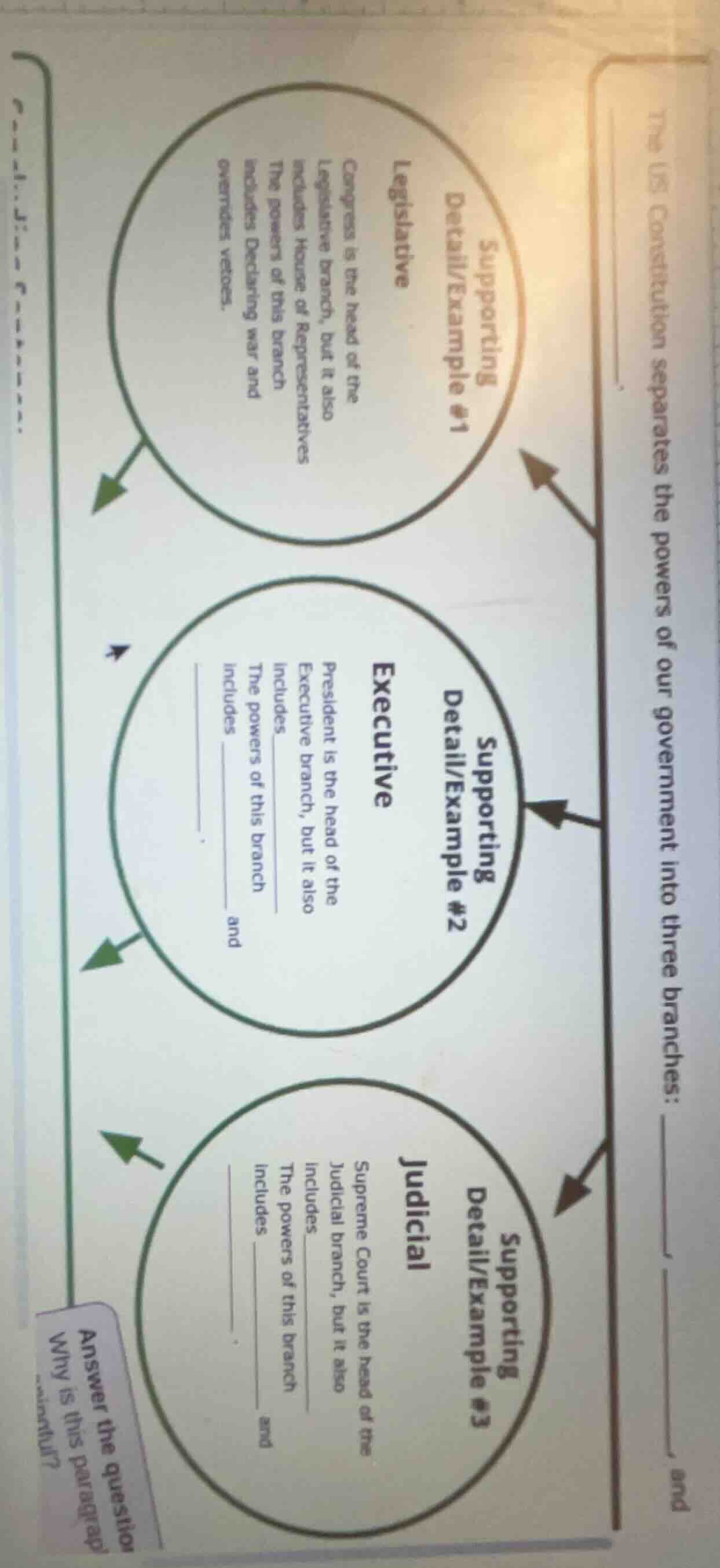
the us constitution separates the powers of our government into three branches: ____, __, and __.supporting detail/example #1legislativecongress is the head of the legislative branch, but it also includes house of representativesthe powers of this branch includes declaring war and overrides vetoes.supporting detail/example #2executivepresident is the head of the executive branch, but it also includes __the powers of this branch includes __ and __.supporting detail/example #3judicialsupreme court is the head of the judicial branch, but it also includes __the powers of this branch includes __ and ____.answer the question: why is this paragraph meaningful?
This covers the structure of the U.S. government's three branches, filling in standard details about each branch's members and core powers, plus the purpose of separation of powers.

Snap & solve any problem in the app
Get step-by-step solutions on Sovi AI
Photo-based solutions with guided steps
Explore more problems and detailed explanations
- The US Constitution separates the powers of our government into three branches: Legislative, Executive, and Judicial
---
Executive Branch:
- Includes the Vice President and Cabinet members (e.g., Secretary of State)
- The powers of this branch includes signing/vetoing bills and commanding the armed forces
---
Judicial Branch:
- Includes federal district courts and appellate courts
- The powers of this branch includes interpreting federal laws and reviewing laws for constitutionality
---
Why is this separation meaningful?
It creates a system of checks and balances, preventing any single branch from gaining too much power, protecting individual liberties, and ensuring accountability in governance.