QUESTION IMAGE
Question
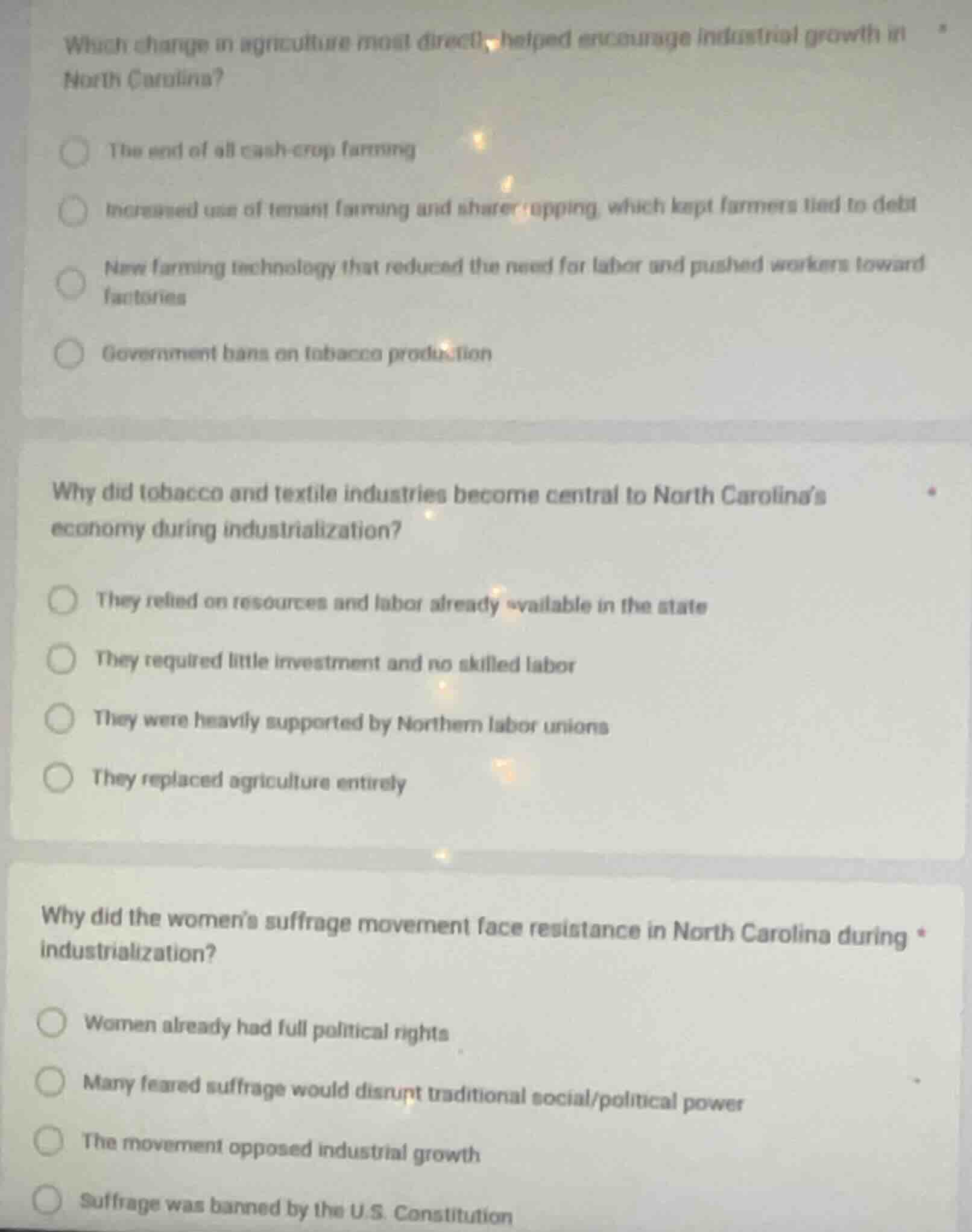
which change in agriculture most directly helped encourage industrial growth in north carolina?the end of all cash-crop farmingincreased use of tenant farming and sharecropping, which kept farmers tied to debtnew farming technology that reduced the need for labor and pushed workers toward factoriesgovernment bans on tobacco productionwhy did tobacco and textile industries become central to north carolinas economy during industrialization?they relied on resources and labor already available in the statethey required little investment and no skilled laborthey were heavily supported by northern labor unionsthey replaced agriculture entirelywhy did the womens suffrage movement face resistance in north carolina during industrialization?women already had full political rightsmany feared suffrage would disrupt traditional social/political powerthe movement opposed industrial growthsuffrage was banned by the u.s. constitution
- For the first question: Cash-crop farming (like tobacco) was key to NC agriculture, so ending it didn't help industry. Tenant farming kept farmers in debt, not moving to factories. Tobacco bans didn't happen. New tech freed labor for factories, directly aiding industrial growth.
- For the second question: NC had existing tobacco farming (a local resource) and a large rural workforce that could shift to textile mills. These industries needed some investment and basic skilled labor, weren't supported by Northern unions, and didn't replace agriculture entirely.
- For the third question: Women did not have full political rights in NC then. The suffrage movement didn't oppose industrial growth, and suffrage wasn't banned by the U.S. Constitution (the 19th Amendment later granted it). Resistance stemmed from fears that women voting would upset traditional social and political power structures.

Snap & solve any problem in the app
Get step-by-step solutions on Sovi AI
Photo-based solutions with guided steps
Explore more problems and detailed explanations
- New farming technology that reduced the need for labor and pushed workers toward factories
- They relied on resources and labor already available in the state
- Many feared suffrage would disrupt traditional social/political power