QUESTION IMAGE
Question
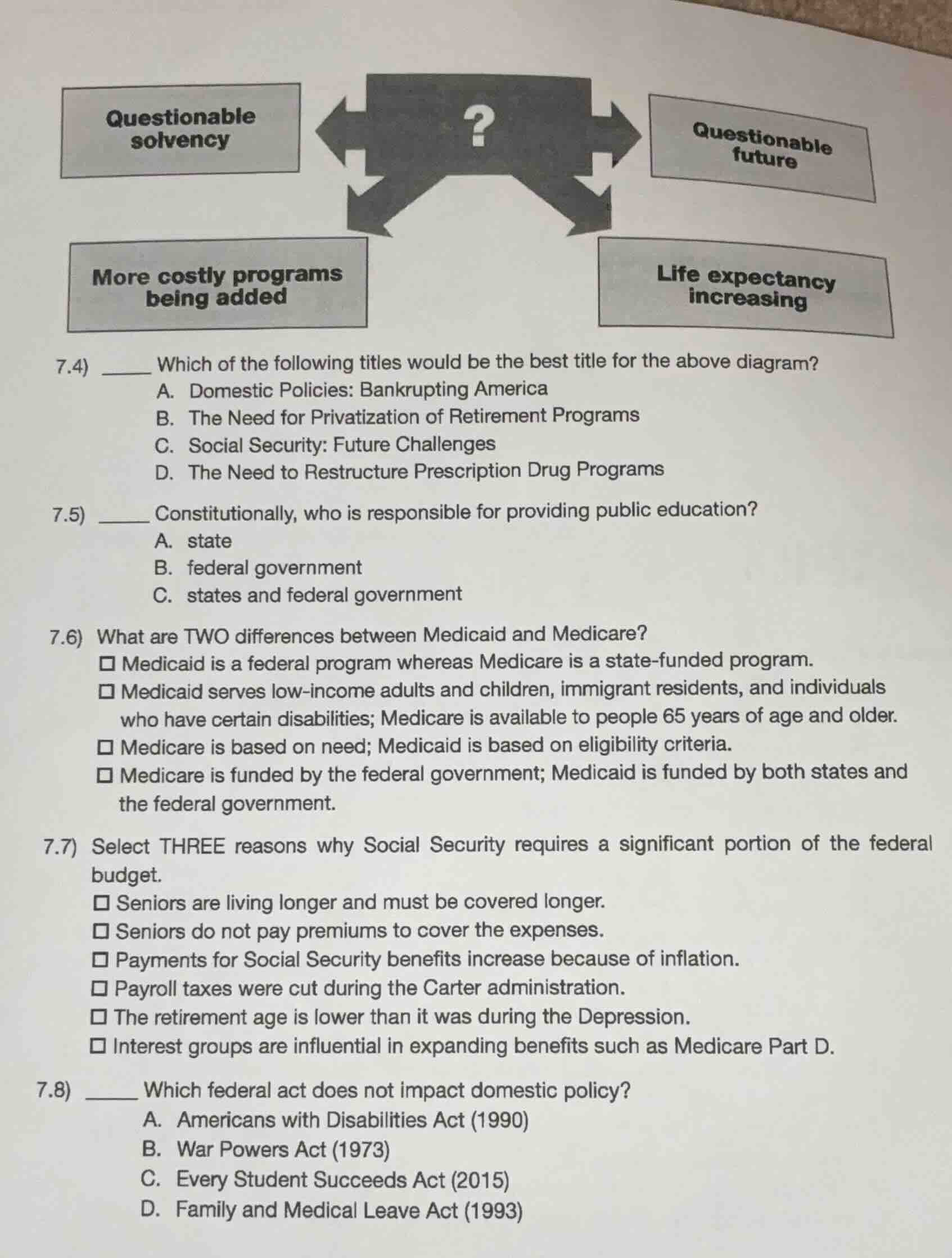
7.4) ______ which of the following titles would be the best title for the above diagram?
a. domestic policies: bankrupting america
b. the need for privatization of retirement programs
c. social security: future challenges
d. the need to restructure prescription drug programs
7.5) ______ constitutionally, who is responsible for providing public education?
a. state
b. federal government
c. states and federal government
7.6) what are two differences between medicaid and medicare?
☐ medicaid is a federal program whereas medicare is a state - funded program.
☐ medicaid serves low - income adults and children, immigrant residents, and individuals who have certain disabilities; medicare is available to people 65 years of age and older.
☐ medicare is based on need; medicaid is based on eligibility criteria.
☐ medicare is funded by the federal government; medicaid is funded by both states and the federal government.
7.7) select three reasons why social security requires a significant portion of the federal budget.
☐ seniors are living longer and must be covered longer.
☐ seniors do not pay premiums to cover the expenses.
☐ payments for social security benefits increase because of inflation.
☐ payroll taxes were cut during the carter administration.
☐ the retirement age is lower than it was during the depression.
☐ interest groups are influential in expanding benefits such as medicare part d.
7.8) ______ which federal act does not impact domestic policy?
a. americans with disabilities act (1990)
b. war powers act (1973)
c. every student succeeds act (2015)
d. family and medical leave act (1993)
7.4) The diagram lists issues like funding concerns, rising costs, longer lifespans, and uncertain outlook, which are core challenges facing the U.S. Social Security program. Other options are too narrow or inaccurate.
7.5) Under the U.S. Constitution, public education is a power reserved to the states, with the federal government playing a secondary, supportive role.
7.6) Medicaid targets low-income/disabled groups and is jointly funded, while Medicare serves those 65+ and is federally funded. The other options contain factual reversals.
7.7) Longer lifespans mean extended benefit payouts, inflation increases benefit amounts, and interest groups push for expanded costly benefits, all driving up Social Security's budget needs. The other options are incorrect facts.
7.8) The War Powers Act governs military/congressional war authority, a foreign policy issue, while the others regulate domestic areas like disability rights, education, and family leave.

Snap & solve any problem in the app
Get step-by-step solutions on Sovi AI
Photo-based solutions with guided steps
Explore more problems and detailed explanations
7.4) C. Social Security: Future Challenges
7.5) A. state
7.6) - Medicaid serves low-income adults and children, immigrant residents, and individuals who have certain disabilities; Medicare is available to people 65 years of age and older.
- Medicare is funded by the federal government; Medicaid is funded by both states and the federal government.
7.7) - Seniors are living longer and must be covered longer.
- Payments for Social Security benefits increase because of inflation.
- Interest groups are influential in expanding benefits such as Medicare Part D.
7.8) B. War Powers Act (1973)