QUESTION IMAGE
Question
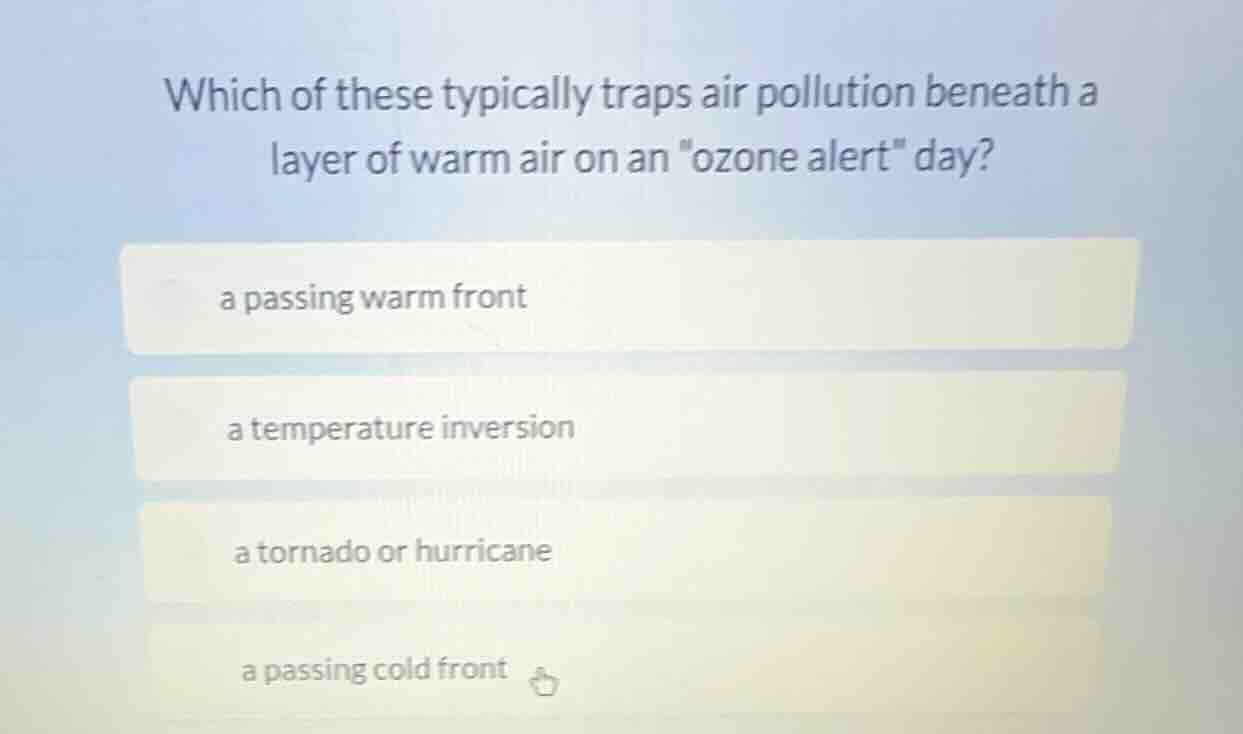
which of these typically traps air pollution beneath a layer of warm air on an \ozone alert\ day?
a passing warm front
a temperature inversion
a tornado or hurricane
a passing cold front
A temperature inversion occurs when a layer of warm air lies above cooler air near the ground. This warm layer acts as a lid, preventing pollutants from rising and dispersing, thus trapping air pollution (like ozone - forming pollutants) near the surface, which is common on "ozone alert" days. A passing warm front brings gradual temperature changes and doesn't trap pollution in this way. Tornadoes/hurricanes are storm systems that don't trap pollution under warm air layers. A passing cold front brings cooler air and usually helps disperse pollutants.

Snap & solve any problem in the app
Get step-by-step solutions on Sovi AI
Photo-based solutions with guided steps
Explore more problems and detailed explanations
B. a temperature inversion