QUESTION IMAGE
Question
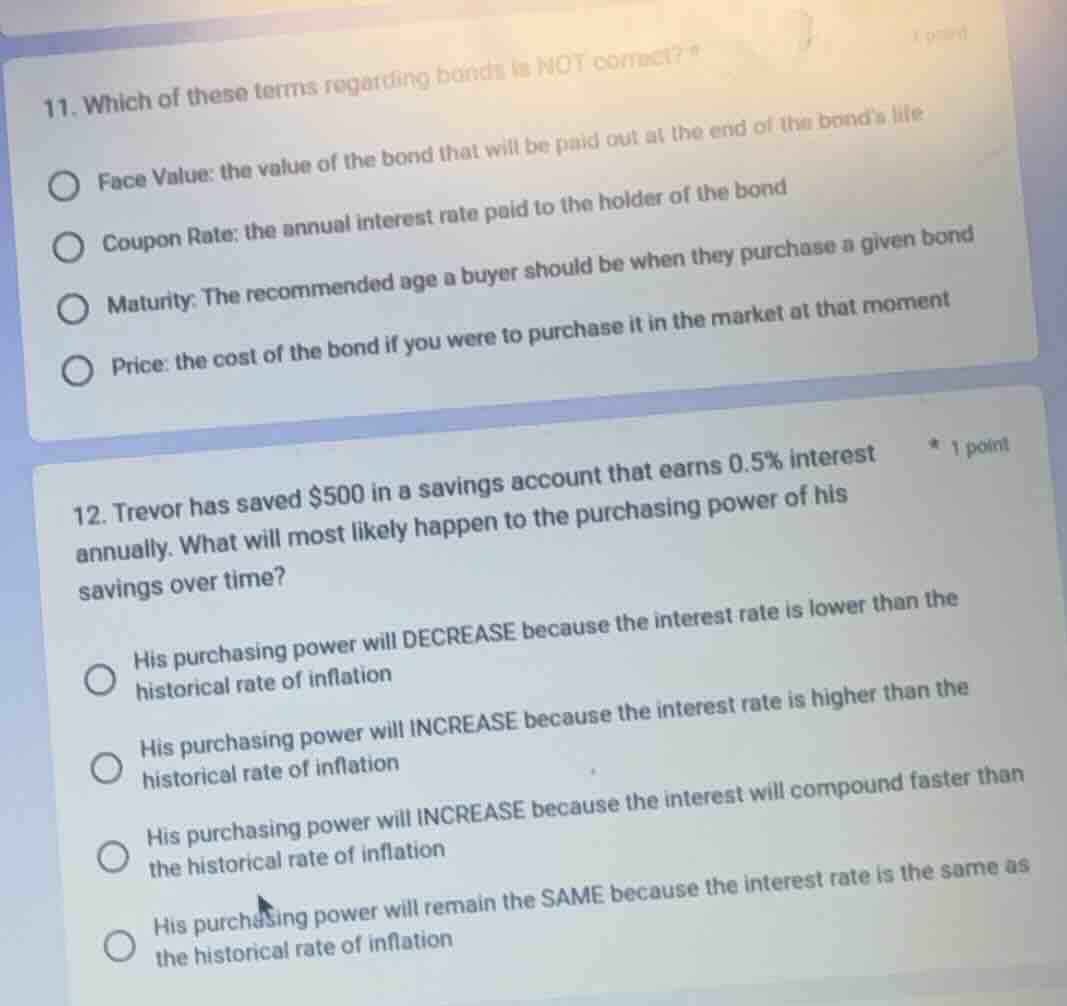
- which of these terms regarding bonds is not correct?
face value: the value of the bond that will be paid out at the end of the bonds life
coupon rate: the annual interest rate paid to the holder of the bond
maturity: the recommended age a buyer should be when they purchase a given bond
price: the cost of the bond if you were to purchase it in the market at that moment
- trevor has saved $500 in a savings account that earns 0.5% interest annually. what will most likely happen to the purchasing power of his savings over time?
his purchasing power will decrease because the interest rate is lower than the historical rate of inflation
his purchasing power will increase because the interest rate is higher than the historical rate of inflation
his purchasing power will increase because the interest will compound faster than the historical rate of inflation
his purchasing power will remain the same because the interest rate is the same as the historical rate of inflation
Question 11:
Step1: Define bond terms
Face Value = repayment at bond end: correct.
Coupon Rate = annual interest rate: correct.
Maturity = bond's lifespan, not buyer age: incorrect.
Price = current market cost: correct.
Question 12:
Step1: Compare rate vs inflation
Historical inflation (~2-3% annually) > 0.5% interest.
Step2: Evaluate purchasing power
When interest < inflation, savings grow slower than price increases, so purchasing power falls.

Snap & solve any problem in the app
Get step-by-step solutions on Sovi AI
Photo-based solutions with guided steps
Explore more problems and detailed explanations
- Maturity: The recommended age a buyer should be when they purchase a given bond
- His purchasing power will DECREASE because the interest rate is lower than the historical rate of inflation