QUESTION IMAGE
Question
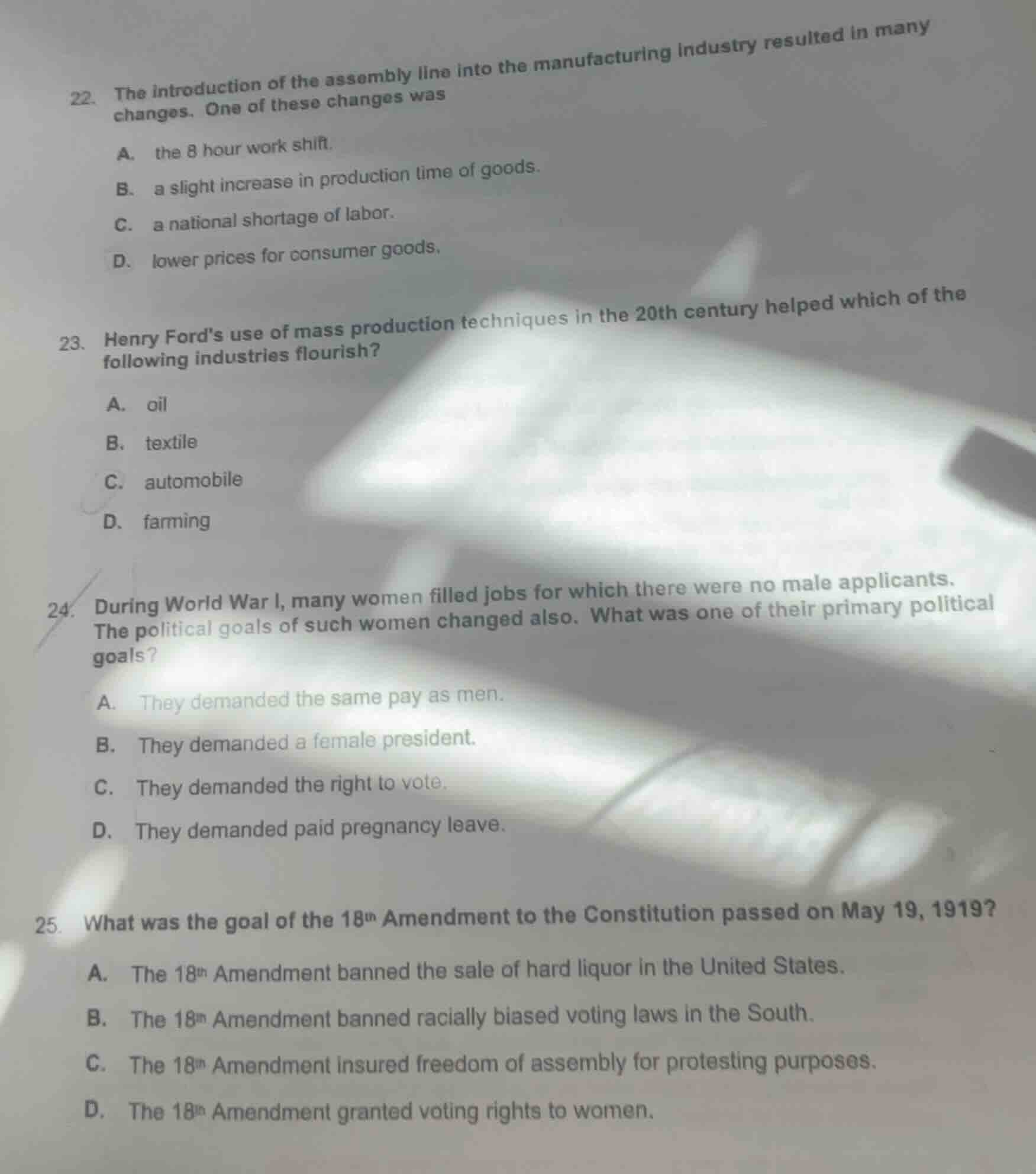
- the introduction of the assembly line into the manufacturing industry resulted in many changes. one of these changes was
a. the 8 hour work shift.
b. a slight increase in production time of goods.
c. a national shortage of labor.
d. lower prices for consumer goods.
- henry ford’s use of mass production techniques in the 20th century helped which of the following industries flourish?
a. oil
b. textile
c. automobile
d. farming
- during world war i, many women filled jobs for which there were no male applicants. the political goals of such women changed also. what was one of their primary political goals?
a. they demanded the same pay as men.
b. they demanded a female president.
c. they demanded the right to vote.
d. they demanded paid pregnancy leave.
- what was the goal of the 18th amendment to the constitution passed on may 19, 1919?
a. the 18th amendment banned the sale of hard liquor in the united states.
b. the 18th amendment banned racially biased voting laws in the south.
c. the 18th amendment insured freedom of assembly for protesting purposes.
d. the 18th amendment granted voting rights to women.
Question 22
The assembly line increased production efficiency, reducing costs. Lower production costs lead to lower consumer prices. Option A: 8 - hour shift was related to labor movements, not assembly line. Option B: Assembly line decreased production time. Option C: Assembly line didn't cause labor shortage. So D is correct.
Henry Ford's mass production was for automobiles (Model T). Oil, textile, and farming industries weren't directly flourished by his automobile - focused mass production. So C is correct.
During WWI, women's work in jobs previously for men led to increased push for suffrage (right to vote). Option A: Equal pay was a later goal. Option B: Female president was not a primary goal then. Option D: Paid pregnancy leave was not a primary political goal at that time. So C is correct.

Snap & solve any problem in the app
Get step-by-step solutions on Sovi AI
Photo-based solutions with guided steps
Explore more problems and detailed explanations
D. lower prices for consumer goods.