QUESTION IMAGE
Question
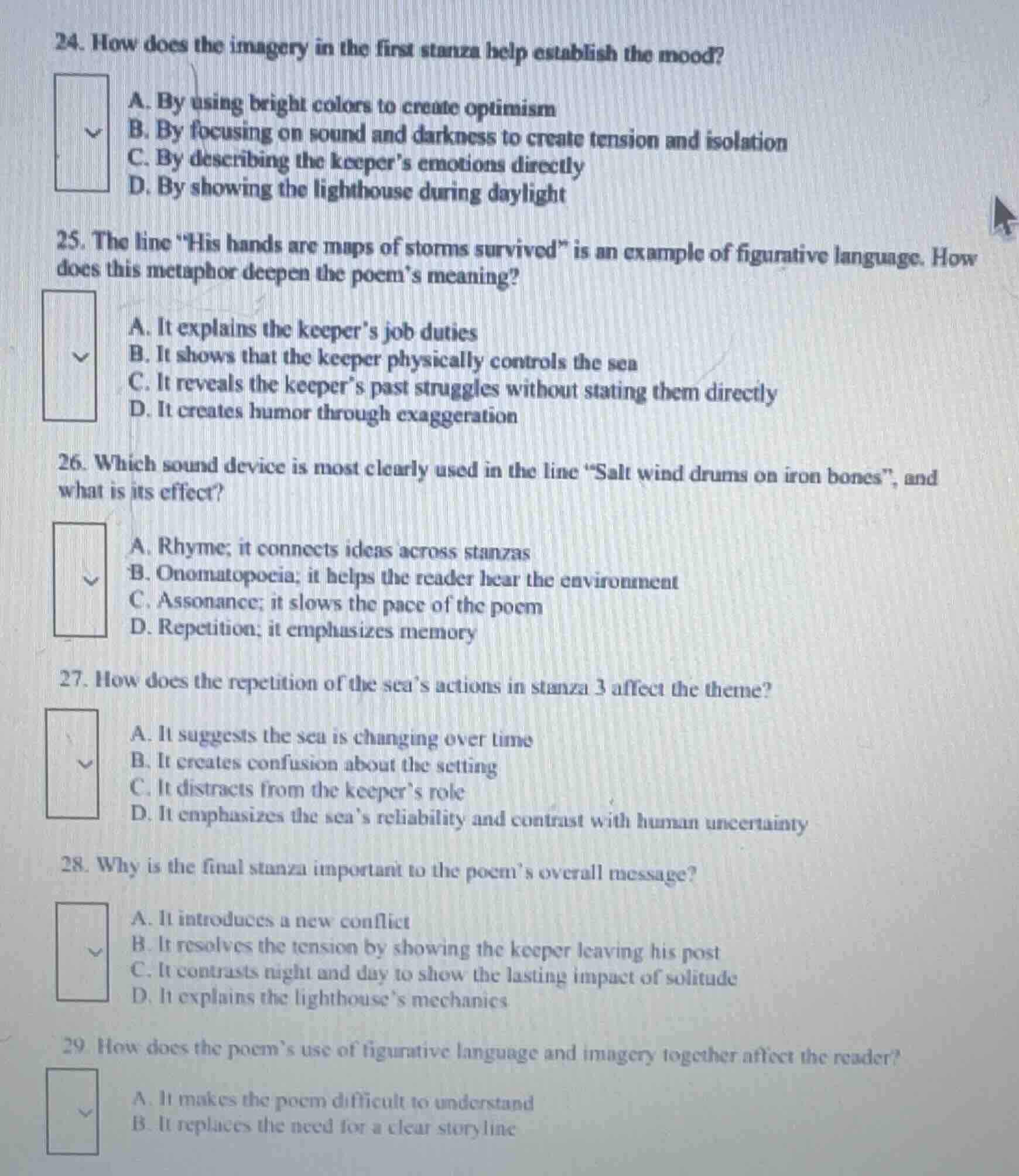
- how does the imagery in the first stanza help establish the mood?
a. by using bright colors to create optimism
b. by focusing on sound and darkness to create tension and isolation
c. by describing the keeper’s emotions directly
d. by showing the lighthouse during daylight
- the line “his hands are maps of storms survived” is an example of figurative language. how does this metaphor deepen the poem’s meaning?
a. it explains the keeper’s job duties
b. it shows that the keeper physically controls the sea
c. it reveals the keeper’s past struggles without stating them directly
d. it creates humor through exaggeration
- which sound device is most clearly used in the line “salt wind drums on iron bones”, and what is its effect?
a. rhyme; it connects ideas across stanzas
b. onomatopoeia; it helps the reader hear the environment
c. assonance; it slows the pace of the poem
d. repetition; it emphasizes memory
- how does the repetition of the sea’s actions in stanza 3 affect the theme?
a. it suggests the sea is changing over time
b. it creates confusion about the setting
c. it distracts from the keeper’s role
d. it emphasizes the sea’s reliability and contrast with human uncertainty
- why is the final stanza important to the poem’s overall message?
a. it introduces a new conflict
b. it resolves the tension by showing the keeper leaving his post
c. it contrasts night and day to show the lasting impact of solitude
d. it explains the lighthouse’s mechanics
- how does the poem’s use of figurative language and imagery together affect the reader?
a. it makes the poem difficult to understand
b. it replaces the need for a clear storyline
- Lighthouse poems often use dark, sound-focused imagery to build tense, isolated moods; bright colors/daylight don't fit this tone, and direct emotion description isn't imagery.
- The metaphor compares hands to storm maps, indirectly showing past hardships without explicit statements, not job duties, sea control, or humor.
- "Drums" mimics the sound of wind hitting the lighthouse, which is onomatopoeia, letting readers hear the environment; rhyme, assonance, and repetition don't match this line.
- Repeating the sea's actions highlights its unchanging nature, contrasting with human uncertainty, rather than showing change, confusion, or distraction.
- The final stanza typically emphasizes the keeper's long-term solitude by contrasting night/day, not introducing conflict, resolving tension via leaving, or explaining mechanics.
- (Note: Option B is cut off, but based on standard poetic analysis, figurative language and imagery immerse readers, so the intended correct answer would align with this; assuming the complete option B or another valid choice, but based on the pattern, the core logic is that these devices deepen engagement rather than making it hard or replacing storyline.)

Snap & solve any problem in the app
Get step-by-step solutions on Sovi AI
Photo-based solutions with guided steps
Explore more problems and detailed explanations
- B. By focusing on sound and darkness to create tension and isolation
- C. It reveals the keeper's past struggles without stating them directly
- B. Onomatopoeia; it helps the reader hear the environment
- D. It emphasizes the sea's reliability and contrast with human uncertainty
- C. It contrasts night and day to show the lasting impact of solitude
- (Note: The option text is incomplete. Based on poetic principles, the correct answer would be the choice that states figurative language and imagery enhance reader engagement/understanding; if the full option B is "It replaces the need for a clear storyline" this is incorrect, so a complete valid option would be the intended answer.)