QUESTION IMAGE
Question
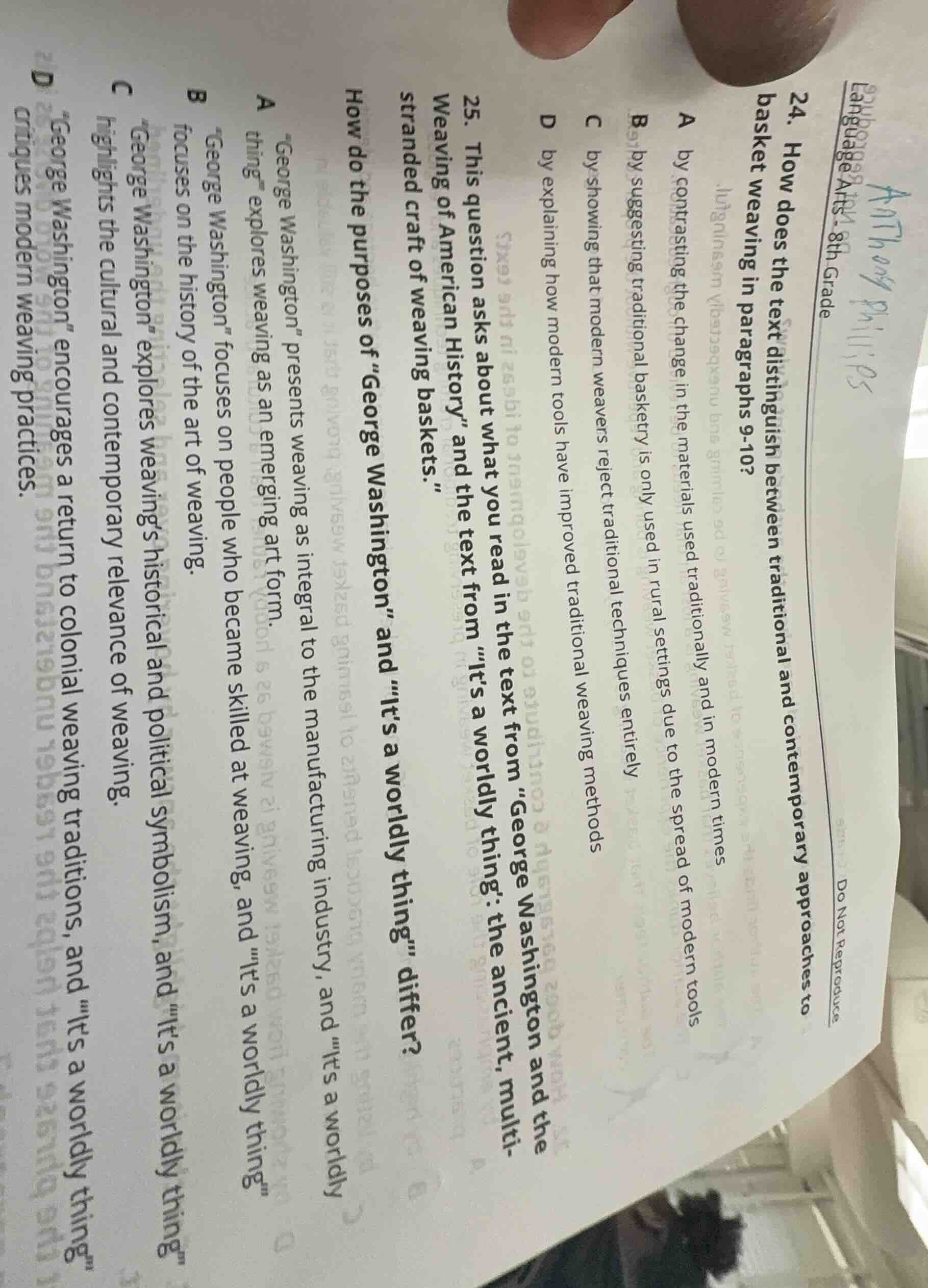
- how does the text distinguish between traditional and contemporary approaches to basket weaving in paragraphs 9 - 10? a by contrasting the change in the materials used traditionally and in modern times b by suggesting traditional basketry is only used in rural settings due to the spread of modern tools c by showing that modern weavers reject traditional techniques entirely d by explaining how modern tools have improved traditional weaving methods 25. this question asks about what you read in the text from “george washington and the weaving of american history” and the text from “it’s a worldly thing”: the ancient, multi - stranded craft of weaving baskets. how do the purposes of “george washington” and “it’s a worldly thing” differ? a “george washington” presents weaving as integral to the manufacturing industry, and “it’s a worldly thing” explores weaving as an emerging art form. b “george washington” focuses on people who became skilled at weaving, and “it’s a worldly thing” focuses on the history of the art of weaving. c “george washington” explores weaving’s historical and political symbolism, and “it’s a worldly thing” highlights the cultural and contemporary relevance of weaving. d “george washington” encourages a return to colonial weaving traditions, and “it’s a worldly thing” critiques modern weaving practices.
Brief Explanations
For question 24: The question asks how the text distinguishes traditional and contemporary basket weaving. Option A directly addresses comparing material use across time periods, which is a clear contrast between traditional and modern approaches.
For question 25: The "George Washington" text frames weaving as tied to historical/political symbolism and cultural relevance, while "It's a worldly thing" positions weaving as an ancient, global craft. Option C matches this distinction.

Snap & solve any problem in the app
Get step-by-step solutions on Sovi AI
Photo-based solutions with guided steps
Explore more problems and detailed explanations
- A by contrasting the change in the materials used traditionally and in modern times
- C "George Washington" explores weaving's historical and political symbolism, and "It's a worldly thing" highlights the cultural and contemporary relevance of weaving.