QUESTION IMAGE
Question
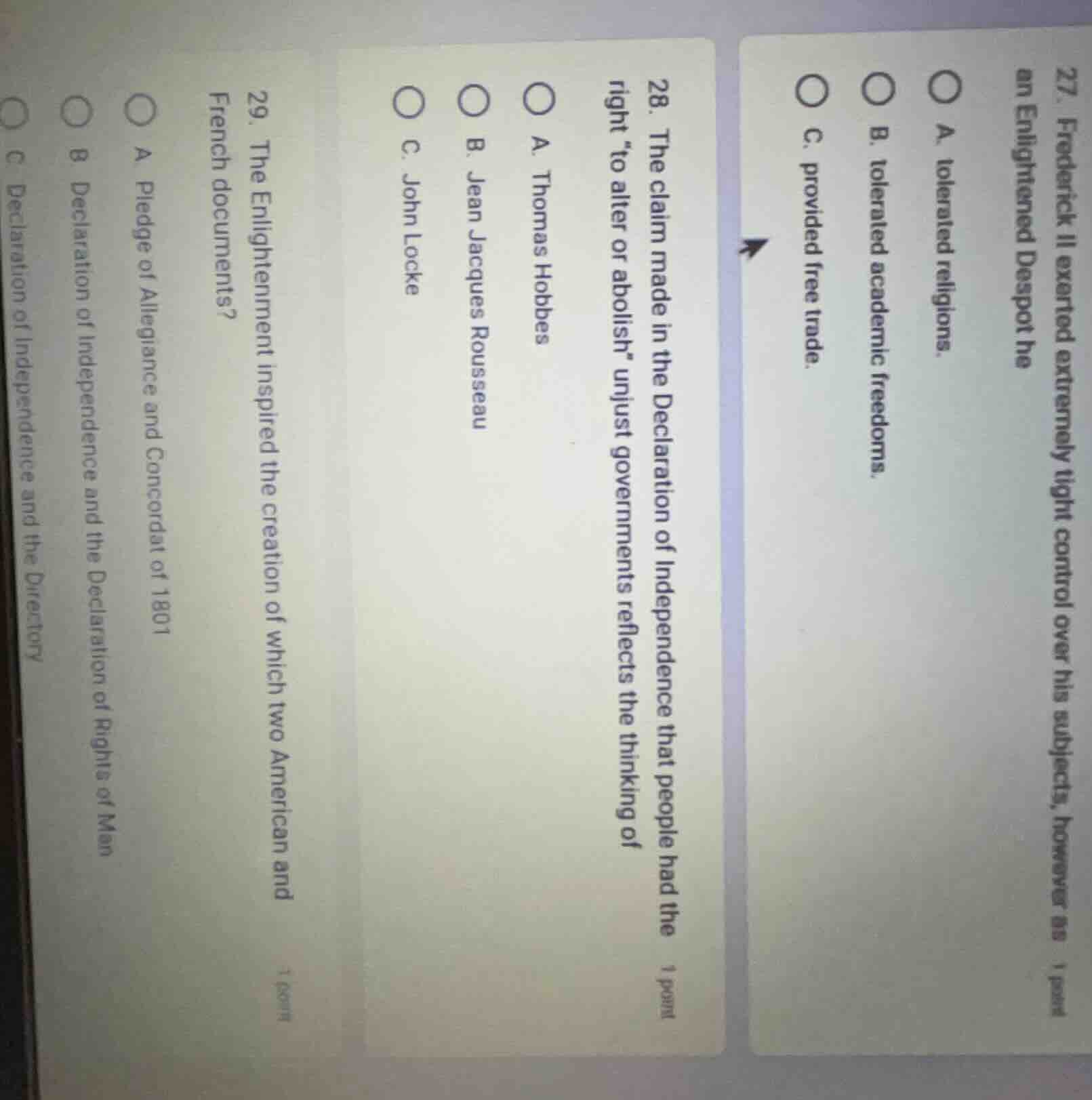
- frederick ii exerted extremely tight control over his subjects, however as an enlightened despot he
a. tolerated religions.
b. tolerated academic freedoms.
c. provided free trade.
- the claim made in the declaration of independence that people had the right \to alter or abolish\ unjust governments reflects the thinking of
a. thomas hobbes
b. jean jacques rousseau
c. john locke
- the enlightenment inspired the creation of which two american and french documents?
a pledge of allegiance and concordat of 1801
b declaration of independence and the declaration of rights of men
c declaration of independence and the directory
Question 27
Frederick II (Frederick the Great) of Prussia, as an Enlightened Despot, was known for tolerating different religions (like allowing religious freedom to a degree, including for Protestants, Catholics, and Jews in Prussia) rather than focusing on academic freedoms or free trade in the context of his enlightened despotism.
The idea that people have the right to alter or abolish unjust governments comes from John Locke's social contract theory, where he emphasized that if a government fails to protect people's natural rights (life, liberty, property), the people have the right to change it. Thomas Hobbes' view was more about a strong sovereign to avoid chaos, and Rousseau's social contract focused on the general will but not this specific right to abolish unjust governments in the same way Locke did.
The Enlightenment's ideas of natural rights, liberty, and equality inspired the Declaration of Independence (American, with ideas of unalienable rights) and the Declaration of the Rights of Man (French, which outlined civil rights and liberties). The Pledge of Allegiance and Concordat of 1801 don't match, and the Directory was a French government structure, not a document inspired by Enlightenment for rights like the other two.

Snap & solve any problem in the app
Get step-by-step solutions on Sovi AI
Photo-based solutions with guided steps
Explore more problems and detailed explanations
A. tolerated religions.