QUESTION IMAGE
Question
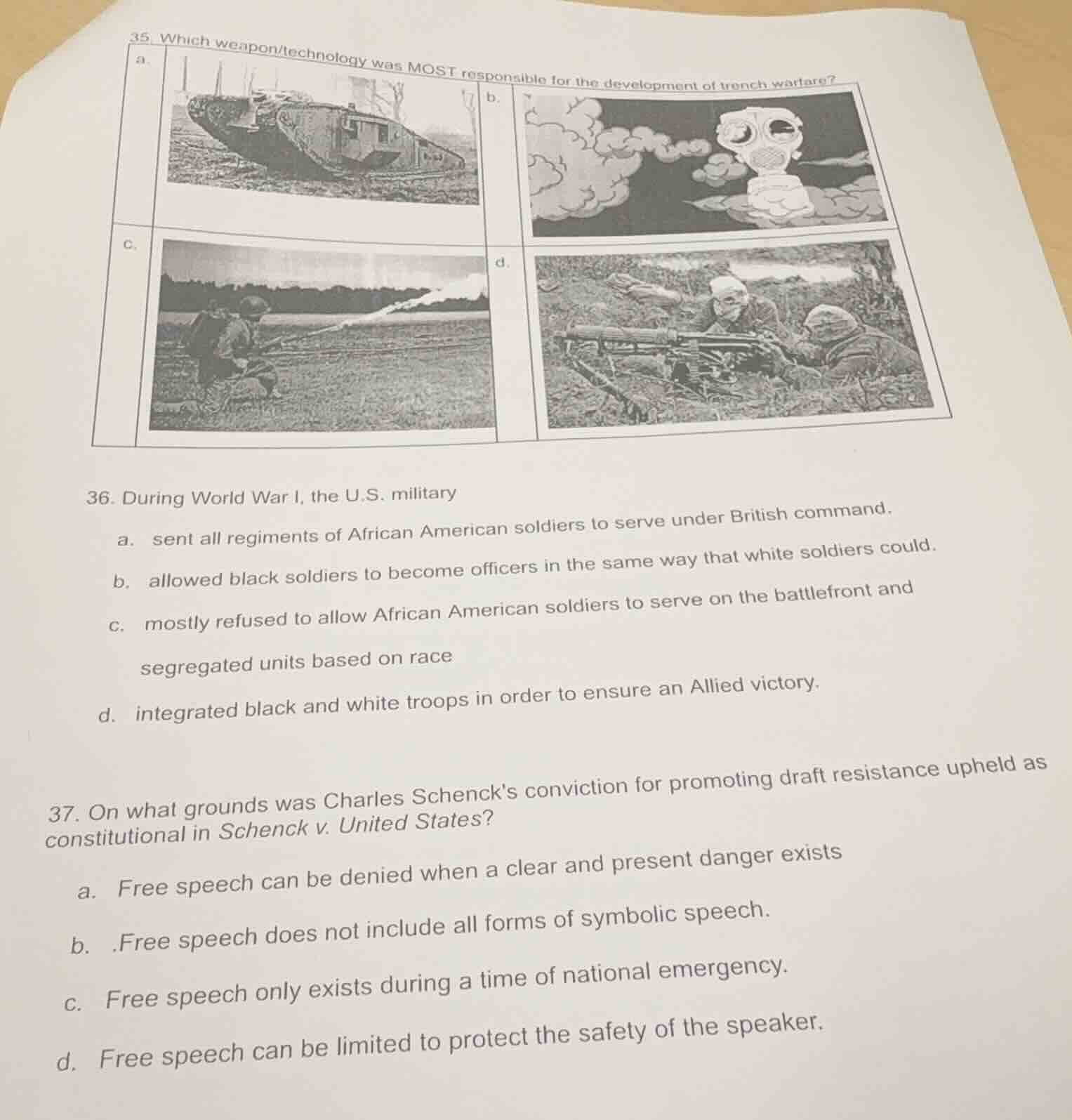
35 which weapon/technology was most responsible for the development of trench warfare?
a. image of a tank
b. image of a gas mask
c. image of a soldier with a flamethrower
d. image of soldiers with a machine gun
- during world war i, the u.s. military
a. sent all regiments of african american soldiers to serve under british command.
b. allowed black soldiers to become officers in the same way that white soldiers could.
c. mostly refused to allow african american soldiers to serve on the battlefront and segregated units based on race
d. integrated black and white troops in order to ensure an allied victory.
- on what grounds was charles schenck’s conviction for promoting draft resistance upheld as constitutional in schenck v. united states?
a. free speech can be denied when a clear and present danger exists
b. free speech does not include all forms of symbolic speech.
c. free speech only exists during a time of national emergency.
d. free speech can be limited to protect the safety of the speaker.
Question 35:
Trench warfare developed because defensive weapons made open attacks suicidal. Machine guns (option d) could mow down advancing troops at long range, forcing armies to dig trenches for protection. Tanks (a) were developed later to break trench stalemates, flamethrowers (c) were a close-range weapon, and poison gas (b) was an offensive tool but not the core driver of trench warfare's creation.
Question 36:
During WWI, the U.S. military was strictly segregated. African American soldiers were mostly assigned to non-combat support roles, and their units were segregated by race. They were not integrated (d), rarely allowed to become officers on equal footing with whites (b), and only some regiments served under French (not British) command (a).
Question 37:
In Schenck v. United States, the Supreme Court established the "clear and present danger" test. It ruled that free speech can be restricted if it creates a clear, immediate risk of harm; Schenck's anti-draft leaflets were seen as threatening the war effort during WWI.

Snap & solve any problem in the app
Get step-by-step solutions on Sovi AI
Photo-based solutions with guided steps
Explore more problems and detailed explanations
- d. [Image of soldiers operating a machine gun]
- c. mostly refused to allow African American soldiers to serve on the battlefront and segregated units based on race
- a. Free speech can be denied when a clear and present danger exists