QUESTION IMAGE
Question
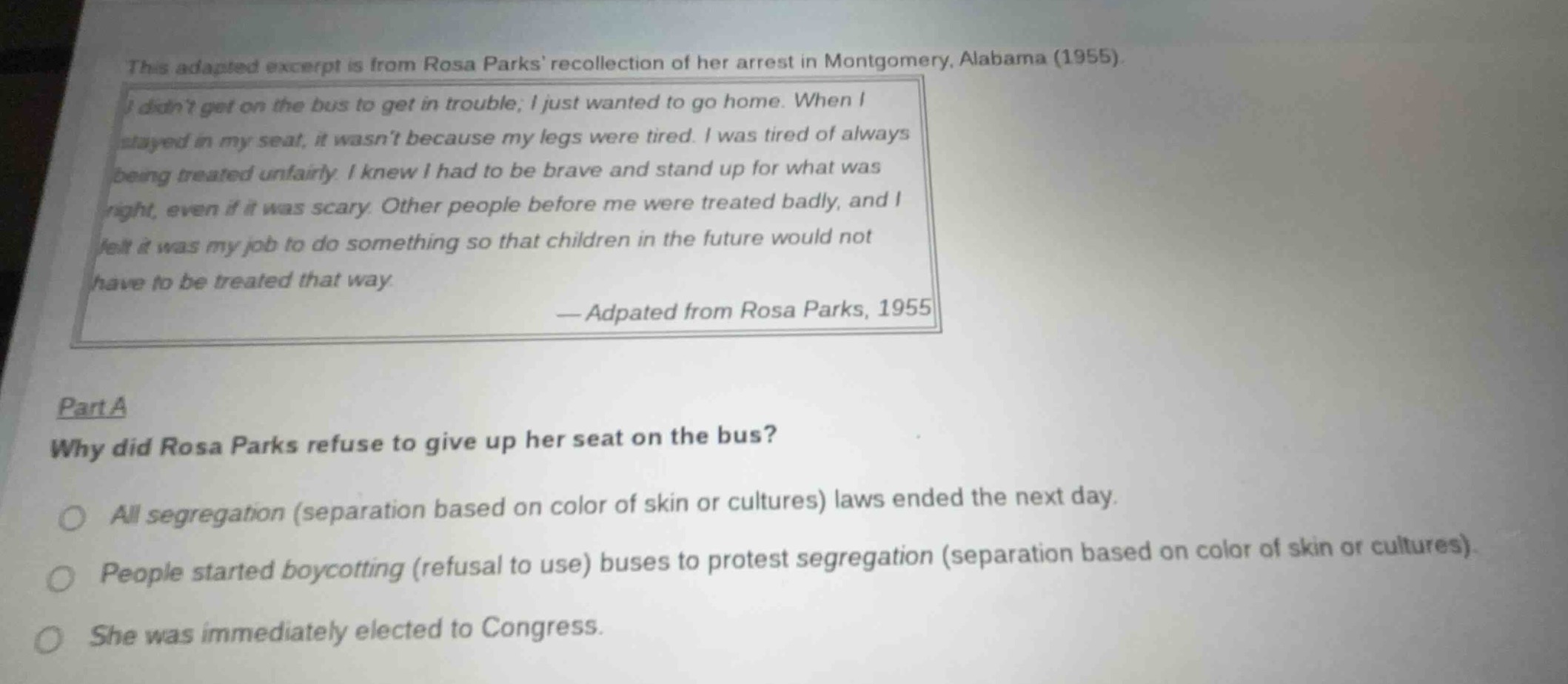
this adapted excerpt is from rosa parks recollection of her arrest in montgomery, alabama (1955).
i didnt get on the bus to get in trouble; i just wanted to go home. when i
stayed in my seat, it wasnt because my legs were tired. i was tired of always
being treated unfairly. i knew i had to be brave and stand up for what was
right, even if it was scary. other people before me were treated badly, and i
felt it was my job to do something so that children in the future would not
have to be treated that way.
— adpated from rosa parks, 1955
part a
why did rosa parks refuse to give up her seat on the bus?
○ all segregation (separation based on color of skin or cultures) laws ended the next day.
○ people started boycotting (refusal to use) buses to protest segregation (separation based on color of skin or cultures).
○ she was immediately elected to congress.
The question asks for Rosa Parks' reason for refusing her seat, so we need to match the option to her stated motivation in the excerpt: she was tired of unfair treatment and wanted to stand up for justice so future generations wouldn't face the same. The other options describe consequences of her action, not her reason.

Snap & solve any problem in the app
Get step-by-step solutions on Sovi AI
Photo-based solutions with guided steps
Explore more problems and detailed explanations
None of the provided options correctly state her reason. The actual reason, from her excerpt, is that she was tired of being treated unfairly, wanted to stand up for what was right, and act so future children would not face the same unfair treatment.
Note: The listed options all describe outcomes of her action, not her motivation for refusing to give up her seat.