QUESTION IMAGE
Question
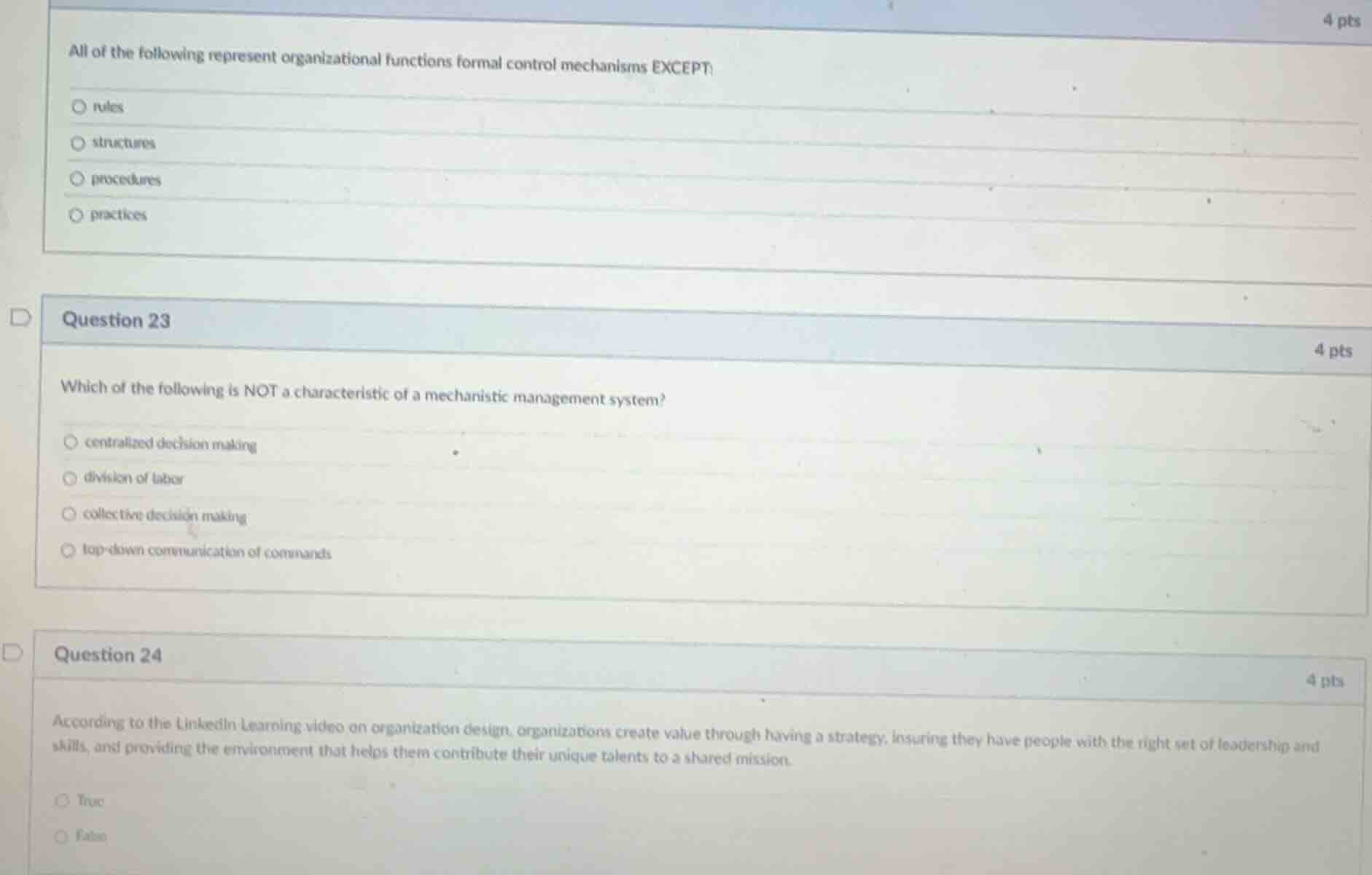
all of the following represent organizational functions formal control mechanisms except:
○ rules
○ structures
○ procedures
○ practices
question 23
4 pts
which of the following is not a characteristic of a mechanistic management system?
○ centralized decision making
○ division of labor
○ collective decision making
○ top - down communication of commands
question 24
4 pts
according to the linkedin learning video on organization design, organizations create value through having a strategy, insuring they have people with the right set of leadership and skills, and providing the environment that helps them contribute their unique talents to a shared mission.
○ true
○ false
Question (First Question: All of the following represent organizational functions formal control mechanisms EXCEPT)
Formal control mechanisms in organizations include rules (official guidelines), structures (organizational hierarchy), and procedures (defined steps). Practices are often more informal or unwritten ways of doing things, so they are not a formal control mechanism.
Mechanistic management systems have centralized decision - making (decisions from top), division of labor (specialized tasks), and top - down communication. Collective decision - making is a characteristic of organic systems (more decentralized), so it is not a characteristic of mechanistic systems.
This statement aligns with how organizations create value: a clear strategy, skilled people with leadership abilities, and an enabling environment for them to contribute to the mission. So the statement is true.

Snap & solve any problem in the app
Get step-by-step solutions on Sovi AI
Photo-based solutions with guided steps
Explore more problems and detailed explanations
D. practices (assuming the options are labeled A: rules, B: structures, C: procedures, D: practices; if labels differ, adjust but the correct option is the one with "practices")