QUESTION IMAGE
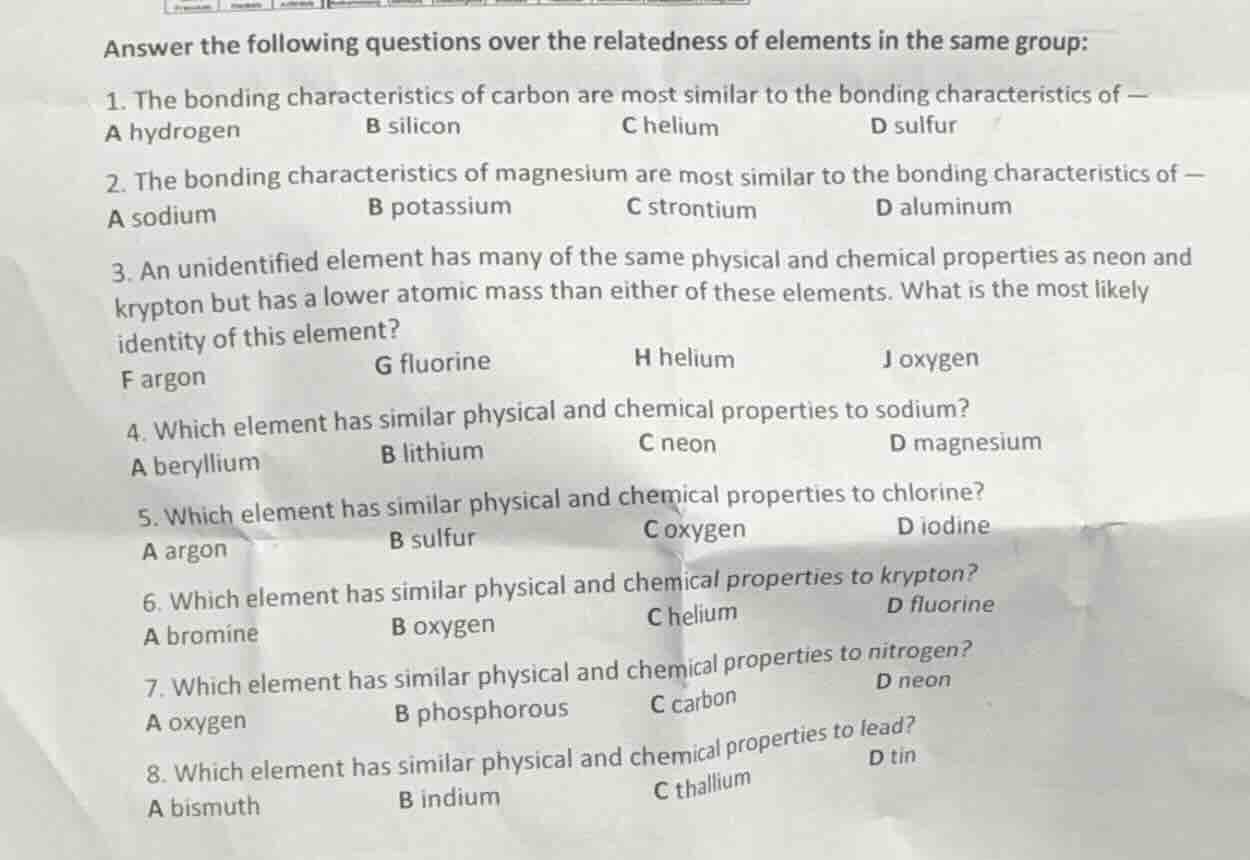
Question
answer the following questions over the relatedness of elements in the same group:
- the bonding characteristics of carbon are most similar to the bonding characteristics of —
a hydrogen b silicon c helium d sulfur
- the bonding characteristics of magnesium are most similar to the bonding characteristics of —
a sodium b potassium c strontium d aluminum
- an unidentified element has many of the same physical and chemical properties as neon and krypton but has a lower atomic mass than either of these elements. what is the most likely identity of this element?
f argon g fluorine h helium j oxygen
- which element has similar physical and chemical properties to sodium?
a beryllium b lithium c neon d magnesium
- which element has similar physical and chemical properties to chlorine?
a argon b sulfur c oxygen d iodine
- which element has similar physical and chemical properties to krypton?
a bromine b oxygen c helium d fluorine
- which element has similar physical and chemical properties to nitrogen?
a oxygen b phosphorous c carbon d neon
- which element has similar physical and chemical properties to lead?
a bismuth b indium c thallium d tin
Elements in the same group (vertical column) of the periodic table have identical valence electron configurations, leading to similar bonding, physical, and chemical properties. For each question, match the given element to its group member:
- Carbon is in Group 14; silicon is also in Group 14.
- Magnesium is in Group 2; strontium is also in Group 2.
- Neon and krypton are noble gases (Group 18); helium is a noble gas with lower atomic mass than both.
- Sodium is in Group 1; lithium is also in Group 1.
- Chlorine is in Group 17; iodine is also in Group 17.
- Krypton is in Group 18; helium is also in Group 18.
- Nitrogen is in Group 15; phosphorus is also in Group 15.
- Lead is in Group 14; tin is also in Group 14.

Snap & solve any problem in the app
Get step-by-step solutions on Sovi AI
Photo-based solutions with guided steps
Explore more problems and detailed explanations
- B silicon
- C strontium
- H helium
- B lithium
- D iodine
- C helium
- B phosphorous
- D tin