QUESTION IMAGE
Question
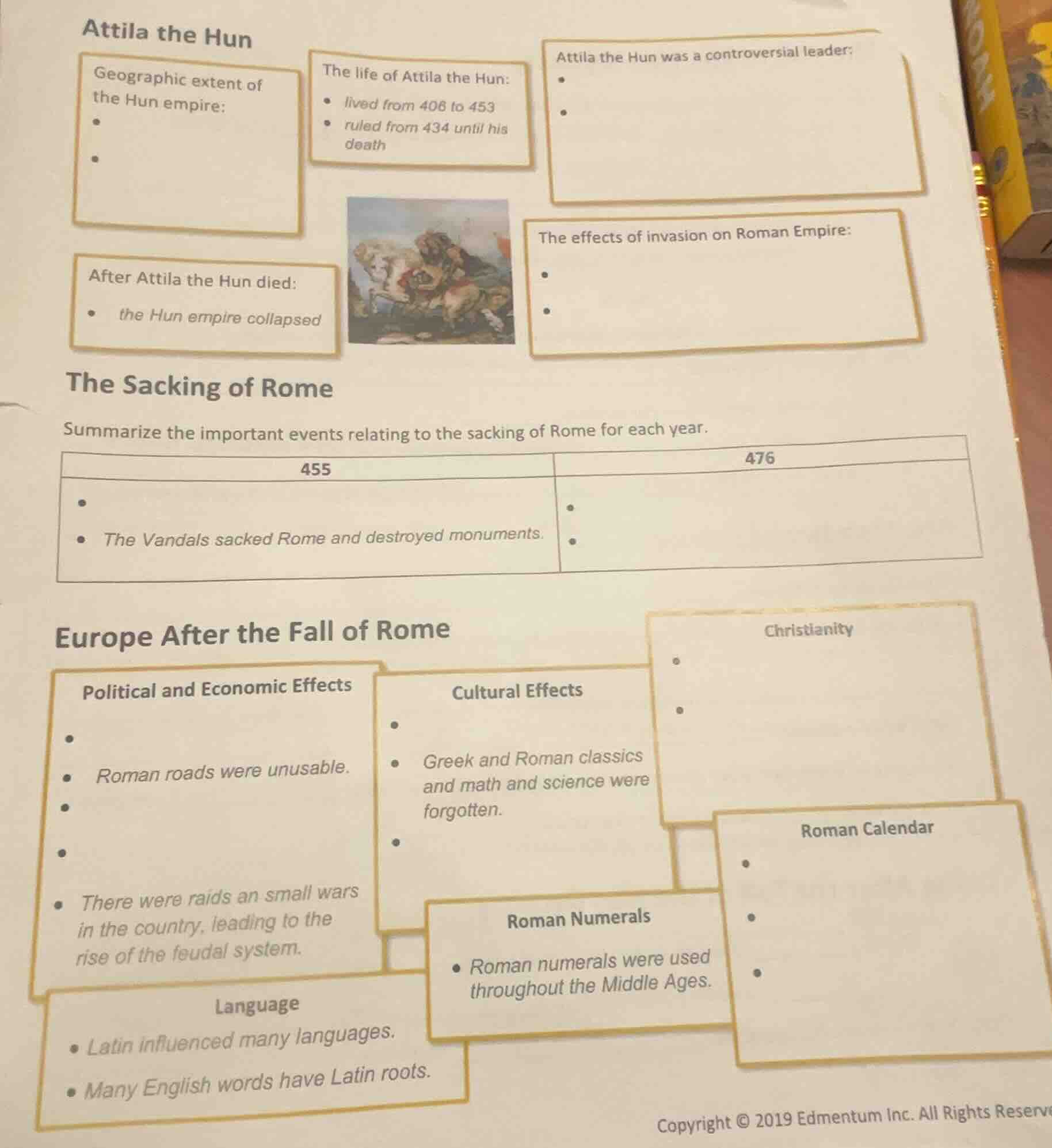
attila the hun
geographic extent of
the hun empire:
the life of attila the hun:
- lived from 406 to 453
- ruled from 434 until his
death
attila the hun was a controversial leader:
after attila the hun died:
- the hun empire collapsed
the effects of invasion on roman empire:
the sacking of rome
summarize the important events relating to the sacking of rome for each year.
455\t476
-
- the vandals sacked rome and destroyed monuments.\t-
-
europe after the fall of rome
political and economic effects
-
- roman roads were unusable.
-
-
- there were raids an small wars
in the country, leading to the
rise of the feudal system.
cultural effects
-
- greek and roman classics
and math and science were
forgotten.
-
christianity
-
-
language
- latin influenced many languages.
- many english words have latin roots.
roman numerals
- roman numerals were used
throughout the middle ages.
roman calendar
-
-
-
copyright © 2019 edmentum inc. all rights reserv
This worksheet covers key late antiquity/early medieval European history topics, filling in the missing historical details based on established academic records of Attila the Hun, the fall of Rome, and post-Roman Europe.

Snap & solve any problem in the app
Get step-by-step solutions on Sovi AI
Photo-based solutions with guided steps
Explore more problems and detailed explanations
Attila the Hun
Geographic extent of the Hun empire:
- Stretched from the Ural Mountains in the east to the Rhine River in the west
- Covered parts of modern-day Central Asia, Eastern Europe, and Western Europe
Attila the Hun was a controversial leader:
- Led brutal, destructive invasions of Roman territories
- Was a skilled military strategist who unified the Huns
The effects of invasion on Roman Empire:
- Weakened the Western Roman Empire's military and economy
- Forced the empire to pay large tributes to avoid attacks
The Sacking of Rome
| 455 | 476 |
|---|
Europe After the Fall of Rome
Political and Economic Effects
- Centralized Roman government collapsed
- Roman roads were unusable
- Trade routes broke down, reducing economic activity
- Towns and cities shrank in size and importance
- There were raids and small wars in the country, leading to the rise of the feudal system
Cultural Effects
- Greek and Roman classics and math and science were forgotten
- Literacy rates dropped sharply across Europe
Christianity
- The Catholic Church became the main unifying institution in Western Europe
- Christian monasteries preserved some classical knowledge
Roman Calendar
- Became the standard calendar used in Europe
- Was later revised into the Gregorian calendar still used today
- Its month names and structure remained intact