QUESTION IMAGE
Question
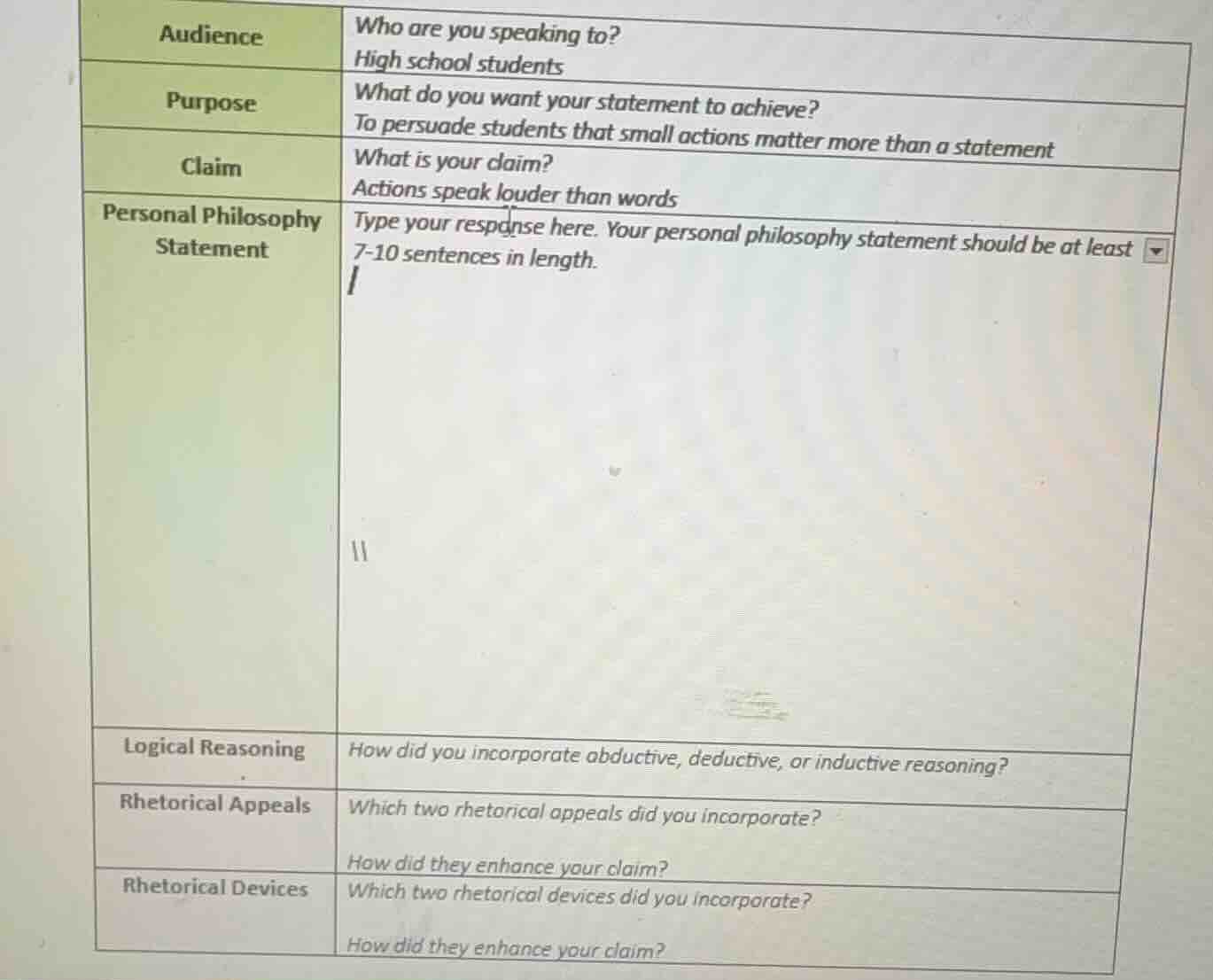
audience
who are you speaking to?
high school students
purpose
what do you want your statement to achieve?
to persuade students that small actions matter more than a statement
claim
what is your claim?
actions speak louder than words
personal philosophy statement
type your response here. your personal philosophy statement should be at least 7-10 sentences in length.
logical reasoning
how did you incorporate abductive, deductive, or inductive reasoning?
rhetorical appeals
which two rhetorical appeals did you incorporate?
how did they enhance your claim?
rhetorical devices
which two rhetorical devices did you incorporate?
how did they enhance your claim?
First, a personal philosophy statement tailored to high school students is crafted to persuade them small actions matter more than words, using relatable examples. Then, we break down the logical reasoning, rhetorical appeals, and devices used, explaining how each supports the core claim.

Snap & solve any problem in the app
Get step-by-step solutions on Sovi AI
Photo-based solutions with guided steps
Explore more problems and detailed explanations
Personal Philosophy Statement
When you see a classmate sitting alone at lunch, saying “I’ll sit with you tomorrow” is kind, but pulling out a chair and joining them right now? That’s the act that makes them feel seen. We’ve all posted about supporting mental health or saving the planet, but how many of us have actually asked a struggling friend how they’re doing, or picked up a piece of trash from the hallway even when no one was watching? Words can feel like a safe way to show we care, but they’re just a promise—actions are the fulfillment of that promise. Think about the teachers you remember most: it’s not the ones who talked about being fair, it’s the ones who stayed after class to help you understand a math problem, or defended you when you were falsely accused. Small, consistent actions build trust in a way that even the most passionate speeches never can. You don’t have to solve a huge problem to make a difference; every time you follow through on a small commitment, every time you choose to act instead of just talk, you’re proving that actions speak louder than words. And over time, those small actions add up to change that words could never create on their own.
Logical Reasoning
I used inductive reasoning: I started with specific, relatable examples (sitting with a lonely classmate, picking up trash, a teacher helping after class) and drew the general conclusion that small actions have more impact than words.
Rhetorical Appeals
- Pathos: I used relatable, emotional scenarios (a lonely classmate, struggling with schoolwork) to connect with students' personal experiences, making the claim feel relevant and heartfelt. This enhances the claim by making students feel the impact of actions, not just understand it.
- Ethos: I referenced trusted figures (teachers students respect) and common, authentic student experiences, which builds credibility. This makes the claim feel more trustworthy, as it’s rooted in what students already recognize as true.
Rhetorical Devices
- Rhetorical Questions: Questions like "how many of us have actually asked a struggling friend how they’re doing?" push students to reflect on their own actions, making them engage more deeply with the claim instead of just passively reading.
- Contrast: I directly contrasted words ("saying ‘I’ll sit with you tomorrow’") with actions ("pulling out a chair and joining them right now") to highlight the clear difference in impact, making the core claim "actions speak louder than words" immediately clear and tangible.