QUESTION IMAGE
Question
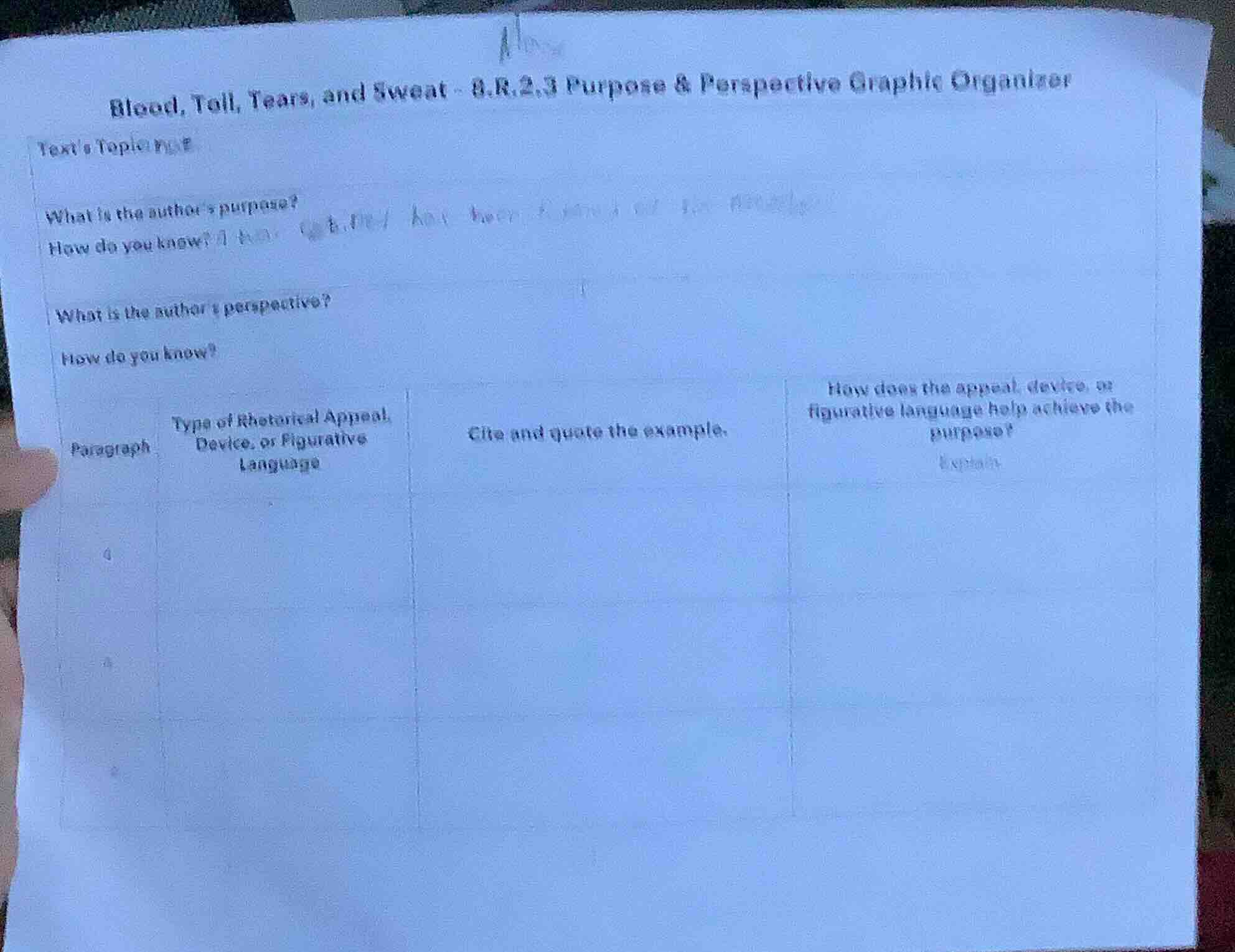
blood, toil, tears, and sweat - r.2.3 purpose & perspective graphic organizer
texts topic:
what is the authors purpose?
how do you know?
what is the authors perspective?
how do you know?
| paragraph | type of rhetorical appeal, device, or figurative language | cite and quote the example. | how does the appeal, device, or figurative language help achieve the purpose? explain |
|---|---|---|---|
Brief Explanations
This graphic organizer analyzes Winston Churchill's Blood, Toil, Tears, and Sweat speech.
- Text's Topic: The UK's entry into WWII and the need for national unity and resolve to fight Nazi Germany.
- Author's Purpose: To rally the British Parliament and public, unify them behind the war effort, and prepare them for the hard sacrifices ahead while conveying resolve to win.
- How do you know?: Churchill directly states the gravity of the situation, emphasizes shared struggle, and closes with a call to persevere through hardship to victory.
- Author's Perspective: Churchill frames the war as a fight for survival and freedom, positions himself as a leader ready to share the nation's suffering, and views unity and unwavering effort as non-negotiable for success.
- How do you know?: His use of personal commitment ("I have nothing to offer but blood, toil, tears, and sweat") and framing the conflict as a fight for "survival and honour" reveals this perspective.
For the table section (focused on Paragraph 4, a key section of the speech):
| Paragraph | Type of Rhetorical Appeal, Device, or Figurative Language | Cite and quote the example | How does the appeal, device, or figurative language help achieve the purpose? Explain |
|---|

Snap & solve any problem in the app
Get step-by-step solutions on Sovi AI
Photo-based solutions with guided steps
Explore more problems and detailed explanations
Completed graphic organizer as detailed above.
- Text's Topic: UK's WWII war effort and national resolve
- Author's Purpose: Rally Britons to unite and sacrifice for victory
- How do you know?: Explicit calls for effort, focus on shared struggle
- Author's Perspective: War is a fight for survival; unity = victory
- How do you know?: Personal commitment language, framing of enemy as evil
- Table filled with Paragraph 4 rhetorical analysis as shown